Construction Essential: The Root Cause of Drill-Bit Bouncing in Rock Drilling Identified — How to Stabilize Parameters
In geological exploration and drilling operations, drill-bit bouncing (often experienced as irregular jumping or impact of the bit during penetration) is a common abnormal condition that reduces drilling speed, damages tooling, and degrades borehole quality. To control bit bounce effectively, first identify its triggers, then apply targeted corrective measures.
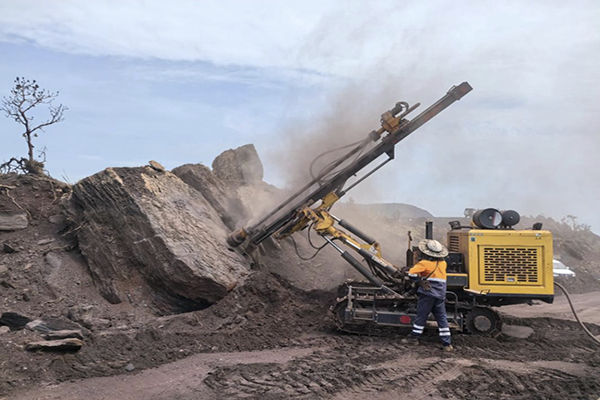
Main causes of drill-bit bouncing Bit bounce rarely has a single cause; it usually arises from interactions among geological conditions, drilling parameters, and equipment condition:
Geological factors
Formation characteristics are a primary driver. Very hard formations (for example, conglomerates, granites, and other crystalline rocks) impose strong resistance on the bit, preventing smooth cutting and causing the bit to rebound. Alternating soft–hard interbeds produce rapid changes in resistance; frequent switching between low and high load states on the bit leads directly to bouncing.Improper drilling parameters
Human-set parameters are a common cause of bounce:
• Excessive weight on bit (WOB): While WOB provides the cutting force, exceeding the mechanical limits of the bit or drill string causes elastic deformation and repeated “rebound–impact” cycles that appear as bounce.
• Excessive rotation speed (RPM): In hard formations, high RPM increases contact frequency and amplifies impact loads, preventing the bit from cutting steadily and promoting bouncing.Equipment and system issues
The mechanical condition and stability of drilling equipment affect cutting smoothness:
• Poor rig stability: If the rig is not firmly installed or the base is uneven, the rig can vibrate during drilling; those vibrations transmit through the drill string to the bit and induce bouncing.
• Drill-string defects: Bent or deformed drill rods, or loose threaded connections, lead to irregular lateral or torsional movement of the string and unbalanced loading on the bit, causing bounce.
Field countermeasures for drill-bit bouncing The most direct and effective on-site response is to adjust drilling parameters so the bit returns to steady cutting. Apply these targeted measures:
Reduce WOB appropriately
Lower WOB progressively based on formation hardness and bit type (for example, diamond/impregnated bits generally operate at lower WOB than some carbide/conventional bits). Use the criterion “bit cuts steadily into the formation with no noticeable bouncing” to find the safe working range and avoid overload-induced rebound.Adjust RPM to match the formation
Tailor rotation speed to lithology: in soft formations a moderate RPM increase can improve penetration, but in hard or heterogeneous formations reduce RPM to lower impact frequency. A “lower RPM with steady feed” approach often stabilizes bit loading and reduces bouncing.
Practical approach: diagnose and act
Use on-site observation (drill-string vibration amplitude, changes in drilling sound, torque and WOB feedback) to determine the likely cause, then apply parameter adjustments or equipment checks accordingly. The key to resolving bit bounce is targeted adjustment—identify the trigger, optimize parameters, and the drilling will regain smoothness.