Custom DTH Drill Rods: Professional Engineering for Higher-Efficiency Drilling
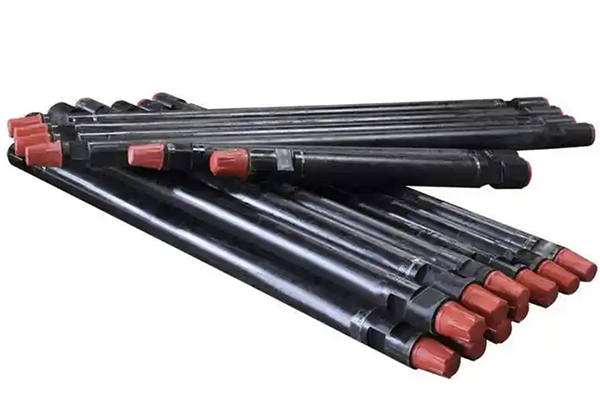
In mining, geotechnical engineering, and geological exploration, the DTH drill rod is a core drilling component whose performance directly affects productivity and cost. As project requirements become more diverse, standardized rods are increasingly unable to meet complex field conditions. Custom DTH drill rod solutions are therefore becoming an industry trend. This article explains the key technical points of customization and how specialized design can improve drilling performance.
Core Functions and Technical Characteristics of DTH Drill Rods
A DTH drill rod must work under combined high-pressure impact and rotary friction. Its core functions are to transmit impact energy, deliver compressed air, and maintain borehole accuracy. Effective customization focuses on three areas: material selection, structural design, and process control.
Material selection
High-quality alloy steel is the foundation, with requirements for high strength, fatigue resistance, and wear resistance. Some custom solutions use advanced coatings; for example, tungsten carbide coatings can significantly increase surface hardness and service life.
Structural design
Connection strength between the rod body and threaded joints is critical. Custom services can tailor thread profiles (such as R-type and T-type) for different formations, optimize flushing groove geometry to reduce sticking risk, and strengthen key sections through processes such as medium-frequency quenching.
Process control
Precision quench-and-temper treatment balances toughness and hardness. Friction welding ensures a seamless bond between joint and rod body, reducing impact energy loss during drilling.
How Custom Rods Solve Common Construction Pain Points
Under complex geological conditions, standard rods often suffer from hole deviation, rod breakage, or low efficiency. Custom design addresses these issues directly.
Adaptation to complex formations
For hard rock, fractured zones, or highly abrasive formations, custom rods can optimize diameter-to-wall-thickness ratios to improve impact energy transfer. In hard granite, for example, thick-wall designs can provide better impact resistance.
Higher drilling efficiency
By optimizing flushing groove angle and depth, custom rods improve cuttings evacuation and reduce repeated crushing. Lightweight concepts, such as hollow structures, can also reduce equipment load and increase penetration rate.
Longer service life
Surface nitriding or laser cladding can create a wear-resistant protective layer, significantly reducing wear in high-quartz formations. Some custom schemes also include replaceable bit interfaces to reduce maintenance cost.
Key Factors When Choosing a Customization Service
Custom DTH drill rods should be engineered from real jobsite data. The following factors are essential:
Geological condition analysis
Provide formation hardness, integrity, and water-content data. In heavily fractured formations, for example, higher bending resistance is needed to reduce sticking risk.
Equipment compatibility
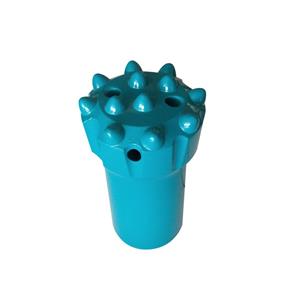
Rod outer diameter and thread connection must match compressor and rig parameters. Customization can adjust joint specifications for full system compatibility.
Manufacturing capability verification
Confirm whether the supplier has core capabilities in heat treatment and precision machining. Friction weld strength, for instance, directly affects rod life and should be validated by ultrasonic inspection.
Application Examples and Technical Insights
In an open-pit mining project, one company used custom extended rods (over 12 meters) for deep-hole blasting and increased single-hole depth by 40%. In tunnel construction, custom variable-diameter rods for alternating soft-hard strata effectively reduced hole deviation. These cases show that precise customization can significantly reduce construction risk and improve resource efficiency.
Custom DTH drill rod development is not just a size adjustment. It is a system-level solution that combines materials science, mechanical design, and manufacturing process control for specific operating conditions. To maximize both drilling efficiency and economic return, choose a supplier with strong R&D capability and base the design on rigorous geological and equipment data.