Drill Rod Breakage: Root Causes and Practical Prevention Measures
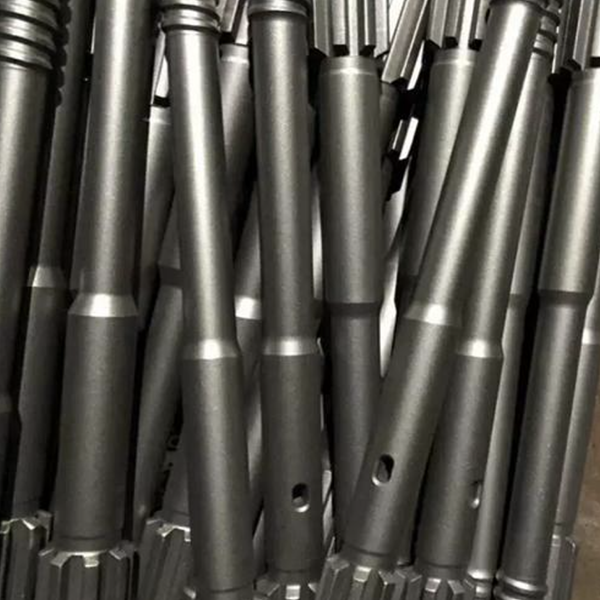
Drill rod breakage is one of the most costly failures in rock drilling. A broken rod wastes consumables, interrupts production, can leave tools stuck in the hole and may damage couplings, shank adaptors or the rock drill itself. It also prevents the drilling system from achieving the full service life of the bit.
Most drill rod failures are not random. They result from fatigue, corrosion, heat-treatment problems, material defects, poor connections or incorrect operating practice. Understanding these failure mechanisms helps drilling teams prevent breakdowns and reduce cost per drilled meter.
Fatigue Is the Leading Cause of Drill Rod Failure
Rock drill rods are exposed to repeated impact waves, rotation, feed force, bending and vibration. Although the maximum stress during each cycle may be below the steel’s static tensile strength, thousands of repeated cycles can initiate and grow a fatigue crack.
Fatigue cracks usually begin at weak points such as:
Surface scratches or machining marks.
Thread roots and shoulders.
Corrosion pits.
Internal or surface defects in the steel.
Abrupt geometry changes.
Areas with low hardness or poor heat-treatment transition.
At first, these cracks may be too small to see. With continued drilling, they grow until the remaining intact cross-section can no longer carry the applied load. The rod then breaks suddenly.
A fatigue fracture often has two distinct regions. One section may appear smooth, polished or finely textured because it developed gradually under repeated loading. The final fracture zone is usually rougher and fresher, showing where the remaining metal failed in overload.
Corrosion Fatigue Accelerates Damage
Water flushing, groundwater, drilling additives and contaminated mine water can make fatigue damage worse. Corrosion can attack the steel surface and form pits, which act as stress concentrators. Once a crack begins at a corroded area, repeated impact can accelerate its growth.
This is why drill rods should be protected during storage and inspected after use in wet or corrosive environments. Good flushing practices help remove abrasive fines, but operators should also avoid leaving rods exposed to moisture, mud or chemical residues for long periods.
Corrosion fatigue is especially important near threads and internal flushing holes, where moisture and debris may remain after drilling.
Heat Treatment Can Create Weak Zones
Heat treatment is necessary to obtain suitable hardness, strength and toughness. However, poorly controlled heating or cooling can create local property variations. Transitional zones between heated and unheated areas may have lower hardness or reduced fatigue strength.
A drill rod needs balanced properties. Excessive hardness may increase brittleness, while insufficient hardness may reduce wear resistance and strength. The goal is not simply the highest possible hardness. It is a controlled hardness profile that supports impact resistance, fatigue life and thread durability.
Manufacturers should control forging temperature, heating length, quenching and tempering. These processes should produce smooth property transitions rather than abrupt weak zones near the shank, thread or heat-affected regions.
Steel Quality and Surface Condition Matter
The quality of the original drill steel has a direct effect on service life. Inclusions, decarburized layers, rolling defects, surface seams and internal discontinuities can all become crack-initiation sites.
Good drill steel should have:
Suitable alloy composition for the application.
Consistent mechanical properties.
Clean steel with controlled inclusions.
Uniform microstructure after rolling and heat treatment.
Accurate hollow-hole position and wall thickness.
Smooth, defect-free external surfaces.
Drill rod manufacturing must also control straightness, thread accuracy and surface finish. A small surface defect in a highly stressed area can have a much larger effect on fatigue life than its size suggests.
Operating Conditions Can Shorten Rod Life
Even premium drill steel can fail early if it is used under poor conditions. Misalignment between the drill, feed beam and hole creates bending stress. Excessive feed force can overload the bit and rod. Insufficient feed can cause bouncing and poor impact transfer.
Thread connections should be clean, lubricated when specified and fully engaged. Worn couplings or damaged threads should be replaced before they damage a new rod. Mixing incompatible thread systems or forcing misaligned connections can lead to thread-root failure.
Flushing should remove cuttings effectively. Poor flushing can increase friction, cause bit binding and expose the rod to unnecessary torque and bending loads.
Practical Prevention Measures
A successful drill-rod maintenance program combines material selection, manufacturing control and correct field practice.
Select drill steel and rod geometry that match the drill power, hole diameter and rock conditions.
Use rods, couplings and shank adaptors with compatible threads and dimensions.
Inspect rods regularly for cracks, corrosion, straightness, thread wear and surface damage.
Remove damaged or heavily worn components before they fail in service.
Maintain correct drill alignment, feed pressure, rotation and flushing.
Store drill steel in a clean, dry location and protect it from corrosion.
Keep records of failures by location, rod type, rock formation and operating condition.
Failure records are especially useful. If rods repeatedly break at the same distance from a thread, shoulder or shank, the operation can focus its investigation on that specific geometry, heat-treatment area or drilling practice.
Focus on Cost per Meter, Not Purchase Price
The lowest-priced drill rod is not always the lowest-cost choice. A rod that breaks early can cause lost drilling time, stuck tools, hole abandonment and expensive recovery work. A reliable rod system improves penetration consistency, protects other components and lowers the total cost of drilling.
By controlling steel quality, heat treatment, corrosion exposure, thread condition and operating technique, mines and contractors can significantly reduce drill rod breakage and improve overall rock drilling reliability.