Four Types of Coupling Sleeves: The Small Part That Determines Whether Your Drill String Holds Together
A coupling sleeve isn't much to look at. It's a threaded steel collar, maybe a foot long, that sits between two drill rods. But when it fails — and it will fail if you pick the wrong type — everything behind it stops. The rod string comes apart downhole, and you're fishing steel out of a hole instead of making footage.
The good news is that coupling sleeves fall into four clear categories. Match the sleeve type to your rig and your application, and they'll run reliably for a long time. Guess, and you'll find out the hard way.
Full-Bridge Sleeves: When You Can't Afford a Weak Link
A full-bridge coupling sleeve is the heavy-duty option. Made from high-grade alloy steel with through-hardening heat treatment, it's engineered to handle the full impact load and torque that a high-power drill can deliver. The thread profile is typically trapezoidal — deeper than standard threads, with more contact area on the load flank — which means the connection stays tight under heavy percussion and still breaks loose cleanly when you need to disassemble the string.
These are the sleeves you want on rigs with independent rotation drives, where torque is applied separately from impact. Large open-pit blast hole drills, heavy tunnel jumbos, production drilling in hard rock — if the rig is pushing serious energy through the string, a full-bridge sleeve is the only sensible call.
They cost more. They're worth it.
Half-Bridge Sleeves: The Torque Specialist
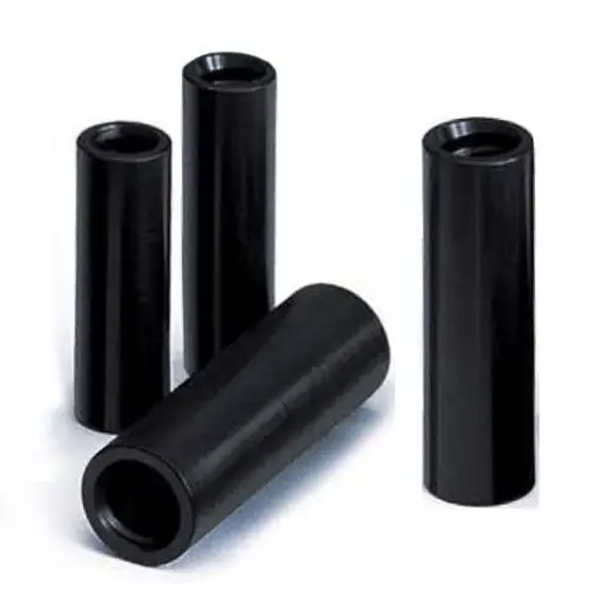
A half-bridge sleeve uses an interrupted bridge design — less material in the center section, more focused on the thread engagement zones at each end. The result is a lighter sleeve that still handles significant torque, but trades off some of the raw impact capacity of a full-bridge.
These work best on rigs where rotation torque is the dominant load rather than pure percussion — think underground bolting, cable bolting, and smaller development drills. They pair well with wave-form and stepped-thread rod profiles that are common in those applications.
If you're in ground where you need reliable torque transmission but aren't running maximum impact energy, a half-bridge sleeve hits the sweet spot between cost and capability.
Reducing Sleeves: When the Rods Don't Match
Sometimes the drill string isn't uniform. Maybe the shank adapter is T45 and the top rod is T45, but you want to step down to T38 rods deeper in the hole to reduce weight or because that's what you have in stock. A reducing coupling sleeve handles that transition.
Made from medium-carbon or alloy steel, reducing sleeves are simpler in design — their job is straightforward: connect two different thread sizes securely. They're not meant for the highest-impact applications, but in the right context they're indispensable. Any site that runs mixed rod inventories should keep a few reducing sleeves on hand. They're small, inexpensive insurance against being shut down because the right-diameter rod isn't available.
Straight Sleeves: The Universal Connector
The straight coupling sleeve is the most common type. It connects two rods of the same diameter and thread specification. Compact, simple, and available in virtually every thread size. For most tunnel and general mining applications where the entire string runs one rod diameter, this is what you'll use.
Don't mistake "common" for "commodity," though. The steel grade and heat treatment still matter. A straight sleeve made from low-grade material will thread-gall under load just as fast as any other component. Buy from a supplier that specifies the alloy and the process, not just the dimensions.
One Sleeve Doesn't Fit All
The coupling sleeve is the least glamorous component in the drill string, but it's also the one whose failure causes the most downtime. A broken rod you can pull and replace. A stripped sleeve that leaves half the string in the hole is a much bigger problem.
Match the sleeve type to the rig's drive system. Match the thread specification to the rods. And if you're running a high-power drifter in hard rock, don't cheap out on the connector that holds your string together.