Heat Treatment: The Hidden Process That Defines Drill Tool Life
Two drill tools may appear identical and use similar steel, yet deliver very different performance underground or on the bench. One may wear quickly, chip, or break after only a few drilling cycles. Another can maintain its cutting performance and structural reliability far longer.
The difference is often not visible in the finished product. It lies in heat treatment.
For rock drilling tools, heat treatment determines how effectively the steel balances surface hardness, wear resistance, impact resistance, and core toughness. This balance is essential in harsh drilling conditions involving repeated impact, rotation, friction, vibration, and variable rock formations.
Why Material Alone Is Not Enough
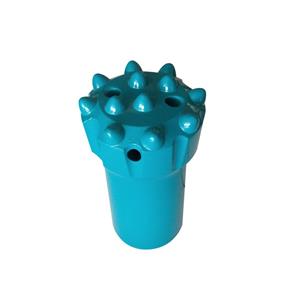
High-quality steel is the starting point, but it does not guarantee a durable drill rod, drill bit, shank adaptor, or other drilling component. Without controlled heat treatment, even good material may be too soft to resist abrasion or too brittle to survive impact loading.
A reliable rock drilling tool must resist wear while remaining tough enough to avoid cracking or sudden fracture. Achieving this balance requires a controlled combination of hardening and tempering.
1. Quenching Improves Surface Hardness
Quenching is used to increase hardness and wear resistance. During rock drilling, tool surfaces experience high-frequency impact and intense friction against hard rock and drill cuttings. A properly hardened surface helps the tool resist abrasion and maintain its working profile.
When heat treatment is controlled correctly, the steel develops a stronger surface structure that supports improved wear resistance and impact performance. This can help drilling tools perform more consistently in demanding formations and reduce premature surface damage.
However, hardness alone is not enough.
2. Tempering Restores Toughness
A tool that is extremely hard but lacks toughness can become brittle. Under strong impact, a brittle component may chip, crack, or break unexpectedly.
Tempering is the process that helps reduce residual stress created during hardening and restores useful toughness to the steel. The objective is not simply to make a tool hard. It is to create a component that combines a wear-resistant exterior with a tough and resilient internal structure.
For drilling tools, this balance supports a more stable response to repeated impact and torsional loads.
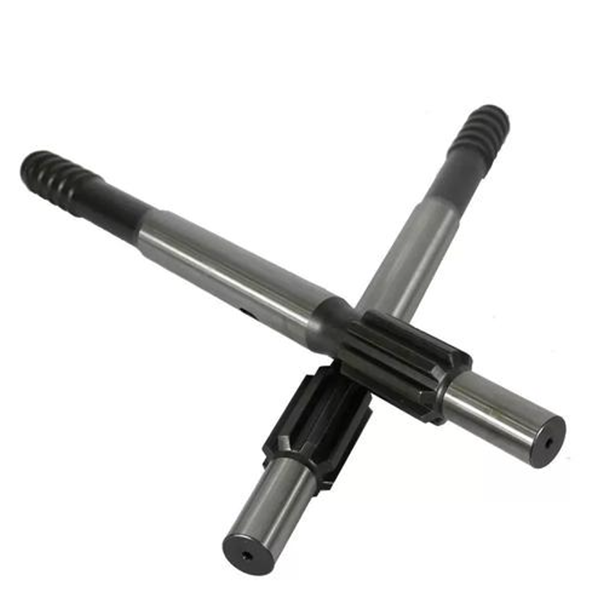
3. Hardness and Toughness Must Work Together
The best drilling tools are not defined by maximum hardness. They are defined by a controlled hardness profile that suits the intended operating conditions.
Quenching supports hardness and wear resistance.
Tempering supports toughness and crack resistance.
Controlled carburising can help create an engineered surface layer.
Consistent temperature, time, case depth, and hardness control support repeatable product quality.
When these processes are properly managed, drilling tools can better resist the combined stresses of impact, rotation, friction, and vibration.
Heat Treatment Supports Safer, More Efficient Drilling
Properly treated drill tools may help operators achieve:
Longer usable service life
More stable drilling performance
Better resistance to surface wear
Lower risk of brittle failure
Reduced unplanned tool replacement
More consistent borehole quality
Actual performance still depends on rock conditions, drilling parameters, equipment condition, flushing practices, operator technique, and routine inspection. Worn, bent, cracked, or damaged tools should be removed from service according to site procedures.
Selecting Drill Tools for Rock Projects
When choosing drilling tools, project teams should assess more than material grade. Relevant factors include heat-treatment quality, tool geometry, compatibility with the drilling rig, local geology, expected impact load, rotational demand, and maintenance requirements.
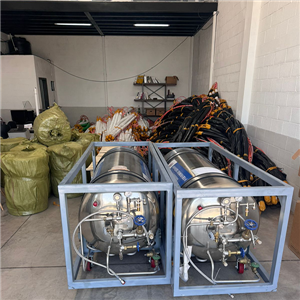
For drilling and rock-breaking projects where conventional blasting is constrained by vibration, nearby infrastructure, or operational sensitivity, the Gaea Rock O2 Gas Energy Rock Splitting System may also be evaluated as an engineered alternative. It uses rapid liquid-oxygen phase-change energy rather than conventional explosive formulations, subject to qualified design, training, and local regulatory requirements.