Factors Affecting Expansion Agent Performance in Concrete
Factors Affecting Expansion Agent Performance in Concrete
Expansion agents are used in concrete and mortar to compensate for shrinkage, improve volume stability, and help reduce cracking risk. Their performance depends on more than dosage alone. Material composition, concrete mix design, curing conditions, and structural restraint all influence the final expansion effect.
The source article groups these influences into three categories: factors related to the expansion agent itself, factors related to the concrete mixture, and external conditions such as curing and restraint.
Expansion-agent properties include mineral composition, particle-size distribution, and dosage. These determine hydration behaviour and the rate at which expansive products form. A suitable dosage must be selected for the intended concrete system; excessive or insufficient dosage can reduce the desired shrinkage-compensation effect.
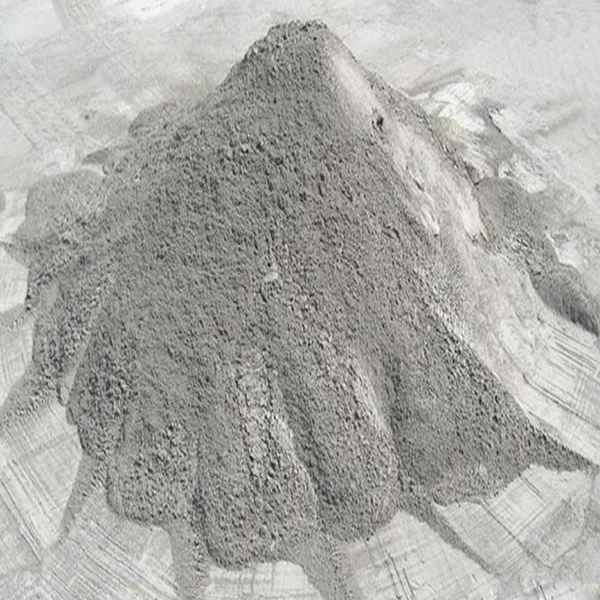
Concrete-mixture factors are equally important. Cement type, supplementary cementitious materials, cement content, water-to-binder ratio, admixtures, and concrete strength can all affect hydration, pore structure, and the available space for expansion. The compatibility of the expansion agent with the selected cement and admixtures should be tested before use in major projects.
Curing conditions strongly affect expansion development. Temperature and moisture influence hydration speed and the formation of expansive mineral products. The article notes that different curing temperatures can produce different restrained-expansion results. Practical projects should follow validated curing procedures rather than assuming that faster or hotter curing always improves expansion performance.
Structural restraint is another major consideration. In actual reinforced-concrete elements, free expansion rarely occurs because steel reinforcement, adjacent members, and overall structural continuity limit movement. Under lower restraint, more expansion may be available to compensate for shrinkage. Under higher restraint, expansion may be smaller and may mainly delay cracking rather than fully offset shrinkage.
For reliable results, engineers should evaluate expansion agents through laboratory testing and project-specific trials. Mix proportions, reinforcement conditions, curing regimes, and target performance should be established before construction.