Five Mining Blasting Methods: Which One Fits Your Operation?
Open-pit mining is usually described as a sequence of drilling, blasting, loading, hauling, and waste disposal. Among these steps, blasting often represents around 15% to 20% of total open-pit production cost. More importantly, fragmentation quality affects excavator productivity, truck loading, crushing efficiency, slope stability, and the final cost per tonne.
There is no single blasting method that works best for every mine. The right choice depends on rock conditions, production scale, bench geometry, equipment, environmental limits, and local regulations.
1. Shallow-hole blasting
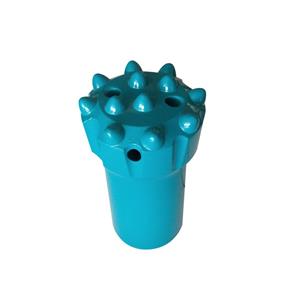
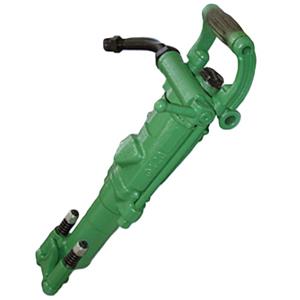
Shallow-hole blasting normally uses smaller holes, commonly around 30 to 75 mm in diameter. Hole depth is generally below 5 m, although it may reach approximately 8 m or more when a drilling jumbo is used.
This method is commonly used for:
Small open-pit mines
Small quarries
Tunnel excavation
Secondary breaking
Road cuts
New mine construction
Special excavation work
Its main advantage is flexibility. Shallow holes are easier to position and can be drilled with relatively compact equipment.
The limitation is production volume. Shallow-hole blasting is usually less suitable for large benches where the mine needs to move hundreds of thousands of tonnes in one cycle.
2. Deep-hole bench blasting
Deep-hole blasting uses drilling equipment to create deeper holes that serve as the loading space for the approved blasting product. In open-pit mines, it is mainly used for production blasting on benches.
Typical reference ranges are approximately:
Hole depth: 15 to 20 m
Hole diameter: 75 to 310 mm
Common diameter: 200 to 250 mm
Deep-hole blasting is widely used for mine development, stripping, and production. Large-scale operations may use it for more than 90% of their total blast volume.
Vertical and inclined holes are both possible. Inclined holes can provide more uniform energy distribution and may improve fragmentation and loading conditions. Depending on the site, engineers may also use controlled delay designs, decked loading, air decking, or other approved techniques to manage vibration and improve energy utilization.
DTH drill rigs and rotary blasthole drills are both common choices. The drilling system must be selected according to the rock, hole diameter, depth, and required production rate.
3. Chamber blasting
Chamber blasting places a large quantity of blasting product inside a prepared chamber or underground opening. Because the amount involved can be very large, the method is sometimes called mass blasting.
It may be considered for:
Mine construction projects
Special open-pit conditions
Large quarry operations
Sites where a major volume must be broken in a limited number of events
The method can reduce the amount of surface drilling required and may handle different rock hardnesses. It can also be used where surface drilling conditions are difficult.
However, chamber preparation can create poor working conditions for development crews, and the result may contain a higher proportion of oversized rock. The method requires detailed design, authorization, geological review, and strict safety management.
4. Multi-row millisecond blasting
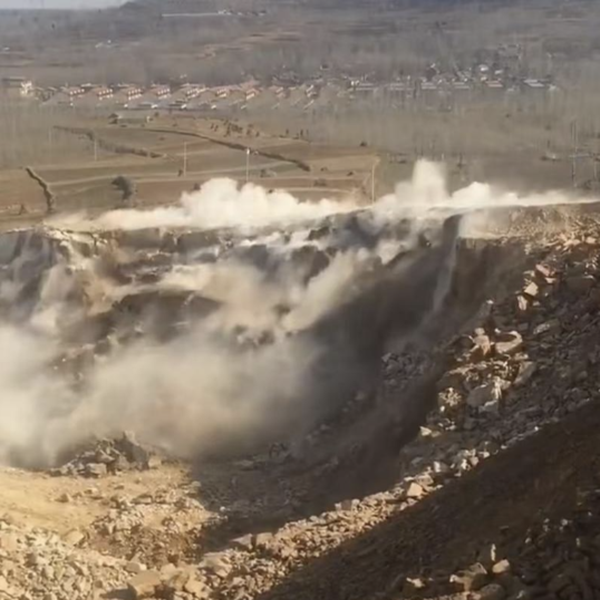
As excavator bucket sizes and mine production capacity have increased, mines have needed larger blast volumes. Multi-row millisecond blasting allows several rows of holes to be initiated in a planned sequence.
Large operations may blast approximately 5 to 10 rows in one event, with total broken material reaching hundreds of thousands of tonnes depending on the mine design.
In a millisecond blast, charges in adjacent holes are initiated at short, designed time intervals. This timing helps distribute energy and manage the movement of the rock mass.
Potential advantages include:
Larger volume per blast
Fewer blast events and shorter waiting time
Better fragmentation
Lower oversize percentage
Improved utilization of drilling equipment
Better excavator and haul-truck productivity
The original field material cites possible improvements of roughly 10% to 15% for drilling and loading-hauling equipment, while oversize can be substantially reduced compared with single-row blasting. Actual results depend on drilling accuracy, rock structure, blast design, and site conditions.
5. Multi-row millisecond cast or confined blasting
Multi-row millisecond confined blasting is carried out while a previous muck pile remains in front of the working face. The existing pile creates confinement.
That confinement can:
Extend the effective action time
Improve fragmentation
Help control muck-pile width
Reduce uncontrolled rock movement
Keep the broken material more concentrated
Compared with ordinary multi-row millisecond blasting, the delay interval is commonly designed differently. The exact timing must be determined by qualified blasting engineers through site-specific analysis and testing.
The main advantages are improved fragmentation and a more concentrated muck pile. This can be useful for mines using rail transport, because the track may not need to be removed before every blast.
The tradeoffs are equally important:
Higher blasting-product consumption
A wider working platform requirement
Greater muck-pile height
Possible interference with excavator operation
More demanding coordination and safety control
Choose by site conditions, not by habit
A mine should not keep one blasting pattern forever simply because it worked in the past. Rock hardness, joints, water, bench height, equipment, and nearby infrastructure can all change.
Before selecting a method, review:
Rock type and fracture structure
Required fragment size
Bench geometry and free-face conditions
Drilling equipment and hole accuracy
Loading and hauling capacity
Vibration and fly-rock limits
Dust, noise, and community restrictions
Local licensing and safety requirements
Total cost per tonne, including secondary breaking
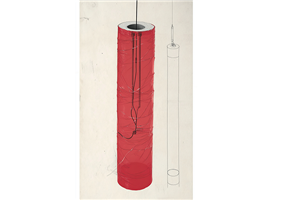
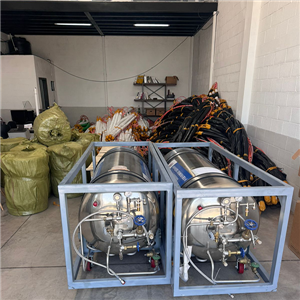
For sites near buildings, railways, highways, power lines, or sensitive facilities, conventional blasting may not be the only option. Gaea Rock's O2 Gas Energy Rock Splitting System uses liquid oxygen and a combustible absorbent inside a fracturing tube. It is a controlled physical phase-change process, not a conventional explosive system.
The O2 system may be considered where lower shock-wave intensity, reduced vibration, simplified transport classification, or controlled rock splitting is important. It still requires proper drilling, stemming, remote ignition, exclusion zones, trained personnel, and local engineering approval.
The best blasting method is the one that balances fragmentation, productivity, safety, environmental protection, and total operating cost.