Comparison of Five Common Blasting Methods in Open-Pit Mining
Comparison of Five Common Blasting Methods in Open-Pit Mining
Open-pit mining typically includes drilling, blasting, loading, hauling, and waste removal. Blasting is a key stage because it affects rock fragmentation, loading and hauling efficiency, primary-crushing performance, and overall mine cost.
Different blasting methods are suitable for different geological conditions, production scales, equipment configurations, and operational constraints. The following overview compares five methods commonly discussed in open-pit mining.
1. Shallow-Hole Blasting
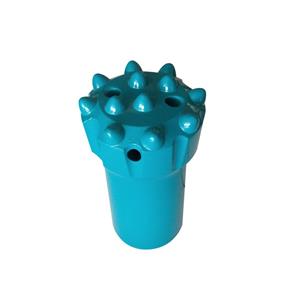
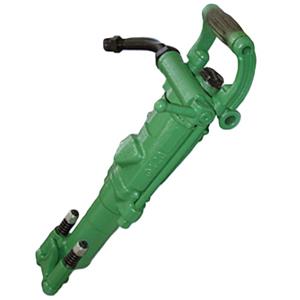
Shallow-hole blasting uses relatively small-diameter holes and is commonly associated with short hole depths. It is generally used for smaller production areas, quarries, tunneling support work, secondary breaking, road and trench construction, and other specialized tasks.
Its main advantage is flexibility in limited or localized work areas. However, it is usually less suitable than larger-scale production methods when substantial volumes of material must be broken efficiently.
2. Deep-Hole Blasting
Deep-hole blasting is widely used for production benches in open-pit mines. It supports larger blast volumes and can be integrated with methods such as delay blasting, cushion blasting, directional blasting, or other approved designs where site conditions require them.
For large mines, deep-hole blasting can support high production capacity and simplified operational management. Its final design must be based on mine-specific geological conditions, drilling quality, equipment capability, and an approved blast plan prepared by qualified professionals.
3. Chamber Blasting
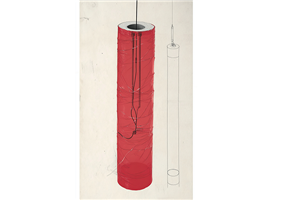
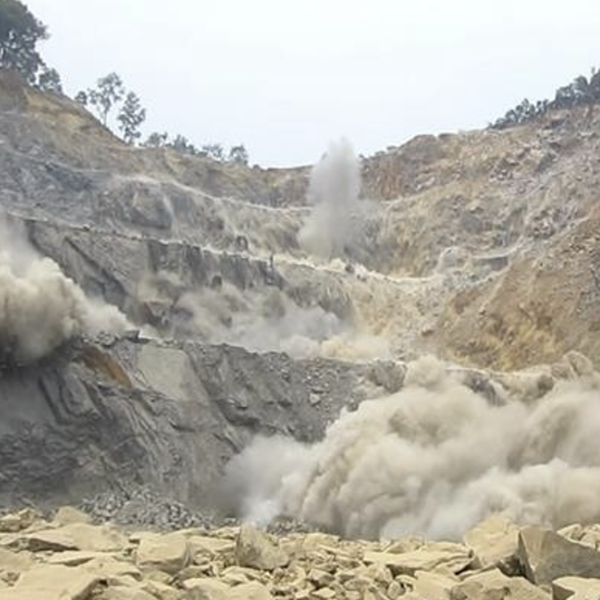
Chamber blasting places explosive charges in purpose-built underground chambers. Because it can involve a large volume of material in a single event, it is also described as large-scale blasting.
It may be used during mine development or under specific site conditions where large overburden removal is required. Chamber blasting can complete significant rock breaking in a short period and may be used in complex terrain. At the same time, it demands thorough planning, strict controls, and professional risk management because large blasts can create oversized fragments and challenging operating conditions.
4. Multi-Row Delay Blasting
Multi-row delay blasting uses sequential initiation across multiple rows of blast holes. Its purpose is to manage energy release and improve fragmentation while supporting larger production blasts.
Potential operational benefits include fewer blasting interruptions, improved material breakage, and better utilization of drilling, loading, and haulage equipment. The real outcome depends on competent engineering design, accurate drilling, suitable initiation systems, and field monitoring.
5. Multi-Row Delay Cushion Blasting
Multi-row delay cushion blasting is performed where a broken-rock pile remains in front of the blast area. The existing material can help confine the blast and influence fragmentation and material movement.
This method may produce a more concentrated blast pile and can improve fragmentation in suitable conditions. However, it can also require more working space and may create higher piles that affect loading operations. Its use should therefore be assessed against equipment capability, bench geometry, geotechnical conditions, and site safety requirements.
Selecting the Appropriate Method
There is no universal blasting method for every open-pit operation. Selection should consider the mine plan, rock mass conditions, required fragmentation, available equipment, environmental limits, and downstream processing needs.
All blasting work must comply with applicable blasting regulations and site procedures. Warning systems, exclusion zones, personnel protection, and qualified blasting supervision are essential regardless of the method selected.