Four Key Detection Dimensions and Practical Measures for Drill-Bit Overheating (Bit Burn)
Bit overheating ("bit burn") is a common and potentially severe failure mode in drilling operations. It is typically caused by excessive friction between the bit and the borehole bottom or by circulation failure of the drilling fluid, leading to rapid temperature rise downhole. Consequences include bit damage, loss of penetration, and secondary problems such as borehole collapse. Prompt recognition of surface indicators can buy time for corrective action and reduce losses. The following describes practical identification methods and field precautions across four core dimensions: drilling parameters, wellhead returns, drilling sounds, and post-trip bit inspection.
Closely monitor abnormal changes in drilling parameters The stability of drilling parameters directly reflects downhole conditions. Before and during the early stages of bit overheating, key parameters such as weight on bit, RPM, and pump pressure typically show clear anomalies. Real-time instrument monitoring combined with operator experience is essential.
Coupled anomalies in weight on bit and rotation speed: Under normal drilling, weight on bit (WOB) and rotation speed (RPM) are set for the formation and remain relatively stable to achieve efficient cutting. When excessive friction or partial adhesion occurs between the bit and the borehole bottom, a characteristic linked anomaly appears: WOB suddenly rises while RPM drops markedly. WOB can increase by 30% or more relative to normal, and RPM may fall abruptly or experience a stalled rotation. This indicates a sudden increase in resistance to bit movement; if not corrected, it can rapidly lead to overheating. Note that this is an instantaneous parameter imbalance rather than the gradual change expected from a lithology transition.
Sudden changes and instability in pump pressure: Proper circulation of drilling fluid (mud, fresh water, etc.) is critical for controlling downhole temperature and transporting cuttings. Bit overheating causes cuttings accumulation and expansion of the bit matrix, which can block fluid flow paths and disrupt circulation, producing abnormal pump pressure behavior. Under normal conditions pump pressure stays within a set band with minimal fluctuation; a sudden rise in pump pressure accompanied by frequent oscillations, or a condition where pressure spikes and fails to drop (pump stall), strongly indicates restricted circulation and rising downhole temperature. In such cases, stop drilling immediately and inspect the circulation system—do not attempt to overcome the problem by applying more pressure.
Pay close attention to the wellhead return flow Wellhead returns provide a direct, observable window into downhole conditions. High temperatures and changes in the composition of cuttings caused by bit overheating will be reflected in the return flow’s temperature, color, and sand content. Combine sensory checks with simple measurements to identify problems.
Abnormal rise in return flow temperature: During normal drilling, returns are slightly warmer than ambient due to frictional heat, but not uncomfortably hot to the touch. With bit overheating, localized downhole temperatures can reach hundreds of degrees Celsius, causing a sharp rise in return temperature. Touching the return line or collecting a small sample may produce an obvious burning sensation; a thermometer may show an increase of 15°C or more above normal operating returns, with a sustained upward trend. Such a pattern indicates abnormal downhole high temperature and a very high risk of bit burning. Always compare against the ambient baseline temperature to avoid false positives, and avoid direct contact with very hot returns—use appropriate protective equipment.
Changes in return color and sand/cuttings content: Normal return color matches the lithology being drilled (for example, pale yellow for sandstone, gray-brown for shale) and contains minimal sand with little or no visible settling. Bit overheating introduces bit matrix material (often cemented carbide, polycrystalline diamond, or similar materials) that has been thermally altered and mixed with rock fines, producing darker returns—black, dark gray, or dark brown—deepening with the severity of burning. Sand and fine fragments increase noticeably; allowing a sample to settle briefly will reveal heavy deposits of fine black particles (bit matrix powder) mixed with rock sand and grit with a rough texture. The simultaneous shift in color and increased sediment load is a characteristic surface indicator of bit overheating.
Listen for changes in drilling sounds The noise generated by the bit interacting with the formation carries useful diagnostic information. Experienced operators can detect anomalies by sound: normal drilling produces a steady, regular cutting noise—often described as a humming or rhythmic thump—without extraneous sounds. As overheating develops, the interaction shifts from cutting with frictional lubrication to dry or semi-dry grinding; the acoustic signature deforms noticeably. Early-stage burning may produce sharp, hissing or squealing friction sounds accompanied by increased drill-string vibration. More severe burning, where the bit matrix adheres to or deforms against the formation, produces dull impact sounds—thuds or heavy knocks—and intensified vibration that can transmit to the rig floor. On hearing such changes, stop drilling and inspect to prevent further bit damage.
Conduct standardized inspections of the bit after tripping out If surface indicators suggest bit overheating or if unresolved anomalies persist during drilling, pull the bit for direct inspection. Examining bit appearance and wear patterns is the definitive method to confirm burning and to guide subsequent remedial action.
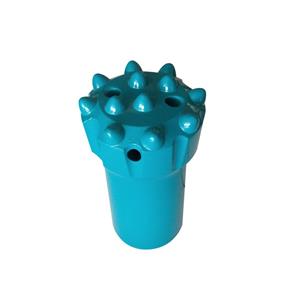
Visual signs of heat damage: A normally functioning bit shows uniform color and intact matrix without discoloration or deformation. A burned bit displays clear heat-damage markers: surface discoloration (typically blue-black or dark red from high-temperature oxidation), localized warping or distortion, delamination or cracking at the junction between the matrix and the bit body, and, in severe cases, irregular fused-and-solidified protrusions from localized melting. For diamond bits, look for diamond grain loss and carbonized, blackened matrix material. The presence of these features is a direct confirmation of bit overheating.
Abnormal wear patterns: Under normal drilling, wear is uniform and consistent with penetration depth and formation hardness (light wear in soft rock, regular wear in harder formations). Bit overheating produces distinct abnormal wear: accelerated wear where the bit shows severe degradation after relatively little penetration—indicating a wear rate far above normal—and highly uneven wear concentrated on one side or in localized pits or gouges ("biased wear" or pitting). This mismatch between penetration length and wear severity, and the presence of localized damage, strongly supports a diagnosis of bit burning, especially when visible heat discoloration is minimal.
Integrated diagnosis and response The surface indicators of bit overheating are interrelated and progressive. Combine multi-dimensional observations—for example, parameter anomalies with rising return temperature and distorted drilling sounds—for an early-stage diagnosis; confirm by tripping and inspecting the bit. Timely actions such as stopping the rig, clearing circulation channels, and replacing the bit can significantly reduce equipment damage and project delays and help maintain drilling safety and efficiency. Routine operational discipline—properly setting drilling parameters, ensuring reliable fluid circulation, and adhering to inspection procedures—reduces the risk of bit overheating from the outset.