Gas Expansion Rock Breaking Solutions for Controlled Engineering Projects
Gas Expansion Rock Breaking for Controlled Engineering Projects
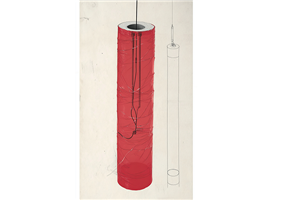
Gas expansion rock breaking is a controlled rock-fracturing approach used in mining, civil construction, road and rail earthworks, foundation excavation, tunnel development, and other projects where conventional explosive blasting may be restricted or unsuitable. Instead of relying on conventional explosives, the method uses a rapid gas-expansion event inside a prepared rock borehole to create pressure and initiate fractures in the rock mass.
For contractors and project owners, the appeal is not simply the equipment itself. The real value lies in matching the rock-breaking solution to local geology, work-area constraints, environmental requirements, project schedule, and applicable regulations. Yantai Gaea supports this project-based approach by focusing on solution selection, equipment configuration, technical communication, and responsible site implementation planning.
Understanding the Gas Expansion Principle
The underlying concept is that a rapid phase change or controlled reaction can produce an expanding gas volume within a confined borehole. The pressure acts on natural joints, bedding planes, and existing weaknesses in the rock, helping to create or extend fractures.
Two broad technology categories are often discussed in the market:
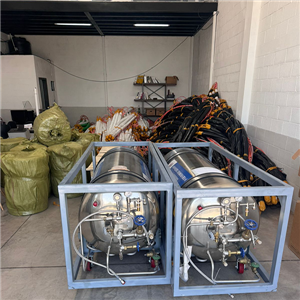
CO2 rock-fracturing systems, which use the rapid conversion of liquid CO2 into gas.
Liquid-oxygen-based rock-splitting systems, which use a controlled energy-release process to generate expanding gases.
Although both are commonly described as gas-expansion methods, they are not interchangeable. Their suitability depends on the project environment, rock properties, supply-chain conditions, regulatory requirements, equipment selection, and site safety controls. A professional assessment should be completed before selecting a technical route.
Why Project-Specific Design Matters
Rock is never completely uniform. Hardness, joint development, weathering, moisture, confinement, free faces, excavation geometry, nearby structures, and desired fragment size can all affect the result. For this reason, a gas expansion system should not be treated as a one-size-fits-all product purchase.
A well-prepared project evaluation may consider:
Rock type, compressive characteristics, and natural fracture patterns
Required excavation volume and production targets
Proximity to buildings, roads, pipelines, utilities, or sensitive facilities
Requirements related to vibration, noise, dust, flyrock, and work-zone control
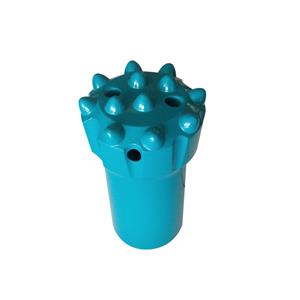
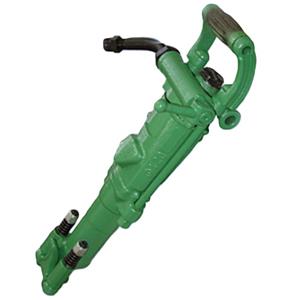
Borehole planning and equipment compatibility
Site access, logistics, and gas or consumable supply
Weather conditions, including cold-climate operating challenges
Operator training, exclusion zones, emergency planning, and local approvals
Yantai Gaea can discuss these conditions with project teams before recommending a suitable system configuration. The objective is to select a controlled rock-breaking approach that fits the real operating environment instead of making generalized promises.
Applications in Mining and Civil Works
Gas expansion rock-breaking methods are often considered for applications where controlled excavation is important. Typical project types include small and medium-scale quarrying, mine development, roadbed excavation, foundation and trench rock removal, tunnel support works, demolition preparation, and projects close to occupied areas or important infrastructure.
In many regions, traditional explosive blasting remains an efficient option for large-scale, high-production rock excavation. However, it may be subject to strict controls or may not be appropriate near sensitive locations. Gas expansion technology can therefore be evaluated as an alternative or complementary method for selected sections of a project.
The source article also notes that controlled gas-expansion systems may be of interest in areas where the management of conventional explosive materials is particularly strict. Actual suitability must always be determined through site-specific engineering review and compliance assessment.
Cold-Climate and Site Conditions
Environmental conditions can influence the handling and performance of gas-based rock-breaking systems. In cold regions, low temperatures may affect equipment behavior, material selection, supply logistics, and the consistency of the operating process. Project teams should account for seasonal weather before committing to a work plan.
For projects in northern or high-altitude regions, Yantai Gaea can help customers evaluate relevant issues such as low-temperature material compatibility, transportation arrangements, work sequencing, operator preparation, and equipment configuration. These considerations should be addressed during planning, not after work has started.
Safety and Compliance Come First
Gas expansion rock breaking involves pressure systems, site controls, and potentially hazardous materials. It must be managed by trained and authorized personnel under an approved engineering and safety plan. The technology should never be presented as risk-free or automatically suitable for every project.
A responsible implementation plan should include local regulatory review, competent supervision, material-compatibility checks, controlled access, exclusion-zone management, operator training, emergency arrangements, transport compliance, and environmental controls. Any supplier performance statement, cost estimate, or project claim should be verified for the specific geology and work conditions involved.
Yantai Gaea supports a practical, engineering-led approach: assess the project, select the appropriate solution, establish compliant site controls, and validate the method through responsible project planning.