Hot-Weather Open-Pit Blasting Safety: Practical Controls for Safer Operations
Hot weather creates additional risks for open-pit blasting. High temperatures can affect explosive stability, increase the likelihood of premature initiation or misfires, and expose workers to heat stress, fire hazards, dust, and poor working conditions. Safe blasting during summer therefore requires coordinated control of materials, site conditions, personnel, weather, and post-blast inspection.
1. Control Blasting Materials at the Source
Only approved, traceable, and temperature-rated blasting materials should be used. Explosives, detonators, and initiating components must be inspected before entering the site. Expired, deteriorated, or unstable products should never be accepted.
Storage areas should be cool, ventilated, shaded, and managed in accordance with local regulations and supplier instructions. Temporary site storage must also be protected from direct sunlight and heat accumulation. Transport should avoid the hottest part of the day, with vehicles equipped with appropriate shading and thermal protection.
2. Complete Pre-Blast Risk Assessment
Before work begins, the blasting team should review geological conditions, rock temperature, air temperature, and borehole conditions. Heat can change rock behavior and may affect the performance of blasting materials. Any temperature reading outside the approved operating range should trigger a work stoppage and engineering reassessment.
Borehole conditioning, thermal protection, and any other preparation must follow the approved blasting design and be performed only by qualified personnel. The blasting plan may need to be adjusted for high-temperature conditions, including changes to timing, exclusion zones, and energy distribution. Midday blasting should be avoided whenever feasible.
3. Protect Workers and Control the Site
Heat stress can reduce concentration and increase operational errors. Workers should use required personal protective equipment, sun protection, hydration, shaded rest areas, and rotation schedules. Supervisors should watch for signs of heat exhaustion and stop work when worker condition or environmental exposure becomes unsafe.
All loading, connection, and inspection activities must be performed by authorized personnel under the approved procedure. Interfaces and equipment should be checked before firing. The exclusion zone should be reviewed for summer conditions, with clear warning signs, reliable communications, and trained sentries maintained throughout the operation.
4. Apply a Conservative Post-Blast Inspection Process
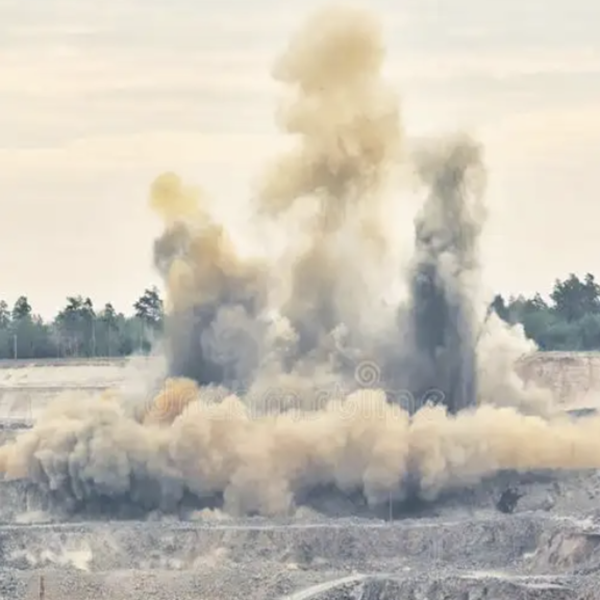
Blasting is not complete when the initiation event ends. The site should remain isolated for the waiting period specified in the approved plan and applicable regulations. Personnel must wait until hot gases, dust, and other hazards have dissipated and the area has cooled sufficiently for inspection.
The inspection should identify misfires, residual materials, unstable rock, fire risks, and damaged equipment. Any abnormal condition must be isolated and managed under the formal misfire and emergency procedure. Unauthorised personnel must never attempt to investigate or correct a suspected misfire.
5. Maintain Emergency Readiness
A hot-weather blasting emergency plan should address heat illness, fire, equipment failure, communication loss, and misfire hazards. Responsibilities, escalation routes, evacuation arrangements, and emergency contacts should be clear before work begins.
Training and drills should be conducted regularly. Water, cooling supplies, first-aid equipment, fire extinguishers, radios, and other emergency resources should be checked and kept immediately available.
6. Build Long-Term Weather and Environmental Controls
The site should monitor heat, thunderstorms, lightning, wind, and wildfire conditions. Extreme heat or severe weather should result in suspension of work. Equipment, communications systems, cooling systems, and protective gear require scheduled maintenance.
Dust suppression and environmental controls remain important in hot weather. Properly planned water spraying can improve visibility and reduce airborne dust, provided it does not interfere with electrical systems, site stability, or the approved blasting procedure.
7. Consider Non-Traditional Rock-Breaking Options
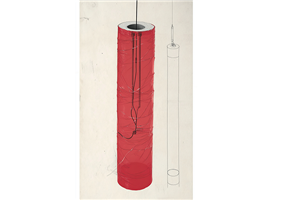
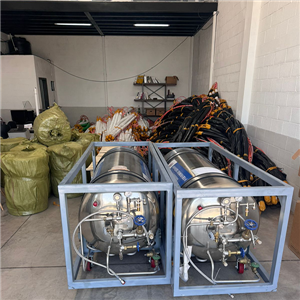
For projects where conventional explosives create heightened sensitivity, regulatory, vibration, or community concerns, an engineered alternative may be considered. The Gaea Rock O2 Gas Energy Rock Splitting System uses rapid liquid-oxygen phase change to generate controlled rock-breaking energy rather than relying on conventional explosive formulations.
Its suitability depends on rock structure, project geometry, local regulations, equipment configuration, and qualified engineering review. It should not be treated as a universal guarantee or as a substitute for site-specific design, training, supervision, and emergency planning.
Conclusion
Hot-weather open-pit blasting requires a complete safety loop: approved materials, temperature monitoring, qualified supervision, worker protection, controlled exclusion zones, conservative post-blast inspection, emergency readiness, and weather-based stop-work decisions. When risks cannot be controlled within approved limits, the correct action is to suspend work and reassess the method.