How to Choose the Right Top Hammer Drill Bit
How to Choose the Right Top Hammer Drill Bit
Choosing the right top hammer drill bit is one of the most important decisions in mining, quarrying, construction, and tunneling. The correct bit can improve penetration rate, extend tool life, reduce downtime, and lower cost per drilled meter.
A successful selection is not simply about choosing the hardest bit. Rock properties, drill rig capacity, bit diameter, carbide quality, face design, flushing performance, and hole depth must all work together.
Start with Rock Properties
The rock type is the first factor to consider. Rock hardness and abrasiveness affect the ideal carbide button shape and bit face design.
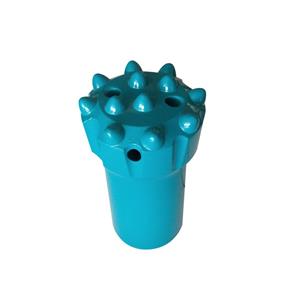
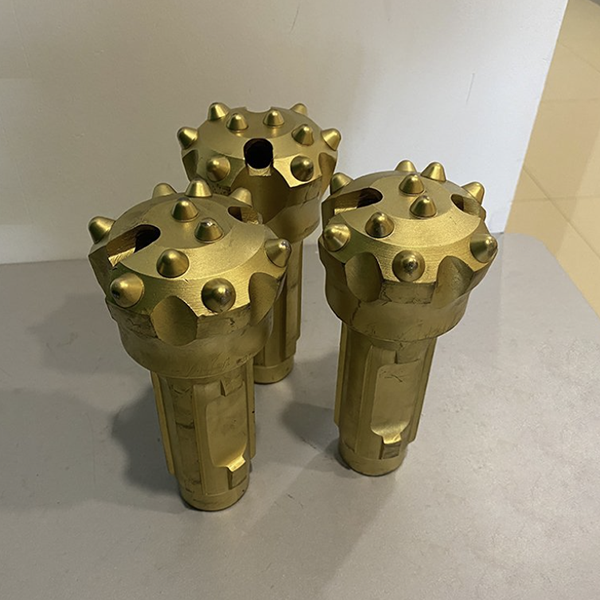
For hard, low-abrasive formations such as granite and basalt, spherical-button drill bits are often preferred because of their strong resistance to impact damage. For medium-hard and highly abrasive rock, ballistic-button designs can provide effective cutting performance. In softer to medium-hard formations such as limestone, concave button bits may offer good drilling efficiency and flushing behavior.
Fractured or unstable ground may require retrac-style bits. Their design helps reduce the risk of sticking, hole collapse, and poor reaming stability.
Before drilling begins, evaluating rock strength is helpful. Methods such as Schmidt hammer testing can provide an indication of uniaxial compressive strength and support a more accurate bit selection.
Match Button Shape to the Formation
Carbide button geometry directly influences penetration, wear resistance, and impact-energy distribution.
Spherical buttons provide excellent wear resistance and resistance to breakage. They are suitable for hard and abrasive formations, although penetration speed may be lower than with more aggressive button profiles.
Ballistic buttons are commonly selected for soft to medium-soft rock where fast penetration is a priority. Their wear resistance is moderate, but they can deliver strong drilling speed in suitable conditions.
Conical buttons balance drilling efficiency and durability. They are often a practical choice for medium-hard rock formations.
Concave-face designs improve cuttings removal and may help maintain hole straightness. Retrac designs are particularly useful in broken, loose, or unstable formations.
Select the Correct Bit Diameter
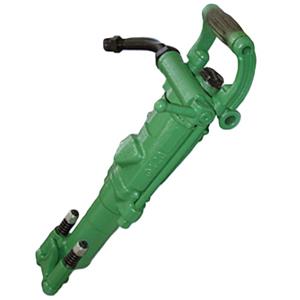
Bit diameter must match both the drilling objective and the power of the rock drill.
Smaller diameters, such as 38 to 45 mm, are commonly used for bench drilling, bolting work, and smaller construction projects. Medium sizes from 48 to 64 mm are suitable for production blasting, quarry applications, and medium-scale surface mining.
Larger diameters from 76 to 89 mm are often selected for deep-hole drilling, underground mining, tunneling, and large-scale production work. The drill rig must have sufficient impact power, rotation capacity, and flushing performance for the chosen diameter.
Hole depth also matters. For shallow holes below five meters, standard or concave-face button bits can prioritize penetration rate. For deep holes above ten meters, reinforced or retrac-style bits can help reduce deviation and minimize the risk of sticking.
Evaluate Carbide Grade and Button Layout
Not all tungsten-carbide buttons offer the same performance. Carbide grade affects hardness, toughness, heat resistance, and wear life.
Harder grades are better suited to extremely hard and abrasive rock, while tougher grades are more appropriate for high-impact drilling and fractured formations. A balanced grade can provide dependable performance across mixed conditions.
Button size and quantity also influence drilling results. Larger buttons, typically 12 to 16 mm, provide stronger impact resistance for hard rock. More buttons can improve flushing and suit softer formations, while fewer buttons may improve penetration efficiency in medium-hard rock.
Optimize Flushing and Bit Face Design
Efficient cuttings removal and cooling are essential for continuous drilling. Large flushing holes can improve debris removal in soft, sticky, or clay-rich formations and help reduce blockage.
A concave face can support better hole straightness in fractured or non-uniform ground. Retrac edges help prevent sticking and improve stability in loose formations. Serrated button designs can increase wear protection in highly abrasive conditions and help maintain hole diameter.
The Core Selection Principle
The best top hammer drill bit is the one that matches the rock formation, drill rig, drilling depth, and production target. By considering rock hardness, abrasiveness, button geometry, carbide quality, face design, flushing performance, and hole depth together, drilling teams can improve efficiency, reduce downtime, and control operating costs.