How to Identify a Reliable Rock Drill Shank Supplier
How to Identify a Reliable Rock Drill Shank Supplier
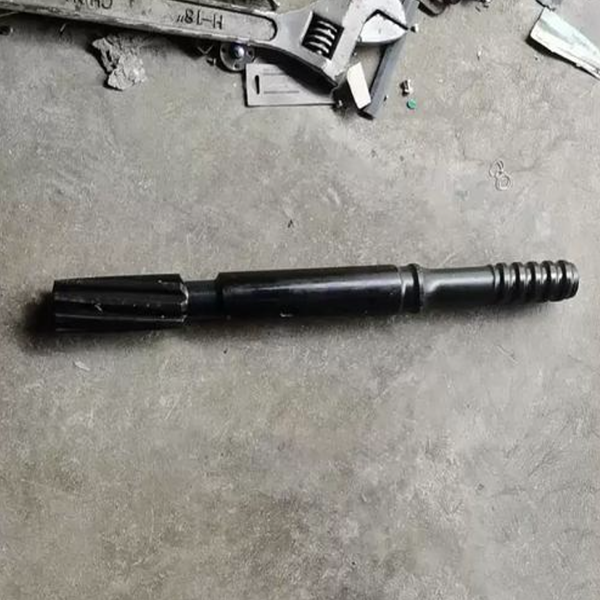
A rock drill shank is the key transmission component between a rock drill and a drill rod. Its quality affects drilling efficiency, operational safety, equipment service life, and overall project cost. Because many manufacturers compete in the market, buyers and contractors need a systematic method for identifying reliable suppliers.
1. Review Industry Experience
Suppliers with many years of experience in rock drilling tools usually have stronger process knowledge and a deeper understanding of different drilling conditions.
Buyers should check whether the company focuses on top-hammer rock drilling tools and whether rock drill shanks are a core product. A supplier that treats shanks as a strategic product is more likely to maintain dedicated technical personnel, invest in development, and continuously optimize manufacturing processes.
2. Evaluate Practical Improvement Capability
A reliable manufacturer should identify problems through actual field use and improve products based on feedback from drilling sites.
The supplier should be able to demonstrate how field data has been used to improve manufacturing processes, raise product quality, and develop new products. A practical development approach allows shanks to adapt better to changing geological conditions and demanding drilling environments.
3. Verify Quality Systems and Certifications
A complete quality management system is one of the main foundations of product reliability. Each steel batch should undergo chemical composition analysis, metallographic inspection, and mechanical-property testing.
Every major production stage should have defined control points, including first-piece inspection, in-process inspection, and final inspection. Test samples should also be evaluated after each heat-treatment batch.
Traceability is particularly important. Each shank should have a unique identification mark that can be linked to the raw-material batch, heat-treatment furnace number, and production date. ISO quality management certification is a basic qualification, but buyers should also verify whether the system is actually implemented.
4. Assess Manufacturing Capacity and Process Control
A capable supplier should control the complete production chain, from steel cutting to final packaging. Key operations such as forging, carburizing heat treatment, and grinding should preferably be completed in-house rather than heavily outsourced.
Important signs of modern production include CNC machining centers, automated heat-treatment lines, and online inspection equipment. Buyers should also review annual production capacity and critical equipment to determine whether the supplier can support volume orders with stable delivery and consistent quality.
5. Investigate Market Reputation and Business Stability
Market recognition can be assessed by reviewing the supplier’s main customer groups, cooperation cases with leading companies, customer relationship duration, and repeat-purchase rate.
After-sales capability is equally important. Buyers should understand the supplier’s technical support, response time for quality problems, and warranty commitments.
Business stability should also be checked through factors such as company age, registered capital, and tax-credit status. A stable supplier is more likely to provide continuous delivery and long-term service support.
6. Conduct a Factory Audit and Trial Order
During a site audit, buyers should examine workshop organization, equipment maintenance, employee operating practices, and production discipline.
The quality laboratory should have complete inspection equipment, valid calibration status, and authentic, complete test records. Buyers should request samples for third-party testing and field-use comparison.
A small-batch trial order is useful before full-scale procurement. It can verify dimensions, material performance, service life, batch consistency, delivery reliability, and technical response.
7. Build a Multi-Supplier Verification System
Supplier information should be cross-checked through industry associations, professional exhibitions, and recommendations from experienced industry contacts.
Different manufacturers may have different strengths in specific applications. Establishing a qualified supplier system with two or three approved manufacturers can reduce supply-chain disruption risk and improve purchasing flexibility.
8. Define Technical and Quality Responsibilities in the Contract
The purchase contract should clearly specify technical standards, material requirements, heat-treatment requirements, inspection methods, acceptance criteria, quality guarantees, after-sales response, and liability for nonconforming products.
Written and verifiable requirements ensure that the supplier evaluation results remain effective throughout purchasing, delivery, inspection, and after-sales management.
A systematic evaluation covering technology, production, quality, reputation, service, and financial stability gives buyers a better chance of selecting a rock drill shank supplier with strong technical capability, stable quality, and dependable support.