How to Choose Rock Drilling Tools for Hydraulic Drill Rigs
Hydraulic rock drill rigs are designed for high productivity in mining, tunneling, quarrying, and civil construction. But even an advanced rig cannot achieve its expected performance if the drill steel and drill bit are poorly matched to the application.
For contractors, the real target is not simply to buy the lowest-priced drilling tools. The target is to drill more accurate holes, maintain a stable penetration rate, reduce unplanned downtime, and lower the total cost per drilled meter.
A hydraulic drill rig works as a complete drilling system. The rock drill delivers impact energy, rotation, and feed force. The shank adapter transfers energy into the drill string. Drill rods carry that energy to the face. The drill bit breaks the rock. If one part of this chain has poor quality, incorrect geometry, excessive wear, or an unsuitable connection, the entire system can lose efficiency.
When choosing rock drilling tools for a hydraulic rig, three requirements deserve special attention: tool quality and reliability, drilling speed, and hole straightness.
1. Reliable Rock Drilling Tool Quality
High-quality drilling tools are essential because downtime is expensive. A hydraulic drill rig may have significant hourly operating costs, including equipment depreciation, labor, fuel or electrical consumption, maintenance, ventilation, and site support. When drilling stops because of a broken drill rod, damaged shank adapter, worn thread, or failed bit, the cost is much greater than the price of the replacement component.
A reliable drill steel system should have good straightness, sufficient stiffness, impact toughness, and consistent heat treatment. The rod body and thread section must resist fatigue, abrasion, and repeated impact loading. Poor thread quality can create loose connections, energy loss, excessive wear, and difficult uncoupling. A rod break can also leave a bit or part of the drill string in the hole, creating costly recovery work and potentially producing a wasted hole.
The shank adapter is equally important. It receives direct impact energy from the rock drill and must transmit that energy efficiently into the drill string. A shank adapter with unsuitable dimensions, poor material quality, or worn splines can cause connection problems, reduced drilling efficiency, and premature failure.
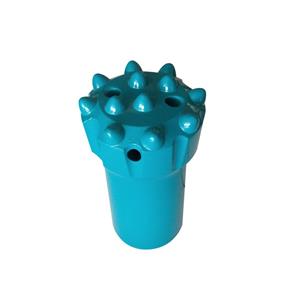
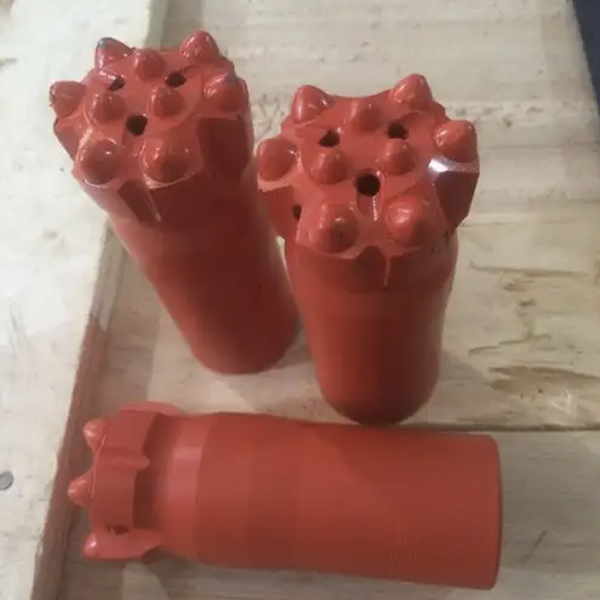
Drill bit quality matters just as much. The bit body, flushing holes, face design, carbide button layout, and thread connection should all be suitable for the rock condition and drilling method. A bit that wears too quickly or loses carbide buttons can slow drilling and increase the risk of deviation.
For this reason, drilling tool selection should focus on service life and consistency, not only purchase cost. The correct question is: how many reliable meters can this tool drill under actual site conditions?
2. Stable Penetration Rate
Penetration rate has a major influence on project economics. In many drilling operations, the cost of the drilling tools themselves is only one part of the total drilling cost. Machine time, labor, site delays, and support costs can be much larger. A tool that costs slightly more but drills faster and lasts longer may reduce the overall cost per meter.
The best drilling speed is not always the highest short-term penetration rate. Excessive impact pressure, feed force, or rotation speed can damage threads, accelerate bit wear, and increase the risk of rod failure. The goal should be stable, efficient drilling that matches the rock formation and the rig’s operating range.
Different rock types require different bit structures. Soft or fractured rock may need a face design that provides effective flushing and prevents clogging. Hard and abrasive rock may require stronger carbide buttons, a durable bit body, and a design that maintains gauge over a longer service life. In very hard formations, the bit must balance penetration ability with button support and wear resistance.
Bit diameter also affects performance. Larger-diameter holes may require more energy and careful flushing control. Smaller holes may be more sensitive to alignment and collaring accuracy. The drill rod diameter, bit diameter, and rock drill power should be selected as a matched system.
Flushing is another key factor. Air or water flushing must remove cuttings efficiently from the hole. Poor flushing can cause regrinding of cuttings, overheating, reduced penetration, and faster wear on the bit and drill string. It can also increase the chance of hole blockage.
Regular inspection is important. Operators should monitor bit wear, button condition, thread wear, rod straightness, and shank adapter condition. Regrinding a button bit at the correct time can help restore drilling performance and extend the useful life of the bit. Waiting too long may lead to broken buttons, excessive gauge loss, or damage that cannot be repaired economically.
3. Hole Straightness and Reduced Deviation
Hole deviation is one of the most important quality issues in long-hole drilling, tunneling, and controlled blasting. A hole that deviates too far from the planned path can reduce blasting accuracy, affect fragmentation, create uneven burden and spacing, and lower overall excavation efficiency.
In deep-hole blasting, deviation may reduce the usable charge length or create unsafe spacing between holes. It can also reduce the amount of rock effectively broken by each blast. As hole depth increases, small alignment errors at the collar can become larger deviations at the bottom of the hole.
Modern hydraulic drill rigs can reduce some sources of error through accurate positioning, automated feed control, and computerized drilling functions. However, tool-related factors still play a major role. A bent rod, worn thread connection, unstable bit design, or poorly matched drill string can all contribute to deviation.
Guide-type drilling tools can help reduce deviation in suitable applications. These tools are designed to improve directional stability during drilling, especially in deeper holes or demanding rock conditions. The right choice depends on the hole diameter, rock structure, drilling depth, rig configuration, and blasting requirements.
Rod straightness is also critical. A drill rod with excessive runout can cause vibration and make it difficult to keep the hole on line. Thread quality matters because poor connections may create misalignment between drill string components. The bit must also maintain proper gauge. An under-gauge bit can lose steering stability and increase the risk of hole deviation.
A System Approach to Tool Selection
The best results come from selecting drill steel, shank adapters, couplings, and bits as one system. A contractor should consider:
Rock hardness, abrasiveness, fractures, and water conditions
Hole diameter and planned hole depth
Drill rig power and impact energy
Required penetration rate and hole-straightness tolerance
Flushing method and available air or water pressure
Expected tool life and regrinding capability
Cost per drilled meter, not only the purchase price
Site trials are valuable because real drilling conditions often differ from laboratory assumptions. A reliable supplier should help evaluate drilling data, identify wear patterns, and recommend suitable tool configurations. Operators should then confirm the final setup through controlled field testing.
Conclusion
Hydraulic drill rigs achieve their best performance when they are paired with reliable, properly matched rock drilling tools. High-quality drill steel reduces downtime and failure risk. Suitable drill bits support stable penetration rates. Straight rods, accurate connections, and appropriate bit geometry help minimize hole deviation.
For mining, tunneling, quarrying, and construction contractors, the most effective strategy is to evaluate drilling tools by total operating value. The right drill string does more than drill rock. It supports productivity, blasting accuracy, safer operations, and lower cost per meter.