Hydraulic Rock Drill Maintenance: Preventing Lubrication and Rotation Failures
Hydraulic Rock Drill Maintenance: Preventing Lubrication and Rotation Failures
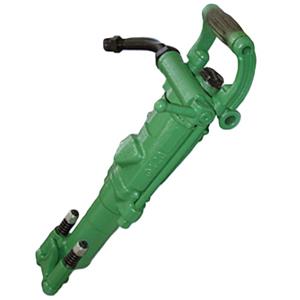
Hydraulic rock drills operate under repeated impact, high hydraulic flow, vibration, dust, and heavy mechanical loads. In surface drilling rigs, they are among the most important working components because they directly determine drilling efficiency, hole quality, and equipment availability. For this reason, hydraulic rock drill maintenance should never be treated as a simple routine task. Correct inspection, correct assembly, and use of qualified parts are essential to preventing serious failures.
Many rock drill problems occur shortly after overhaul. In most cases, the cause is not a complicated design defect. Instead, failures are often linked to incorrect part installation, blocked lubrication passages, unsuitable replacement materials, or continued operation after wear limits have been exceeded. Understanding these risks helps maintenance teams reduce downtime and protect expensive drilling equipment.
Why Lubrication Matters in a Hydraulic Rock Drill
A rock drill contains several components that work under high-speed relative motion. The shank, rotation system, support sleeve, gears, and drive sleeves need reliable lubrication to reduce friction and remove wear particles. If lubricating oil cannot reach the intended contact surfaces, metal components can overheat, wear rapidly, and produce debris that further contaminates the lubrication circuit.
The rock drill lubrication system must therefore be inspected as a complete flow path. It is not enough to confirm that oil is present in an external hose or visible in an observation cover. Maintenance personnel must verify that lubricant reaches the internal head, support sleeve, rotation mechanism, and waste-oil collection route.
A common warning sign is the absence of discharged waste oil from the collection pipe. When the external pipes appear normal and lubricating oil is present at the inlet, the fault may be inside the rock drill head. This can indicate that an internal oil passage is blocked, misaligned, or unable to deliver lubricant to the working components.
Correct Installation of the Drill Shank Support Sleeve
The drill shank support sleeve is an important wear component located in the rock drill head. It supports the shank during operation and contains lubrication grooves that distribute oil to moving surfaces. Because the sleeve works under high-speed motion, correct positioning is critical.
During assembly, the lubrication holes on the sleeve must align with the corresponding internal oil passages. If the sleeve is installed in the wrong orientation, oil may flow along the housing but fail to enter the drill head correctly. As a result, the lubrication circuit becomes ineffective even though the external system appears normal.
This type of mistake can be difficult to detect during a basic visual check. The machine may show oil in the supply line, yet the internal mechanism may receive insufficient lubrication. Over time, poor lubrication accelerates wear in the rotation system and can lead to costly damage.
A proper hydraulic drilling equipment repair procedure should include the following checks:
Confirm the orientation of all lubrication holes during assembly.
Inspect oil grooves for flattening, blockage, or abnormal wear.
Check that oil can travel through each internal passage.
Test the waste-oil discharge route after reassembly.
Record part condition and replacement decisions during overhaul.
Preventing Wear in Rotation Components
The rotation mechanism transfers torque from the hydraulic motor to the drill string. Its drive sleeves and internal gear teeth experience repeated load cycles during drilling. If these parts become worn, drilling performance can decline and metal particles may enter the lubrication system.
The drill shank support sleeve, rotation drive sleeve, and shank rotation drive sleeve should be inspected regularly for wear. Maintenance staff should look for flattened lubrication grooves, pointed gear teeth, worn chamfers, damaged splines, and abnormal clearance between mating parts.
A sleeve with severely worn gear teeth cannot transmit rotational force reliably. A flattened chamfer or worn gear profile may also create uneven loading, vibration, and further damage to connected components. Replacing worn parts before they exceed their service limit is less expensive than repairing a complete damaged rotation assembly.
Use Qualified Materials for Replacement Parts
Using low-cost, unqualified replacement parts can create major risks. For example, a replacement rotation sleeve made from unsuitable brass may wear very quickly under drilling loads. The resulting copper particles can travel through the lubrication oil, accumulate in internal passages, reduce oil flow, and damage other components.
Replacement parts should meet the original equipment requirements for material grade, heat treatment, dimensions, hardness, and machining accuracy. Saving money on a critical wear part may result in much higher repair costs, longer downtime, and reduced rig reliability.
Maintenance teams should also avoid continuing to use a part after it has reached its wear limit. Once excessive wear begins, the component can generate debris and cause secondary damage in the lubrication and rotation systems.
A Practical Maintenance Approach
Effective rock drill rotation mechanism maintenance combines scheduled inspection with careful fault analysis. Operators should monitor lubricant discharge, drilling noise, vibration, rotation performance, and visible contamination. Maintenance personnel should inspect internal oil paths and replace worn parts before failure occurs.
The most important principle is simple: a rock drill overhaul is only successful when every component is installed correctly, lubricated properly, and checked against its service standard. Attention to sleeve orientation, oil passage continuity, gear wear, and replacement-part quality can prevent avoidable breakdowns and keep drilling equipment productive for longer.