The Mechanics of Impact Rock Drilling: Energy Transfer, Feed Force and Bit Contact
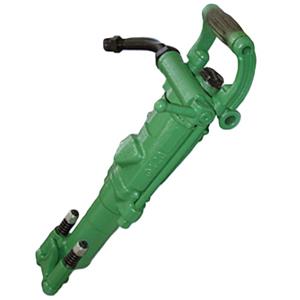
Impact rock drilling works by transferring energy from the rock drill piston through the shank, drill rod and bit into the rock. The basic principle is straightforward, but the actual energy-transfer process is highly sensitive to feed force, bit condition, flushing and connection quality.
When these factors are correctly controlled, the drill delivers more of its impact energy into breaking fresh rock. When they are not, energy is reflected back through the drill string, increasing vibration, reducing penetration and shortening tool life.
Impact Energy Travels as a Stress Wave
When the piston strikes the shank, it creates a compression wave that travels through the drill steel at very high speed. This wave carries the impact energy toward the bit. When the bit is firmly contacting the rock, part of that energy enters the formation and contributes to crushing and fracturing.
Not all impact energy is used productively. Some energy is reflected at changes in geometry, loose connections, damaged interfaces or poor bit-to-rock contact. Reflected waves can travel back into the drill string and create additional loading on the shank adaptor, coupling and drill rod.
The goal of drilling-tool design and operation is to maximize useful energy transfer while minimizing reflected energy.
Feed Force Keeps the Bit in Contact with Rock
Feed force is essential because it holds the bit against the rock surface. Without adequate feed, the bit can bounce away from the bottom of the hole. Even a small gap between the bit and rock can prevent the compression wave from entering the formation efficiently.
Instead of transferring energy to the rock, the wave reflects back into the tool system. This reflected energy may increase vibration, produce abnormal noise and accelerate wear at threaded joints and couplings.
Too much feed force can also be harmful. Excessive feed can overload the carbide, increase friction and interfere with effective rotation and flushing. The correct setting depends on rock hardness, drill power, bit design and the drilling method.
A well-adjusted feed system keeps the bit stable, maintains efficient energy transfer and reduces unnecessary stress in the tool string.
Bit Shape and Wear Affect Energy Transfer
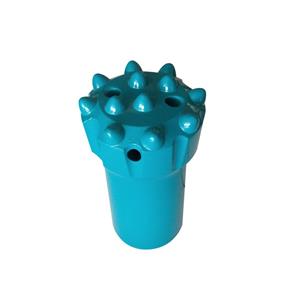
The shape of the bit face influences how the impact wave enters the rock. A properly designed button or insert pattern concentrates load where it can initiate rock fracture effectively. If the bit face becomes too flat through wear, the contact condition changes and resistance to penetration increases.
Severely worn carbide buttons, excessive gauge wear or a damaged bit face can reduce drilling efficiency. The bit may still turn and strike the rock, but a larger portion of the energy is reflected or lost through friction and repeated crushing of cuttings.
Regular bit inspection and timely grinding are therefore mechanical requirements as well as maintenance practices. Restoring the original carbide profile helps preserve the intended contact geometry and supports efficient rock breaking.
Clean the Bottom of the Hole
Rock cuttings at the bottom of the hole can act as a barrier between the bit and fresh rock. If flushing is inadequate, the bit may repeatedly strike loose fines instead of the intact formation.
This causes regrinding, reduced penetration and higher energy consumption. It may also increase dust, heat and bit wear. Effective water or air flushing removes cuttings from the bit face and allows the carbide buttons to engage clean rock.
Flushing should be matched to the bit design, hole diameter, drilling depth and rock conditions. If cuttings are not leaving the hole properly, operators should inspect the flushing holes, rod passages, water or air supply and drilling settings.
Connections Influence Wave Transmission
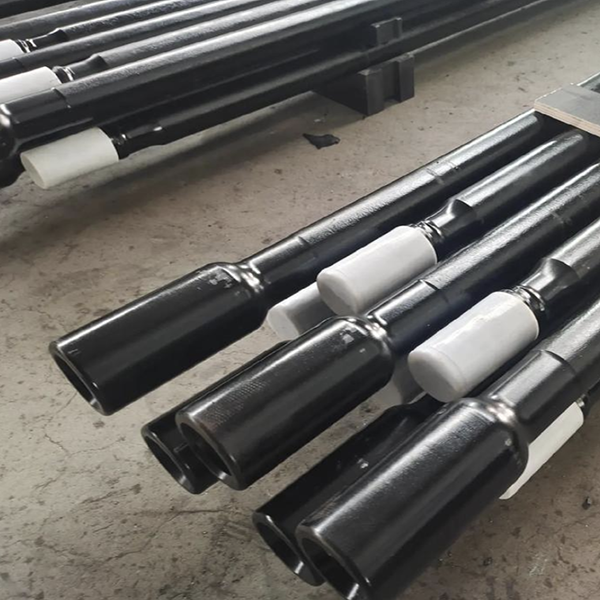
Every rod connection affects wave propagation. In an ideal drill string, all components would have compatible geometry, material properties and contact surfaces. In practice, deeper holes require multiple rods, couplings and threaded joints.
These connections can interrupt the stress wave and create energy loss. Worn threads, loose joints, poor shoulder contact or incompatible parts make the problem worse. They can also create stress concentrations that lead to fatigue cracks.
To reduce losses, drilling tools should use well-matched thread systems and properly maintained couplings. Threads must be clean, correctly engaged and lubricated when required. Worn components should be removed before they damage other tools.
Signs of Poor Energy Transfer
Operators can often recognize poor contact or excessive reflected energy through drilling behavior. Warning signs may include:
High-pitched or irregular drilling noise.
Excessive vibration in the drill string or feed beam.
Unstable penetration rate.
Abnormal bit bouncing.
Rapid thread or coupling wear.
Visible movement or misalignment in the drill setup.
These signs should prompt inspection of feed force, bit condition, alignment, flushing and tool connections. Continuing to drill under unstable conditions can shorten the life of expensive consumables and drilling equipment.
Treat Drilling as a Complete Mechanical System
Impact drilling performance is the result of several connected elements: piston energy, feed force, bit geometry, rock condition, flushing and drill-string integrity. Improving one element while ignoring the others will not produce the best result.
A sharp and correctly selected bit, stable feed force, effective flushing and well-maintained rod connections allow more energy to reach the rock. This increases penetration rate, reduces reflected stress waves and extends the working life of shanks, rods, couplings and bits.
For mining, tunneling and quarry operations, understanding these basic mechanics helps turn drilling from a reactive maintenance problem into a controlled, efficient production process.