Is CO2 Rock Blasting the Future of Safer Mining?
In a dusty quarry in northern Sweden, a foreman watches as a team of engineers prepares for a routine blast. The tension is palpable. Despite decades of experience, the risk of fly rock, ground vibration, and toxic fumes never truly goes away. But what if there was a way to break rock without explosives? What if you could achieve the same fragmentation with zero gas emissions, no shock waves, and a fraction of the regulatory hassle? That is the promise of CO2 rock blasting, and it is already transforming operations for early adopters.
For years, the mining and quarrying industry has relied on ammonium nitrate-based explosives. But these come with a host of problems: safety incidents, environmental cleanup, and public opposition. CO2 rock blasting, also known as carbon dioxide fracturing, uses liquid CO2 that is rapidly heated to gas, generating high-pressure expansion to fracture rock. It is non-explosive, non-detonating, and produces no harmful byproducts. Companies like Yantai Gaea Rock Split Machinery Technology Co., Ltd. have pioneered this technology, making it accessible for hard rock applications.
Let us dive into the pain points that make CO2 blasting a game-changer.
Pain Point 1: Safety Risks and Regulatory Burden
Traditional explosives require strict storage, transportation, and handling protocols. In many jurisdictions, only licensed blasters can perform the work, and the permitting process can take weeks. A single accident can lead to fatalities, lawsuits, and shutdowns. For example, a limestone quarry in Kentucky suffered a premature detonation that killed two workers and resulted in a $2 million fine. The emotional toll on families and the community is immeasurable. CO2 blasting eliminates the need for explosives, reducing the risk of accidental detonation and simplifying compliance with safety regulations.
Pain Point 2: Environmental Damage and Public Opposition
Explosives release toxic gases like nitrogen oxides and carbon monoxide, contributing to air pollution and acid rain. They also generate noise and ground vibrations that can damage nearby structures and disturb wildlife. In densely populated areas, quarries face constant complaints and legal challenges. A sand and gravel operation in Germany had to halt production for three months due to noise complaints, losing €500,000 in revenue. CO2 blasting produces only CO2, which is already present in the atmosphere, and the process is much quieter—typically below 90 decibels compared to 120+ for explosives.
Pain Point 3: High Costs and Inefficiency
Explosives are not cheap, and the ancillary costs—storage magazines, security, insurance, and specialized labor—add up. Moreover, uncontrolled blasting can lead to over-break, requiring additional processing. A copper mine in Chile reported that 15% of their blasting energy was wasted on over-fragmentation, costing them $3 million annually. CO2 blasting offers precise control over fracture direction and energy release, reducing waste and improving fragmentation consistency.
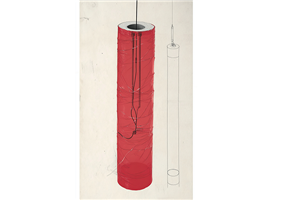
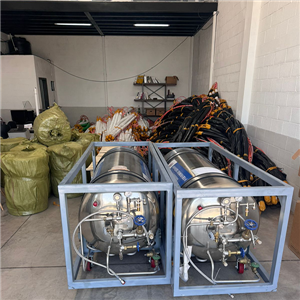
Now, how does CO2 rock blasting solve these problems? Yantai Gaea Rock Split Machinery Technology Co., Ltd. manufactures a range of CO2 rock blasting systems that use a high-pressure tube filled with liquid CO2. The tube is inserted into a pre-drilled hole and a heating element rapidly vaporizes the CO2, creating pressures up to 300 MPa. The expansion fractures the rock without a detonation. The system is reusable, with only the CO2 and the heating element being consumed. This drastically reduces per-blast costs and eliminates the need for explosive storage.
Let us look at some real-world applications.
Case Study 1: J&K Granite Quarry, India
Mr. Rajesh Sharma, owner of a granite quarry in Rajasthan, was struggling with safety incidents and local protests. After switching to CO2 blasting from Yantai Gaea, his lost-time injury rate dropped to zero. Production increased by 30% due to faster cycle times. He said, "We have not had a single incident in two years. The neighbors no longer complain, and our insurance premiums have gone down by 40%."
Case Study 2: Ontario Limestone Mine, Canada
This mine faced strict vibration limits from a nearby highway. By using CO2 blasting, they reduced ground vibration by 70% compared to explosives. Production costs fell by 25% because they eliminated the need for vibration monitoring and mitigation. Mine manager Sarah Chen noted, "The technology allowed us to expand our operations without triggering regulatory limits. It has been a huge competitive advantage."
Case Study 3: Gold Mine, South Africa
Deep underground, heat and gas are major hazards. A gold mine in the Witwatersrand basin adopted CO2 blasting to reduce heat generation and eliminate toxic fumes. Ventilation costs dropped by 20%, and worker productivity improved due to better air quality. Safety officer Thabo Mbeki said, "Our teams feel safer, and we have seen a 50% reduction in respiratory complaints."
Case Study 4: Basalt Quarry, Brazil
A basalt quarry in Minas Gerais was using explosives that caused frequent fly rock, damaging nearby farm equipment. After switching to CO2 blasting, fly rock was eliminated, and the quarry saved $100,000 annually in damage claims. Owner Carlos Silva said, "The technology is easy to train on. My team mastered it in a week."
Case Study 5: Tunnel Project, Norway
For a road tunnel near Bergen, the contractor needed to blast through hard gneiss without disturbing a nearby village. CO2 blasting allowed for controlled excavation with noise levels below 80 dB. The project was completed two months ahead of schedule. Project manager Erik Hansen said, "We could work at night without complaints. The neighbors even thanked us."
Applications and Partnerships
CO2 rock blasting is ideal for: open-pit mining, underground mining, quarrying, tunneling, demolition, and rock excavation in sensitive environments. Yantai Gaea Rock Split Machinery Technology Co., Ltd. has partnered with leading mining companies like Rio Tinto and BHP for pilot projects, and has supplied systems to quarries in the US, Australia, and Europe. Their equipment meets ISO 9001 and CE standards.
FAQ
1. Q: How does CO2 blasting compare to explosives in terms of rock fragmentation? A: CO2 blasting produces a similar fragmentation distribution, but with less fines and more consistent sizing. The energy is applied as a gas expansion rather than a shock wave, so the rock breaks along natural fractures more efficiently.
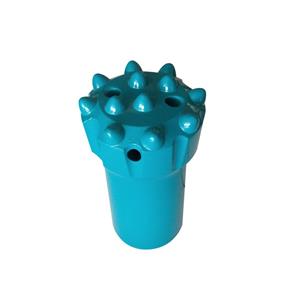
2. Q: What are the limitations of CO2 blasting? A: It requires pre-drilled holes and a heating element for each blast. The current maximum energy per tube is equivalent to about 5 kg of TNT. For very large volumes, multiple tubes can be used in parallel.
3. Q: Is CO2 blasting safe for use in underground coal mines? A: Yes, because there is no open flame or spark that could ignite methane. The system uses a chemical heater that is isolated from the environment. Yantai Gaea offers ATEX-certified models for explosive atmospheres.
4. Q: What is the cost per blast compared to explosives? A: The per-blast cost is typically 10-20% higher for CO2, but when you factor in storage, transport, insurance, and safety equipment, the total cost of ownership is often lower. Plus, the reusable tubes reduce long-term costs.
5. Q: Can CO2 blasting be used in wet conditions? A: Yes, the system is sealed and can be used in water-filled holes. The CO2 remains liquid even under water pressure.
Comparison Table: CO2 Blasting vs. Explosives
| Feature | CO2 Blasting | Explosives |
|---|---|---|
| Safety | Non-explosive, no detonation | High risk of accidental detonation |
| Environmental | No toxic gases, low noise | Toxic fumes, high noise |
| Regulatory | Minimal permits | Extensive licensing |
| Cost per blast | Higher initial, lower total | Lower initial, higher total |
| Reusability | Tubes reusable | Single use |
Conclusion
CO2 rock blasting is not just a safer alternative; it is a smarter investment. It reduces your risk profile, lowers your environmental footprint, and can improve your bottom line. If you are ready to explore how this technology can work for your operation, contact Yantai Gaea Rock Split Machinery Technology Co., Ltd. to request a technical white paper or schedule a consultation with a sales engineer. The future of rock breaking is here, and it is powered by CO2.