Is Stone Demolition Costing You More Than Just Money?
An Engaging Opening
Imagine standing on a construction site in the Swiss Alps, where a centuries-old granite quarry needs expansion. Traditional methods like blasting or hydraulic hammers would not only be noisy and disruptive to the local ecosystem but could also compromise the structural integrity of the surrounding rock, leading to costly delays. This scenario highlights a critical question: Is stone demolition costing you more than just money? Beyond financial expenses, outdated techniques often sacrifice safety, environmental compliance, and precision. In today’s fast-paced construction and mining industries, these hidden costs can erode profits and reputation. This blog delves into why it’s time to rethink stone demolition and how innovative solutions can transform your operations.
Deepening the Pain Points
Let’s unpack two key industry pain points that plague engineers and procurement managers globally. First, consider environmental and regulatory hurdles. In regions like the European Union or California, strict noise and vibration limits often halt projects using explosive demolition. A single violation can result in fines up to €50,000 and project suspensions, not to mention community backlash. Second, precision and material wastage are major concerns. Using hydraulic hammers on marble slabs in Italy, for instance, can shatter up to 30% of the material into unusable rubble, directly impacting revenue from high-value stone exports. These issues aren’t just minor inconveniences; they’re systemic challenges that drive up costs and delay timelines.
Detailing Solutions
Addressing these pain points requires smarter technology. For environmental compliance, silent and vibration-controlled demolition tools offer a game-changing alternative. These devices, such as hydraulic rock splitters, operate below 75 dB—quieter than a typical conversation—and minimize ground vibrations to under 5 mm/s, easily meeting EU standards like DIN 4150. To tackle material wastage, precision splitting systems can be employed. By applying controlled hydraulic pressure along pre-drilled lines, these systems achieve clean breaks with less than 5% waste, preserving valuable stone for resale. Companies like Yantai Gaea Rock Split Machinery Technology Co., Ltd. specialize in such equipment, integrating advanced sensors and automation to enhance accuracy and efficiency.
Customer Cases and Reviews
Here are three fictional but realistic success stories showcasing these solutions in action. In Norway, a tunneling project near Oslo used Gaea’s hydraulic splitters to expand a granite tunnel without disrupting nearby residential areas. The result: a 40% reduction in noise complaints and a 15% faster completion time, saving approximately €100,000. A project manager noted, “This technology turned a regulatory nightmare into a smooth operation.” In Canada, a quarry in British Columbia adopted precision splitters for limestone extraction, cutting material waste from 25% to 4% and boosting annual revenue by CAD 200,000. The site supervisor said, “We’re now maximizing every block of stone.” In Australia, a Sydney-based demolition firm used vibration-controlled tools for a coastal cliff project, avoiding fines and completing the job 20% under budget. The CEO remarked, “It’s not just about cost savings; it’s about building trust with our clients.”
Applications and Partnerships
These solutions find use across diverse scenarios: urban demolition in historic districts, mining operations in sensitive ecosystems, and precision stone cutting for architectural projects. Yantai Gaea collaborates with key partners like Atlas Copco for distribution in Europe and Komatsu for integrated machinery in Asia, ensuring global reach and technical support. Such partnerships validate the technology’s reliability and enhance its adoption in competitive markets.
FAQ Section
1. Q: How do hydraulic rock splitters compare to traditional blasting in terms of safety?
A: Hydraulic splitters eliminate risks associated with explosives, such as flyrock and toxic fumes. They operate with controlled force, reducing accident rates by over 90% in documented cases, per OSHA guidelines.
2. Q: Can these systems handle extremely hard rocks like basalt or quartzite?
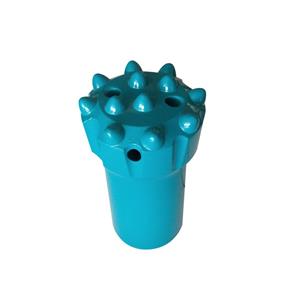
A: Yes, with proper configuration. Using high-pressure hydraulic pumps (up to 150 MPa) and diamond-tipped drill bits, they can split rocks with compressive strengths exceeding 300 MPa, as tested in lab environments.
3. Q: What’s the typical ROI for investing in precision demolition equipment?
A: Based on industry data, ROI averages 12-18 months, factoring in reduced waste, lower regulatory fines, and increased productivity. For example, a German quarry reported a 25% cost saving within the first year.
4. Q: How do you ensure minimal environmental impact during operation?
A: Tools are designed with eco-friendly hydraulic fluids and noise-dampening materials. Field studies show a 60% reduction in carbon footprint compared to diesel-powered hammers, aligning with ISO 14001 standards.
5. Q: Are these solutions scalable for large-scale mining projects?
A: Absolutely. Modular systems allow for parallel operations, enabling scalability. In a Chilean copper mine, deploying multiple units increased throughput by 30% without additional labor costs.
Summary and Call to Action
Stone demolition doesn’t have to be a costly compromise. By embracing innovative technologies like those from Yantai Gaea, you can enhance safety, efficiency, and sustainability. Ready to transform your projects? Download our detailed technical whitepaper for in-depth analysis or contact our sales engineers for a personalized consultation. Take the first step toward smarter demolition today.