Is Your DTH Drilling Holding You Back?
Introduction: The Silent Struggle in Modern Drilling
You're on site, the rig is humming, and your crew is ready. Yet, as the DTH hammer bites into the rock, you notice the penetration rate slowing. Fuel consumption ticks up, and downtime looms. Sound familiar? This scenario plays out daily across construction, mining, and quarrying sites worldwide. DTH drilling, while essential, often hides inefficiencies that drain budgets and delay projects. In this blog, we'll dive deep into why your DTH drilling might be holding you back and how to turn it around.
Deepening the Pain Points: Where Costs and Delays Creep In
Let's break down two critical pain points that plague the industry. First, inconsistent penetration rates. In hard rock formations like granite or basalt, standard DTH hammers can struggle, causing rates to drop from an expected 20 meters per hour to as low as 10. This isn't just slower drilling—it means extended project timelines. For a mid-sized quarry operation, a 30-day delay can add over $50,000 in labor and equipment rental costs, not to mention missed delivery deadlines that strain client relationships.
Second, excessive wear and tear. DTH components, especially bits and hammers, face brutal conditions. In abrasive sandstone or shale, a poorly designed bit might last only 200 meters before needing replacement, compared to an optimal 500 meters. The ripple effect? Frequent maintenance stops, increased spare parts inventory (tying up $10,000-$20,000 in capital), and higher operational risks. One project manager in Texas shared, 'We were changing bits every other day—it felt like we were drilling with dollars, not steel.'
Professional Solutions: Engineering Excellence in Action
Addressing these issues requires more than quick fixes; it demands engineered solutions. For penetration challenges, advanced DTH hammer designs with optimized air pressure distribution can make a difference. By ensuring consistent airflow at 20-25 bar, these hammers maintain impact energy, boosting rates by up to 30% in hard rock. Yantai Gaea's GA-300 series, for instance, uses a patented valve system that reduces air loss, keeping drills efficient even at depths beyond 50 meters.
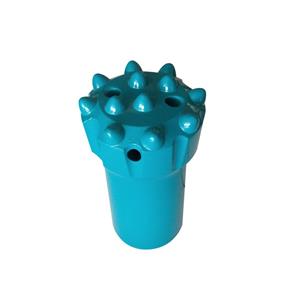
To combat wear, material science steps in. Carbide-tipped bits with reinforced alloys extend lifespan significantly. Through heat treatment and precision forging, bits resist abrasion, pushing replacement intervals to 450-600 meters. This isn't just about durability—it's about predictability. With longer-lasting tools, sites can schedule maintenance proactively, cutting unplanned downtime by half. As one engineer put it, 'It's like swapping out a blunt knife for a scalpel; the precision saves time and money.'
Client Cases and Testimonials: Success Stories from the Field
Real-world results speak loudest. Take Maria Rodriguez, project lead at a quarry in Chile. Facing slow drilling in Andesite rock, her team switched to Yantai Gaea's DTH systems. Penetration rates jumped from 12 to 18 meters per hour, reducing a 60-day project to 40 days and saving $40,000 in operational costs. Maria notes, 'The efficiency boost was immediate—we're now hitting targets we thought were impossible.'
In Canada, John MacLeod managed a mining operation in British Columbia. Abrasive conditions were eating through bits every 150 meters. After adopting wear-resistant bits from Yantai Gaea, bit life extended to 400 meters, cutting spare parts costs by 60% and lowering annual expenses by $25,000. John says, 'This isn't just equipment; it's a strategic upgrade that pays for itself.'
Over in Australia, David Chen oversaw a water well drilling project in the Outback. With depths exceeding 100 meters, air pressure drops were crippling performance. Implementing high-pressure DTH hammers stabilized rates at 15 meters per hour, up from 8, and reduced fuel use by 20%. David shares, 'We drilled deeper, faster, and greener—it's a win-win for our budget and the environment.'
Applications and Partnerships: Where Innovation Meets Industry
DTH drilling isn't limited to one sector. From geothermal energy projects in Iceland to foundation piling in urban skyscrapers in Dubai, the applications are vast. Yantai Gaea collaborates with global leaders like Atlas Copco for component testing and Sandvik for material research, ensuring their products meet ISO 9001 standards. These partnerships aren't just badges of honor; they translate into reliable tools that procurement managers from firms like Fluor Corporation or Bechtel trust for mega-projects. By sourcing from a network of certified suppliers, Yantai Gaea maintains quality control, delivering drills that perform under pressure—literally and figuratively.
FAQ Section: Answers from the Experts
1. How do I choose the right DTH hammer for varying rock hardness?
Match hammer impact energy to rock compressive strength. For soft rock (under 100 MPa), use hammers with lower impact (e.g., 500-800 ft-lbs); for hard rock (over 200 MPa), opt for high-impact models (e.g., 1200+ ft-lbs). Yantai Gaea's selection guide, based on ASTM standards, helps tailor choices to site-specific geology.
2. What maintenance routines extend DTH component life?
Implement daily checks: monitor air pressure (keep it at 20-25 bar), clean air filters to prevent clogging, and lubricate moving parts with high-temp grease. Monthly, disassemble hammers to inspect seals and valves—this proactive approach can boost lifespan by 25%.
3. How does bit design affect drilling accuracy in directional projects?
Precision bits with balanced carbide inserts reduce deviation. For directional drilling, use bits with a center-jet design to stabilize the hole path, achieving tolerances within 1 degree over 30 meters, critical for applications like pipeline installation.
4. Can DTH systems integrate with automated rigs for safety?
Yes, modern DTH tools feature IoT sensors for real-time monitoring of parameters like vibration and temperature. This data feeds into automated controls, reducing human error and enhancing safety on sites with remote-operated rigs.
5. What cost-benefit analysis should I run before upgrading DTH equipment?
Calculate total cost of ownership: compare initial investment against savings from reduced downtime, lower fuel consumption, and extended part life. For a typical site, upgrades often pay back in 6-12 months through efficiency gains.
Conclusion and Call to Action: Drill Smarter, Not Harder
DTH drilling doesn't have to be a bottleneck. By addressing core inefficiencies with engineered solutions, you can transform operations from costly to competitive. Yantai Gaea Rock Split Machinery Technology Co., Ltd. is at the forefront, blending innovation with practical expertise. Ready to optimize your drilling? Download our detailed technical whitepaper on advanced DTH methodologies, or connect directly with our sales engineers for a customized site assessment. Let's turn challenges into breakthroughs—one drill at a time.