Liquid Oxygen Rock Breaking Systems for Controlled Engineering Applications
Liquid Oxygen Rock Breaking Systems for Controlled Engineering Applications
Liquid oxygen rock breaking is a specialized approach to controlled rock fragmentation. It is often discussed for mining, road and railway construction, foundation excavation, tunnel-related works, secondary rock breaking, and restricted construction environments where conventional blasting may require additional review or may not be the preferred solution.
The technology should be evaluated as a project-specific engineering option, not as a universal replacement for traditional blasting. Rock conditions, site constraints, production targets, local rules, logistics, and safety controls all influence whether a liquid-oxygen-based rock-breaking system is appropriate.
The Basic Engineering Concept
At a high level, liquid oxygen is a cryogenic industrial gas with strong oxidizing properties. In a properly designed and professionally managed rock-fracturing system, a controlled energy-release process generates expanding gases within a confined rock-breaking assembly. The resulting force is intended to act on the surrounding rock mass and its natural discontinuities.
This differs from conventional explosive blasting in both system configuration and project-management requirements. However, the distinction does not remove risk. Liquid oxygen, pressure components, cryogenic handling, oxygen enrichment, electrical systems, and site exclusion controls all require qualified planning and trained personnel.
Yantai Gaea approaches these projects through technical assessment and suitable system selection rather than broad claims that one method can solve every rock-breaking challenge.
Equipment and System Considerations
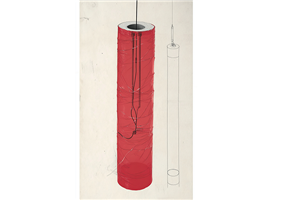
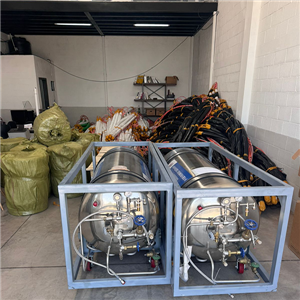
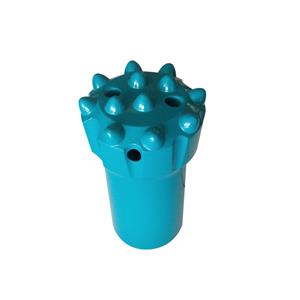
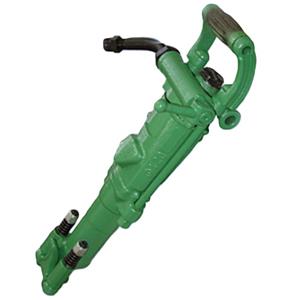
A liquid oxygen rock-breaking solution can involve storage and handling equipment, controlled filling equipment, rock-fracturing assemblies, compatible accessories, and an approved initiation or control system. Equipment integrity is important because field conditions may include dust, moisture, vibration, temperature variation, and difficult access.
For project teams, the main questions are not only about the equipment itself but also about whether the complete system fits the job:
Does the selected method suit the rock type and fracture pattern?
Can the site safely accommodate cryogenic and oxidizing materials?
Are qualified operators, safety procedures, and emergency arrangements available?
Can local transportation, storage, fire-safety, and work-permit requirements be met?
Is the project near homes, utilities, roads, railways, or sensitive structures?
Will the expected excavation volume justify the method and support equipment?
A supplier should be able to discuss these questions transparently before a project begins.
Suitable Application Scenarios
Liquid oxygen rock breaking may be considered for controlled excavation tasks where a project requires careful evaluation of vibration, noise, flyrock, access limitations, or restrictions on conventional explosives. Typical discussions include:
Rock removal near residential or industrial facilities
Road and railway foundation excavation
Foundation pits, trenches, and restricted urban work sites
Secondary breaking of isolated boulders
Tunnel, slope, and controlled demolition preparation
Mining areas with specific operational or regulatory constraints
Each scenario should be reviewed independently. Large-scale, high-volume quarrying or mine stripping may still favor conventional drilling-and-blasting methods because of their production scale and established operating model. A liquid oxygen system can be more relevant where control, access, or regulatory conditions outweigh pure volume efficiency.
Cost Must Be Evaluated as a Complete Project Cost
Material cost alone is not a reliable basis for comparing rock-breaking technologies. A realistic project calculation should consider drilling requirements, equipment mobilization, labor, site preparation, safety controls, consumables, production rate, material logistics, and any delays caused by local restrictions.
For some small-volume, restricted-access, or sensitive-area tasks, controlled gas-based rock breaking may offer practical benefits. For larger, uniform rock masses, a conventional approach may remain more economical. The best choice depends on verified site conditions, not generalized cost claims.
Environmental and Compliance Factors
Projects in urban areas, ecological zones, or near critical infrastructure often face heightened environmental and safety expectations. Controlled rock-breaking technologies may be considered when teams need to manage disturbance carefully, but no method should be described as impact-free.
Before deployment, project owners and contractors should confirm the applicable requirements for hazardous-material management, occupational health, fire prevention, transport, environmental protection, contractor qualification, and local authority approvals. Product classification and project compliance should be confirmed with relevant authorities rather than assumed from marketing descriptions.
A Responsible Implementation Path
Yantai Gaea recommends a disciplined decision process: evaluate geology and site restrictions, confirm legal and safety requirements, select a technically suitable system, prepare an approved work plan, train authorized personnel, and validate performance under controlled project conditions.
Liquid oxygen rock-breaking work must be carried out only by trained and authorized professionals under site-specific engineering review and a documented safety plan. Detailed operating parameters, material formulations, filling procedures, electrical initiation practices, and abnormal-condition handling must be governed by approved technical documentation and local regulations.