New shank adapter worn flat in four to five days? Root causes and complete fixes
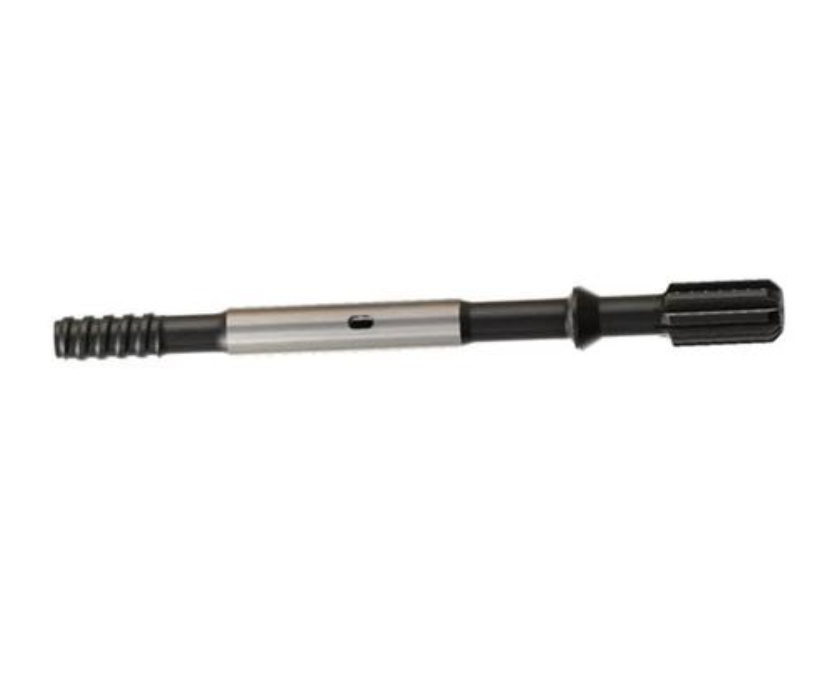
Anyone who works in rock drilling has probably seen this aggravating problem: a brand-new shank adapter gets worn smooth after only four or five days. Once the thread is damaged the rig has to stop, work grinds to a halt, schedules slip, and frequent shank replacements and repairs drive maintenance costs up. Here’s a clear, practical explanation of why the threads wear so fast and what to do about it.

I. Find the real culprits: two core problems that destroy shank threads Rapid thread wear rarely has a single cause. In practice it’s almost always the result of two problems occurring together: incorrect machine settings and improper operation.
Incorrect machine parameters — “dry hitting” grinds the threads Impact pressure and feed (thrust) pressure on the drill rig must be matched. If they’re mismatched, the bit will “dry hit”: the bit does not stay fully engaged with the rock face, so the impact energy has nowhere to go and concentrates on the threaded connection instead, producing repeated high-frequency impacts at the thread. That pounding quickly wears the thread profile down, loosens the connection, degrades energy transfer, and then the tool slips more easily — creating a vicious cycle of more dry hits and faster wear.
Improper operation — misuse and rule-breaking accelerate failure Poor operating habits are an even bigger killer. On many sites crews use the drill rig as a pry bar, employing the shank adapter to lever or pry loose rock — an operation the tool is not designed for. Others simply start holes at maximum impact ("high-impact start"), subjecting the threads to forces beyond design limits. Both practices introduce chaotic loads to the threaded connection, accelerating wear and in bad cases causing thread failure, stuck tools, and component breakage.
II. How to stop it for good: set the machine right and enforce correct operation Replacing parts alone won’t fix the underlying problem. The remedy is straightforward: properly tune the machine parameters and enforce disciplined operating procedures. Do both and you’ll save parts, time and money.
Match impact and feed to avoid dry hitting Impact and feed pressure on the drilling carriage must be balanced to keep the bit engaged and transfer energy into the formation rather than into the threads. If set incorrectly, the bit will repeatedly lift off and an impact energy pulse will instead dissipate at the thread connection.
Practical, three-step parameter tuning (match the rock)
Trial drilling to assess conditions: before full work starts, drill a few test holes to judge rock hardness and fracturing.
Adjust by rock type: for hard rock, increase impact energy and slow the feed; for soft rock, reduce impact and increase feed speed so energy is consumed in cutting rather than bouncing. This helps the bit remain in contact with the face.
Monitor and fine-tune during drilling: have an experienced operator or foreman observe cuttings evacuation, vibration and machine behavior. Make small adjustments immediately if you see signs of poor engagement or unstable operation.
Enforce proper operating rules — don’t let crews abuse the rig Clear rules and consistent enforcement cut wear dramatically. Implement these three measures:
Draw the hard red line: explicitly prohibit using the drilling carriage for prying, forbidding high-impact starts, and other unsafe shortcuts.
Daily inspections: before work each day have a safety officer or senior technician check shank threads with a gauge or ruler. Replace adapters that show significant profile wear — don’t keep using compromised parts.
Ongoing crew training: hold periodic briefings showing real examples of damage caused by bad habits, teach how to tune parameters to maximize tool life, and make sure crews understand the cost and downtime implications. Once technicians know what to do and why, compliance improves.
Conclusion Fast shank-thread wear is not an insoluble problem. The core solution is simple: make the machine “match” the rock, and make sure operators follow proper procedures. Do those two things and shank adapters will last much longer, rigs will break down less, schedules will be more reliable, and overall operating cost will fall — which is the most economical outcome of all.