Nickel Industry Trends and Their Impact on Rock Drilling Tools
Nickel Industry Trends and Their Impact on Rock Drilling Tools
Nickel is a strategic non-ferrous metal and a key raw material for stainless steel and high-performance alloys. Its production structure, supply security, and price movements have a direct effect on the rock drilling tool industry.
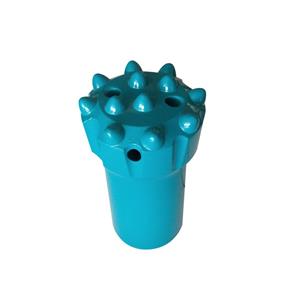
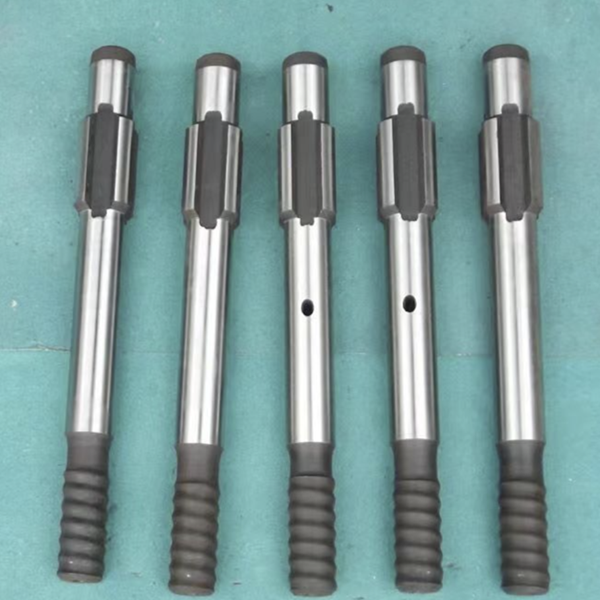
Nickel is widely relevant to threaded drill rods, button bits, high-pressure DTH hammer pistons, and DTH drill bits that use nickel-alloy steels. As the nickel market changes, drilling-tool manufacturers face both short-term cost pressure and long-term opportunities for higher-performance products.
Global Nickel Supply
Global nickel production is highly concentrated in Indonesia. In 2025, Indonesia accounted for approximately 67% of worldwide nickel-element output.
China continues to rely heavily on imported nickel resources while increasing refined-nickel output. China’s nickel-resource import dependence remains above 80%, encouraging Chinese companies to develop integrated projects in Indonesia and establish an “overseas resources plus domestic deep processing” supply model.
Nickel feedstocks follow different production routes. Sulfide nickel ore is mainly used for high-grade electrolytic nickel, while laterite nickel ore is a major feedstock for nickel pig iron and nickel sulfate. Refined nickel produced through Indonesian laterite-ore routes has also gained delivery eligibility.
Policy and Supply Risks
Although overall nickel supply has been relatively adequate, Indonesian mining policy can significantly affect availability and cost.
Indonesia has tightened mining quotas and plans to reduce ore output in 2026. It may also introduce separate taxation for cobalt. Such changes can increase raw-material costs and create uncertainty for nickel consumers.
The article forecasts that Indonesia’s 2026 quota measures could reduce global nickel supply by 8.1%, potentially moving the market from surplus toward shortage.
Demand, Technology, and Price Outlook
Nickel demand is expected to diverge across end markets. Stainless-steel demand may grow moderately, while electric vehicles are expected to support long-term nickel-sulfate demand. Domestic nickel-sulfate output is projected to grow at an average annual rate of more than 12% between 2025 and 2030.
Technology is also evolving. Hydrometallurgical processing continues to improve, recycled-nickel recovery is accelerating, and lower-carbon production is becoming an important industry direction.
The article expects nickel prices to enter a volatile upward cycle in 2026, with a core range of RMB 130,000 to RMB 150,000 per tonne. Policy changes and macroeconomic conditions remain major price variables.
Impact on Rock Drilling Tool Manufacturers
Higher Material Costs
Rising nickel prices increase purchasing costs for nickel-alloy steel and related materials. Manufacturers must improve quotation discipline, inventory management, and material-cost control.
Support for High-End Tool Development
Improved availability of higher-grade nickel materials can support the development of advanced drilling tools for deep mining, hard-rock excavation, and other demanding applications. Better alloy materials can help improve impact resistance, fatigue life, wear resistance, and operating reliability.
Supply-Chain Restructuring
The concentration of global nickel supply increases the need for diversified procurement channels. Rock-drilling tool manufacturers may need to strengthen supplier qualification, diversify material sourcing, and expand recycled-material recovery.
Recycling worn products and recovering nickel-bearing materials can reduce dependence on primary resources and ease raw-material supply pressure.
Industry Outlook
Nickel supply restructuring and price increases will create short-term cost challenges for rock drilling tool manufacturers. Over the longer term, these changes may accelerate the industry’s move toward high-performance products, greener production, recycled-resource use, and more resilient supply chains.
Manufacturers with strong cost control, materials research capability, and diversified supply-chain planning will be better positioned to compete.