Controlling Flyrock Risk in Open-Pit Mining Blasts
Flyrock is one of the most serious hazards associated with open-pit blasting. It can damage equipment, infrastructure, and nearby property, and it presents a direct threat to workers and the public. Unlike the main muckpile, flyrock fragments can travel in unpredictable directions and distances, which makes risk control essential.
Effective flyrock management requires more than a single protective measure. It depends on competent blast design, accurate field execution, geological awareness, disciplined exclusion-zone control, and a clear stop-work process when conditions differ from the approved plan.
Why Flyrock Occurs
Flyrock can result from a combination of geological, design, and execution factors.
Rock masses are naturally variable. Joints, fractures, faults, weak seams, and other discontinuities may create paths where energy is released unevenly. These conditions can be difficult to identify fully before work begins, especially in complex open-pit environments.
Design and execution issues can add further risk. Examples include drilling deviations, changed bench conditions, inadequate confinement, inaccurate field measurements, unsuitable sequencing, or a mismatch between the approved design and actual rock conditions. Any variation can change how energy interacts with the rock mass.

Where Risk May Develop
Potential flyrock sources may occur near the collar area, through poorly confined zones, and in areas where rock resistance differs from expectations. Site teams should identify these risks during pre-blast inspection, review the results against the approved design, and escalate abnormal conditions to qualified blasting personnel.
A safe decision is often to pause, reassess, and update the approved plan rather than continuing with unverified assumptions.
Risk-Control Framework
A robust flyrock-control programme should include:
Detailed geological and site-condition assessment
Approved blast design prepared by qualified professionals
Verification of drilling quality and actual field conditions
Controlled material handling and confinement in line with the approved plan
Clear blast exclusion zones based on risk assessment and applicable regulations
Visible warning systems, communications, and trained guards
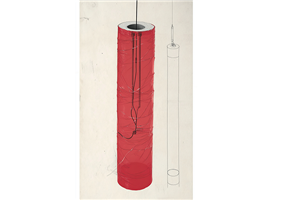
Suitable protective coverage where required by the approved design
Post-blast inspection before reopening the area
Documentation of deviations, observations, and corrective actions
No one should enter the exclusion zone until the responsible blasting authority has completed the required clearance process.
Importance of Field Management
Many blast incidents are linked to execution and management failures rather than a single isolated technical issue. Strong site management includes role clarity, pre-blast briefings, weather monitoring, equipment checks, access control, and a firm stop-work authority.
Drilling records, bench conditions, and changes observed during preparation should be communicated to the blasting engineer before firing. When geology, drilling results, or site conditions differ materially from the approved plan, the plan should be reviewed by qualified personnel.
Alternative Rock-Breaking Methods
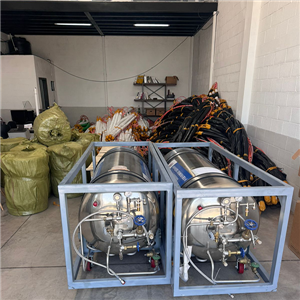
Where conventional blasting creates unacceptable sensitivity around people, infrastructure, vibration limits, or permitting conditions, a non-traditional rock-breaking method may be considered. The Gaea Rock O2 Gas Energy Rock Splitting System uses rapid liquid-oxygen phase-change energy rather than conventional explosive formulations.
Its use still requires qualified engineering review, appropriate training, local regulatory compliance, and a site-specific safety plan. Technology selection should be based on the rock mass, project constraints, surrounding environment, and desired production outcome.
Conclusion
Flyrock control is a complete operational discipline, not a single design parameter. The strongest protection comes from combining competent engineering, verified field conditions, strict exclusion-zone management, trained personnel, and conservative decision-making whenever uncertainty exists.