Basic Requirements and Types of Blasting Operations in Open-Pit Mining
Basic Requirements and Types of Blasting Operations in Open-Pit Mining
Blasting is a critical link in open-pit mining. Its role is to fragment and loosen rock so that downstream loading, hauling, and crushing operations can proceed efficiently. The quality of a blast directly affects productivity, equipment utilization, operating costs, and site safety.
A well-managed blasting program is not simply about breaking rock. It must provide suitable material for the entire mining process while controlling risks to people, equipment, surrounding infrastructure, and the environment.
Key Requirements for Open-Pit Mining Blasting
Adequate Blasted-Rock Reserve
Mining operations need a sufficient reserve of blasted material to keep loading equipment working continuously. If the available rock supply is too low, excavators and loaders may be forced to wait for the next blast cycle. This can reduce equipment utilization, interrupt production schedules, and increase unit operating costs.
A coordinated production plan helps ensure that blasting, loading, hauling, and processing remain aligned.
Suitable Fragmentation Size
Fragmentation is one of the most important measures of blast performance. Rock fragments must be compatible with the capacity of loading equipment and the feed opening of the primary crusher.
Oversized material can slow loading, damage equipment, create crusher blockages, and require secondary breaking. On the other hand, excessive fines may also affect handling and processing performance. Blast planning should therefore aim for consistent, process-appropriate fragmentation.
A Stable and Manageable Blast Pile
Blast-pile shape has a direct effect on loading efficiency and selective mining. A suitable pile should be concentrated, reasonably loosened, and accessible to loading equipment without creating unnecessary operational difficulty.
In mines with varying ore grades or geological zones, preserving material separation is also important. Poor blast-pile control can mix different materials, complicating grade control and reducing resource recovery.
Effective Hazard Control
Blasting can create vibration, flyrock, dust, noise, and possible effects on nearby slopes or infrastructure. These risks must be managed through approved blast designs, exclusion zones, communication procedures, trained personnel, and site-specific monitoring.
Safety decisions should be based on regulatory requirements, geotechnical conditions, environmental constraints, and the mine’s formal blast-management plan. Explosive selection, charge design, timing, and initiation methods must only be determined and implemented by authorized blasting professionals.
Integrated Blast Design
The most effective blast design supports the full mining value chain. It considers geology, rock properties, production targets, drilling quality, equipment capability, loading requirements, haulage conditions, and crushing performance.
When blasting is coordinated with downstream processes, mines can reduce avoidable rehandling, equipment downtime, excessive energy use, and total operating cost.
Common Types of Open-Pit Mining Blasting
Large-Scale Overburden Blasting
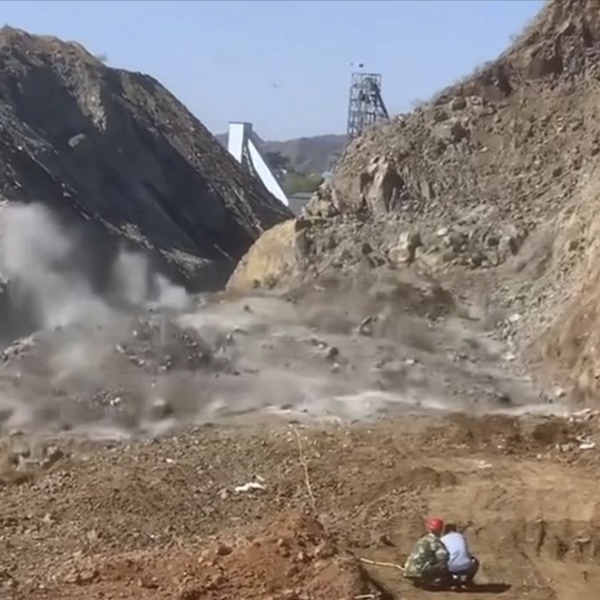
During mine development, large-scale overburden blasting may be used to remove rock or soil covering an orebody. Its objective is to open access to the deposit and prepare safe, workable mining areas. Such projects require especially rigorous engineering review, permitting, environmental planning, and safety controls.
Production Bench Blasting
Production bench blasting is the routine method used to supply broken rock for daily open-pit operations. It is carried out in planned sections of a mining bench and is designed to produce material suitable for loading, hauling, and crushing.
The design must balance fragmentation quality, blast-pile movement, slope protection, and operational continuity.
Controlled Blasting
Controlled blasting is used where mining takes place near sensitive areas, infrastructure, unstable rock, or other assets requiring protection. The goal is to limit the effects of blasting, including vibration, noise, flyrock, and unintended rock breakage.
This approach is especially important in complex mining environments and in areas close to public infrastructure or occupied facilities.
Open-pit blasting delivers the best results when it is managed as part of an integrated mining system. Careful planning, qualified personnel, compliant procedures, and continuous performance review help improve efficiency while keeping safety at the center of operations.