Open-Pit Mining: From Drilling and Blasting to Water Control and Mine Rehabilitation
Open-pit mining looks simple from a distance: drill the rock, break it, load it, and haul it away.
In practice, a safe and productive open-pit mine depends on several connected systems. Bench geometry affects drilling. Drilling quality affects blasting. Blasting affects loading, hauling, crushing, slope stability, dust, drainage, and eventually the cost of rehabilitation.
Understanding the complete workflow is more useful than looking at any single machine in isolation.
1. The two basic types of open-pit mine
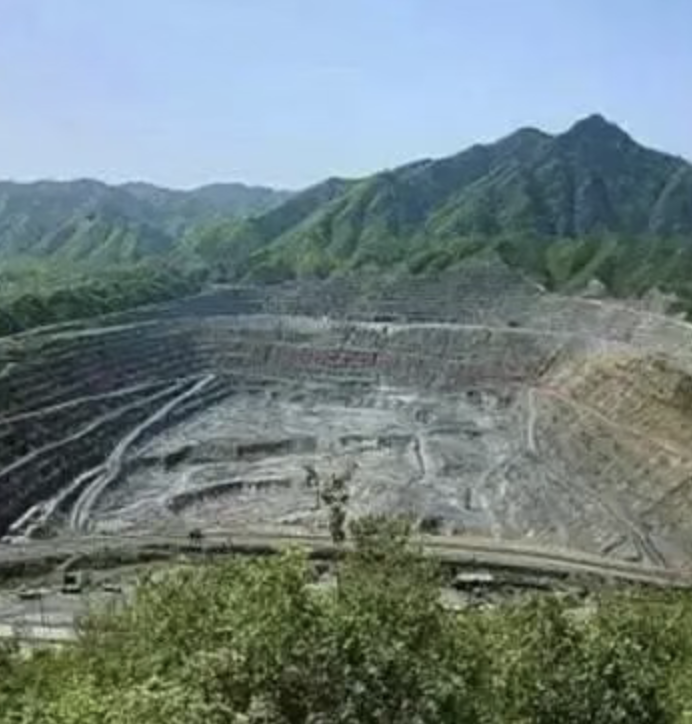
The “closed contour” is the horizontal closed line formed by the open-pit mining boundary at the ground surface.
Based on the terrain and the position of the deposit relative to this contour, open-pit mines are commonly divided into two types:
Hillside open-pit mines are located above the surface closed contour. The excavation develops along a slope, and gravity may assist some drainage operations.
Depression open-pit mines extend below the surface closed contour. These pits often require more complex water control, haul-road planning, and slope management as the excavation becomes deeper.
This distinction affects the mine layout, access roads, drainage system, and final slope design.
2. The three basic elements of a bench
An open-pit mine is built in horizontal working levels called benches.
Bench: A horizontal layer into which the ore and rock mass is divided. The vertical distance between working levels is the bench height.
Bench face: The inclined surface of the bench facing the mined-out area. The angle between this face and the horizontal plane is the bench-face angle.
Platform or berm: The horizontal area between the toe and crest of the bench face. Its width is the platform width.
Different platforms serve different purposes:
The working platform supports drilling, blasting, loading, and hauling.
A safety or catch berm helps intercept falling rock.
A cleaning berm provides space for removing loose material.
The working width must be sufficient for both equipment movement and safe separation.
Bench design is not only a production issue. It is also a slope-stability and access-control issue.
3. The main open-pit production sequence
The core production workflow normally includes:
Drilling
Blasting or rock breaking
Loading and hauling
Waste-rock removal
Each stage affects the next one. Poor drilling can produce a poor blast. Poor fragmentation can overload excavators and crushers. Weak haul-road design can reduce the output of otherwise capable loading equipment.
Drilling
Drilling is the first major operation in open-pit production. It commonly accounts for around 10% to 15% of total production cost.
Three equipment categories are widely used.
DTH drill rigs offer flexible drilling angles, good mobility, and relatively low equipment weight and investment. They are useful for small and medium-sized mines, especially in medium-hard rock. Inclined drilling can help control ore quality, reduce toe formation, and limit oversized blocks.
Rotary blasthole drills provide high productivity and a high level of mechanization. They are widely used in large open-pit mines and can drill formations across a broad range of hardness.
Jumbo or crawler-mounted rock-drilling rigs use one or more rock drills with automatic feeds mounted on a boom or frame. Their mobility and mechanical operation make them suitable for specialized or changing drilling work.
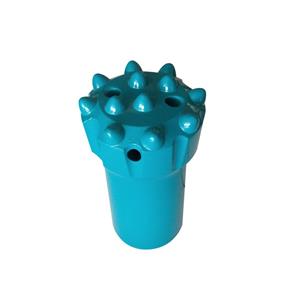
For DTH drilling, the hammer, bit, rod, compressor, flushing system, and rock formation must be matched as one system. Hole diameter, depth, inclination, and accuracy all influence the final blast or rock-splitting result.
Blasting and controlled rock breaking
The purpose of blasting is to create a manageable fragment size for excavators, haul trucks, and primary crushers. In many open-pit operations, blasting represents approximately 15% to 20% of total production cost.
Common methods include:
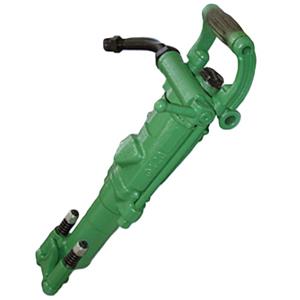
Shallow-hole blasting: Usually uses smaller holes, often around 30-75 mm in diameter, with hole depths generally below 5 m. It is used in smaller quarries, tunnels, road cuts, secondary breaking, and special excavation work.
Deep-hole bench blasting: Uses deeper holes drilled by DTH or rotary equipment. Vertical and inclined holes may be used depending on the bench design and fragmentation requirements.
Chamber blasting: Places a larger quantity of explosive in a chamber or underground opening. It is generally limited to specific construction or high-volume quarry conditions.
Multi-row millisecond blasting: Used when larger production volumes are required. Controlled timing can improve fragmentation and manage vibration more effectively than simultaneous initiation.
Near final slopes, engineers may use controlled blasting methods such as millisecond delays, pre-splitting, smooth blasting, and buffer blasting. The objective is to protect the remaining rock mass rather than simply maximize breakage.
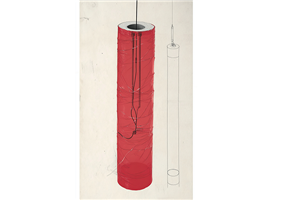
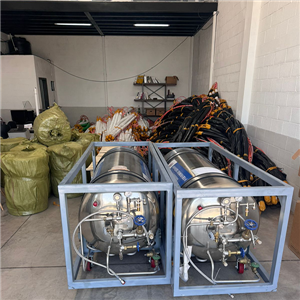
For sites near buildings, railways, highways, power lines, or other sensitive assets, a non-explosive method may be more appropriate. Gaea Rock's O2 Gas Energy Rock Splitting System uses liquid oxygen and a combustible absorbent inside a fracturing tube. It is a controlled phase-change process, not a conventional explosive system.
The O2 system can be considered where lower shock-wave intensity, reduced vibration, easier transport classification, and controlled rock splitting are important. Actual drilling, stemming, charging, ignition, exclusion, and emergency procedures must be designed and supervised by qualified personnel.
4. Loading and hauling
Loading is the central link in the open-pit production cycle. Excavators remove ore or blasted rock and load it into haulage equipment or transfer it to a designated location.
Common loading equipment includes:
Hydraulic excavators
Cable shovels
Hydraulic shovels
Wheel loaders
Loading and hauling cannot be optimized separately. A larger excavator is of little value if trucks queue at the face or haul roads are poorly maintained.
Transport infrastructure can represent a major share of mine investment, and hauling can account for more than half of total ore cost and labor in some operations.
Common transport systems include:
Truck haulage
Rail haulage
Conveyor systems
Inclined-skip lifting
Combined transport systems
Truck haulage remains the most common because it is flexible, but larger mines are increasingly integrating continuous conveyors, dispatch software, and automated equipment.
5. Waste-rock disposal
Waste rock and stripped overburden must be moved to designated disposal areas.
Waste-rock handling may use road transport, rail transport, or conveyors. Disposal areas can be designed as single-bench dumps, multi-bench covered dumps, or multi-bench dumps supported at the toe.
The dump must be designed for capacity, drainage, slope stability, traffic separation, and long-term rehabilitation. Poorly managed waste placement can create instability, runoff, dust, and future reclamation problems.
6. Water protection and drainage
Water control is one of the most important open-pit engineering systems.
Common drainage approaches include:
Gravity drainage for hillside mines
Bottom collection for shallow pits with limited inflow
Staged interception drainage for deeper pits with higher water flow
Underground galleries and drainage tunnels for very high inflow
Several systems may be combined depending on terrain and geology.
Waterproofing also requires regular inspection. Drainage channels, barriers, pumps, liners, and other protective structures should be checked before the rainy season and after extreme weather.
7. Problems after mining
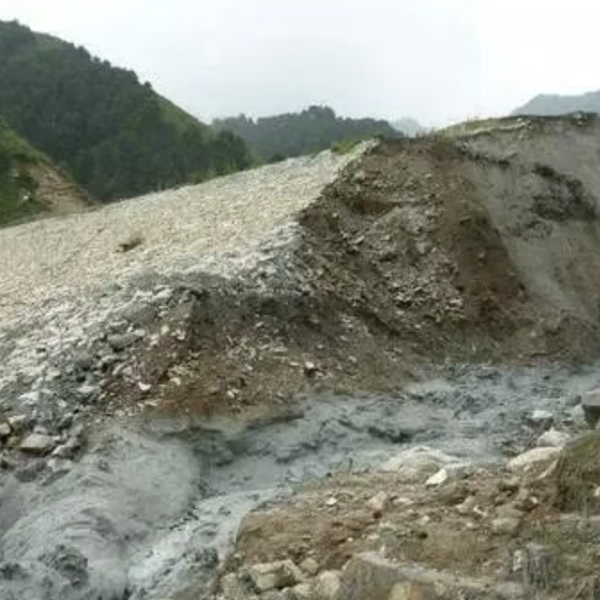
Unmanaged open-pit sites may develop serious hazards:
Water accumulation in the pit
High and unstable slopes
Landslides
Pressure effects on nearby underground workings
Tailings-dam failure
Mudflows affecting downstream communities
Long-term ecological damage from tailings discharge
These risks should be addressed during mine planning, not only after production ends.
8. Mine rehabilitation
Modern mine rehabilitation usually focuses on four areas.
Slope treatment: Remove unstable rock, reduce excessive slope angles, form stable benches, and revegetate treated areas.
Tailings management: Use suitable tailings as underground backfill where technically and legally appropriate. Recover valuable minerals through reprocessing and explore safe uses as construction materials.
Soil treatment: Replace or improve damaged soil, establish barriers that limit contaminant migration, and add amendments that restore fertility.
Vegetation restoration: Select plants adapted to local climate, poor soils, and, where necessary, heavy-metal exposure. Direct vegetation cover is simple and economical; topsoil placement often improves establishment and recovery speed.
The most efficient open-pit mine is not simply the one that moves the most rock. It is the one that coordinates drilling, rock breaking, loading, hauling, drainage, slope control, and rehabilitation from the beginning.