Rock Drill Bit Grinding: When and How to Restore Drilling Performance
A rock drill bit is a consumable tool, but it should not be treated as disposable after the first signs of wear. Correct and timely grinding can restore the original cutting profile, improve penetration rate, reduce stress in the drill string and extend the usable life of carbide buttons or inserts.
For mines, quarries, tunneling contractors and construction teams, bit grinding is one of the most direct ways to reduce drilling cost per meter. The key is to grind at the right time and use a method that removes surface damage without overheating or weakening the carbide.
Why Worn Bits Reduce Drilling Efficiency
During drilling, carbide buttons and inserts repeatedly strike and crush rock. In abrasive formations, the carbide gradually becomes flat, rounded or uneven. As the cutting profile deteriorates, the bit must push harder to achieve the same penetration rate.
A worn bit can cause several problems:
Lower rate of penetration.
Higher energy consumption.
More vibration and stress in the drill string.
Increased risk of rod bending or thread wear.
Higher risk of carbide cracking and button breakage.
Poorer hole quality and gauge loss.
A bit may continue to drill after it becomes dull, but this does not mean it is operating efficiently. The rock offers greater resistance, and more of the drill’s energy is absorbed by the tool system instead of breaking rock.
The Value of Timely Grinding
Grinding removes the worn surface layer and restores the cutting geometry of the carbide. It can also remove shallow fatigue cracks before they develop into large cracks and lead to button fracture.
This is particularly important in hard and abrasive rock. Fine surface cracks may not always be visible to the naked eye, but they can grow under repeated impact loading. Preventive grinding helps remove this damaged surface and supports longer tool life.
A well-managed grinding program can substantially improve the number of drilled meters obtained from a bit. The actual result depends on rock conditions, bit design, carbide grade, drilling parameters and grinding quality, but the economic benefit is often significant.
Button bits can normally be reground several times if the carbide and bit body remain in good condition. Chisel, cross and integral bits can also be restored repeatedly, provided their working profile, flushing arrangement and carbide support remain suitable.
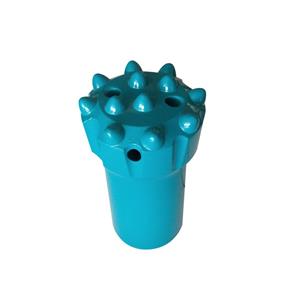
When Should a Button Bit Be Sharpened?
The best time to sharpen a bit is before wear becomes severe. Waiting too long makes grinding slower, removes more carbide and may allow cracks to grow deeper.
Common signs that a bit should be inspected or reground include:
A clear drop in penetration rate.
Flattened button surfaces.
Loss of gauge at the outer buttons.
Visible cracks, “snake-skin” patterns or surface checking.
Excessive carbide protrusion caused by wear of the bit body.
Broken or damaged buttons.
Uneven wear between face buttons and gauge buttons.
A useful field guideline is to schedule grinding when the flat area on a button approaches roughly one-third of the button diameter. This is a practical trigger rather than a replacement for inspection. In highly abrasive rock, more frequent checks may be required.
Even when penetration still appears acceptable, preventive grinding can be worthwhile after a planned drilling interval. The correct interval depends on the rock, drilling method, button design and site experience. The purpose is to remove early fatigue damage before it becomes visible failure.
Correct Grinding Practice
Grinding must restore the intended profile without creating thermal damage. Excessive heat can crack carbide, alter the bond between carbide and steel, or introduce new surface defects.
A good grinding process includes:
Clean the bit and inspect every button before grinding.
Remove damaged surface material gradually.
Use the correct grinding cup or pin for the button shape and diameter.
Maintain sufficient cooling, usually with water where the equipment is designed for wet grinding.
Avoid applying excessive pressure or holding the grinder in one place.
Restore the button shape consistently across the bit face.
Check gauge buttons carefully because they determine hole diameter.
Remove severely broken buttons only through an approved repair method.
For chisel and cross bits, the grinding goal is to restore the original edge profile and flushing grooves. Uneven sharpening can reduce drilling stability and cause the bit to track poorly in the hole.
Match the Bit to the Application
Grinding cannot correct an unsuitable bit selection. The bit, drill steel, rock drill and rock formation should be considered as one system.
A bit selected for soft, non-abrasive rock may wear rapidly in hard quartz-rich rock. A button pattern designed for one drilling method may not be ideal for another. Bit diameter, face design, carbide grade, flushing holes and gauge protection must match the operating conditions.
When a site experiences frequent button breakage, rapid gauge loss or low penetration rate, the solution may involve more than changing the grinding interval. Review the drill’s impact energy, feed force, rotation, flushing, rod condition and bit specification.
Build Grinding into Preventive Maintenance
The most economical approach is to make bit inspection and grinding part of the regular drilling workflow. Keep records of drilled meters, penetration rate, grinding intervals, button failures and rock conditions. Over time, these records help identify the best service interval for each bit type and application.
A sharp, properly maintained rock drill bit improves more than its own service life. It protects drill rods, couplings and the rock drill by reducing unnecessary vibration and internal stress. Timely grinding is therefore a practical maintenance investment that improves rock drilling efficiency, tool reliability and total drilling economics.