Rock Drill Bit Hydraulics: How Flushing Design Improves Drilling Performance
A rock drill bit does more than break rock. It must also remove crushed cuttings from the bottom of the hole quickly and consistently. If rock fines remain around the bit, they are crushed again, drilling energy is wasted, penetration slows and dust generation can increase.
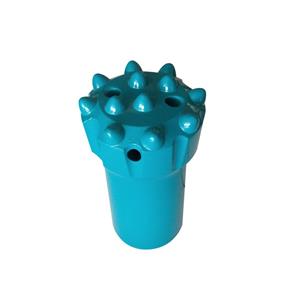
This makes flushing design an important part of rock drill bit engineering. The shape of the flushing grooves, the direction of water or air outlets and the rotation of the bit all affect how efficiently cuttings leave the hole.
Why Cuttings Removal Matters
During impact drilling, carbide buttons or inserts break the rock into fragments. These fragments must move from the bottom of the hole, through the bit’s flushing channels and out of the borehole.
When removal is poor, cuttings collect at the bottom of the hole. The bit then repeatedly strikes material that has already been broken instead of engaging fresh rock. This creates several problems:
Lower penetration rate.
Higher energy consumption per drilled meter.
Faster wear of carbide and bit steel.
Increased heat at the cutting face.
More fine dust and reduced visibility.
Greater risk of bit binding or unstable drilling.
Efficient flushing helps each impact do useful work. It also keeps the bit cooler and protects the drill string from unnecessary vibration and load.
Traditional Flushing Groove Design
Many traditional rock drill bits use flushing grooves that are broadly parallel to the bit axis. This layout provides a clear flow passage and is simple to manufacture. However, it does not always reflect the actual path of the cuttings-laden fluid during drilling.
A rock drill bit does not remain stationary. It impacts, rotates and advances at the same time. As a result, water or air carrying rock fines follows a curved path rather than a straight axial path. The faster the bit rotates, the stronger this rotational effect can become.
If the groove geometry does not support the natural movement of the flushing flow, resistance increases. More energy is then required to transport cuttings through the groove and up the hole.
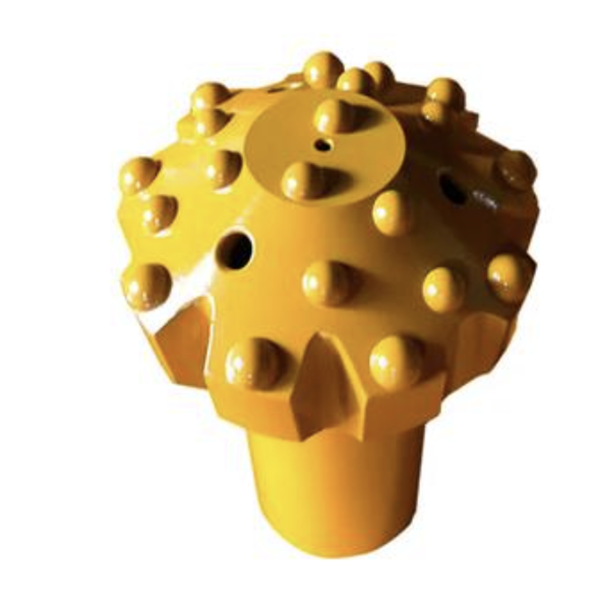
Streamlined Groove Geometry
A streamlined flushing groove is designed to guide water, air and cuttings along a smoother flow path. Instead of treating the groove as a simple straight channel, the design considers the combined effect of axial flushing flow and bit rotation.
The most suitable groove angle depends on several factors:
Bit rotation speed.
Bit diameter.
Flushing medium: water, air or a combined system.
Hole diameter and drilling depth.
Rock type and generated cutting size.
Bit face design and button layout.
In practical terms, higher rotation speeds may require a more pronounced groove angle because the cuttings flow has a stronger circumferential component. Lower-speed drilling may require a smaller angle. The goal is to reduce turbulence and unnecessary flow resistance while maintaining enough passage area for reliable cuttings removal.
Flushing-Hole Direction Is Equally Important
The position and direction of flushing holes affect how efficiently cuttings are swept away from the bit face. Face flushing holes help move fines outward from the central area. Groove flushing holes can help transport this material into the main return flow.
If these two flows oppose each other, energy is lost and cuttings may circulate or settle near the gauge area. A better design coordinates the direction of the outlets so that flow paths support one another.
The objective is not simply maximum water pressure. Effective flushing comes from using available pressure efficiently. A well-designed system can direct the flow toward the areas where cuttings are most likely to collect, especially near the bottom-hole edge and along the gauge section.
Benefits of Better Bit Hydraulics
Improved flushing geometry can deliver several operational benefits:
Faster removal of rock cuttings.
Higher penetration rate.
Lower regrinding of broken material.
Reduced bit-face temperature.
Improved carbide and steel-body life.
More stable drilling conditions.
Lower generation of fine airborne dust.
The result is a more efficient use of the drill’s impact energy. Instead of repeatedly crushing fines, the bit can maintain contact with fresh rock and advance more effectively.
In field use, the actual improvement depends on rock conditions, drilling parameters and the complete drilling system. A bit design that works well in hard, dry rock may need different flushing characteristics in soft, fractured or water-bearing ground.
Design Must Match the Full Drilling System
Flushing design cannot be separated from the rest of the bit. Button layout, face shape, gauge protection, bit diameter and rock drill settings all influence hydraulic performance.
For example, a bit with excellent flushing grooves may still perform poorly if the water supply is insufficient, the rod flushing hole is blocked or the drilling crew uses unsuitable feed and rotation settings. Likewise, the correct groove shape must be compatible with the available pressure and expected cuttings volume.
Tool manufacturers should use laboratory testing, fluid-flow analysis and field trials to evaluate new bit designs. Drilling teams should monitor penetration rate, dust level, bit wear, flushing performance and hole condition when comparing bit options.
A Better Flow Path Supports Better Drilling
Rock drilling efficiency is not determined only by impact power or carbide quality. The way that water, air and cuttings move around the bit is equally important. A bit with streamlined grooves and coordinated flushing holes can reduce flow resistance, clear the bottom of the hole more effectively and improve the efficiency of every impact.
For mines, quarries and contractors, selecting a bit with well-designed flushing geometry can reduce wear, improve productivity and support safer, cleaner drilling operations.