Rock Drill Shank Adapters: Function, Selection, and Maintenance Guide
Rock Drill Shank Adapters: Function, Selection, and Maintenance Guide
In a top hammer drilling system, the shank adapter is the essential connection between the rock drill and the drill string. It is sometimes called an impact rod or shank. Although it is smaller than the drill rig or rock drill itself, it has a major influence on energy transfer, drilling performance, tool life, and maintenance cost.
A shank adapter receives repeated impact energy from the rock drill piston and transfers that energy into the drill rod and drill bit. At the same time, it must transmit rotation torque, support the flushing path, and maintain accurate alignment under high-frequency loading. Selecting the wrong shank adapter or neglecting maintenance can lead to poor drilling efficiency, thread damage, vibration, internal component wear, and costly downtime.
What Does a Shank Adapter Do?
The shank adapter connects the rock drill to the drill rod system. It is the first major contact point for impact energy coming from the piston. During drilling, it must withstand thousands of impacts per minute while transferring energy efficiently through the drill steel.
The main functions of a rock drill shank adapter include:
Transferring impact energy from the piston to the drill string
Transmitting rotation torque to the drill rod and bit
Providing a path for flushing air or water
Maintaining alignment between the rock drill and drill steel
Supporting stable drilling under high impact loads
Because the shank adapter works under repeated stress, it requires a combination of high fatigue resistance, dimensional accuracy, surface hardness, and core toughness.
Impact Energy Transfer
In a top hammer drilling system, the piston strikes the shank adapter at high frequency. The shank adapter then transfers the impact wave through the drill rod and into the drill bit. Efficient transfer is important because lost impact energy reduces penetration rate and increases unnecessary stress on the machine.
Poor contact surfaces, damaged striking ends, incorrect adapter length, or a mismatched design can reduce energy transmission efficiency. Excessive vibration may also develop, which can accelerate wear in the rock drill, guide sleeves, seals, and drill steel connections.
The striking end should be inspected regularly. Mushroom-shaped deformation, dents, cracks, or severe surface damage can indicate that the shank adapter is reaching the end of its service life. Continuing to use a damaged shank may also harm the piston.
Torque Transfer and Splines
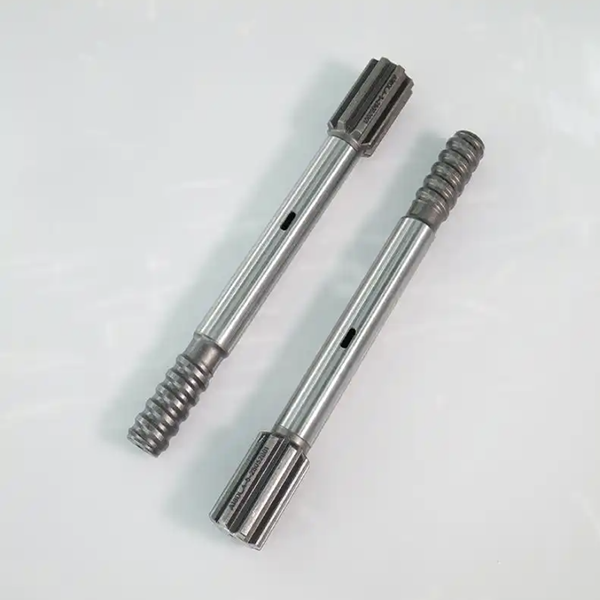
In addition to impact energy, the shank adapter transfers rotational force. Its external splines engage with the rotation mechanism of the rock drill. This allows the drilling bit to rotate while impact energy is applied.
Spline wear can reduce rotational accuracy and cause abnormal vibration. If the splines are excessively worn, the adapter may not engage properly with the rotation system. This can lead to lower drilling efficiency, uneven wear, and possible damage to internal rock drill components.
Regular inspection should include spline condition, contact patterns, lubrication quality, and evidence of abnormal movement. A worn adapter should be replaced before it damages more expensive parts of the drilling machine.
Flushing Channel Function
Most shank adapters include an internal flushing channel. This passage delivers water or compressed air through the drill string to the drill bit. The flushing medium removes rock cuttings from the hole, cools the drilling tools, and helps prevent stuck drill steel.
A blocked, damaged, or incorrectly matched flushing channel can reduce cuttings removal. This may increase drilling resistance, heat, bit wear, and the risk of jamming. When selecting a shank adapter, the flushing arrangement must match the drilling equipment.
Depending on the rig and rock drill design, the system may use internal flushing or external flushing. The chosen shank adapter must be compatible with the intended flushing method.
Choosing the Correct Shank Adapter
Correct selection is essential. A shank adapter is not a universal component, even when two parts look similar. The following factors should be verified before purchase:
Rock drill model compatibility
The adapter must match the exact rock drill model and its internal dimensions. Similar-looking parts may have different striking lengths, spline designs, flushing holes, or thread specifications.Thread connection
The thread must match the drill rod system. Common thread types include R32, T38, T45, T51, and GT60. An incorrect thread can cause poor connection strength, thread damage, and unsafe operation.Material and heat treatment
Quality shank adapters are generally made from high-strength alloy steel and use heat-treatment processes that provide a hard, wear-resistant surface with a tough internal structure.Flushing compatibility
Confirm whether the rock drill requires internal or external flushing, and ensure the adapter has the correct channel design.Operating conditions
High-impact tunneling, underground development, long-hole drilling, and abrasive rock may require more robust tool specifications.
Shank Adapter Maintenance
Shank adapter maintenance is a cost-control activity, not simply a routine inspection. Correct care can extend tool life and protect the rock drill.
Key maintenance practices include:
Maintain proper oil-mist or rock-drill lubrication
Inspect straightness and replace bent adapters
Check the striking end for deformation or impact damage
Inspect splines and threads for wear
Use approved thread lubricant during connections
Avoid forcing damaged threads together
Keep flushing channels clear
Investigate excessive vibration immediately
Thread lubrication is especially important. Dry or damaged threads can gall, burn, and seize during drilling. Using suitable drill steel thread lubrication reduces friction, protects connections, and makes disassembly easier.
A quality shank adapter is an investment in drilling reliability. When properly selected and maintained, it improves energy transfer, protects the rock drill’s core components, reduces downtime, and lowers the overall cost per meter drilled.