Rock Drilling Carbide: Properties, Wear Challenges, and Recycling Considerations
Rock Drilling Carbide: Properties, Wear Challenges, and Recycling Considerations
Rock drilling carbide is one of the most important materials used in mining, tunneling, quarrying, and construction drilling tools. It is installed at the working end of drill bits, where it directly contacts and breaks rock under repeated impact, rotation, abrasion, and heat.
Unlike many cutting tools used in controlled workshop environments, mining carbide inserts operate under highly variable field conditions. They are exposed to large impact loads, abrasive rock, vibration, water, dust, and repeated heating and cooling cycles. This makes material selection, tool design, correct operation, and recycling management especially important.
What Is Rock Drilling Carbide?
Rock drilling carbide is a hard composite material commonly based on tungsten carbide and cobalt. Tungsten carbide provides high hardness and wear resistance, while cobalt acts as a binder that gives the material toughness and helps it withstand impact loading.
The material is used in several types of drilling tools, including:
Button bits
Chisel bits
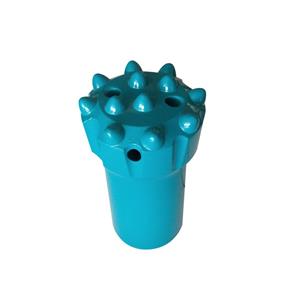
Threaded drill bits
Tapered drill bits
DTH hammer bits
Reaming bits
Mining and tunnel drilling tools
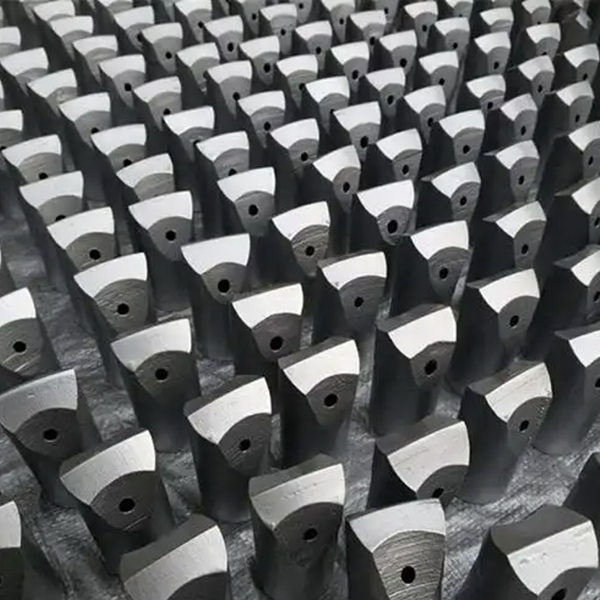
The carbide inserts are mounted in a steel bit body. During drilling, the steel body transfers impact energy from the rock drill, while the carbide inserts crush, chip, and wear away the rock.
Tungsten and cobalt are valuable mineral resources, so carbide performance affects not only drilling productivity but also material consumption and lifecycle cost.
Why Mining Carbide Works Under Severe Conditions
Mining carbide inserts must survive a harsher duty cycle than many standard cutting tools. In a rock drilling application, the bit is repeatedly struck by the rock drill while rotating against hard and abrasive rock. The insert experiences dynamic loading, high contact stress, and rapid temperature changes.
A good carbide grade must balance two competing requirements:
Hardness for abrasion resistance
Toughness for impact resistance
If the carbide is too hard and brittle, it may crack or break under impact. If it is too soft, it may wear too quickly. The steel bit body, insert geometry, flushing design, drilling parameters, and rock type all influence the final tool life.
Short Service Life of Tungsten Carbide Drill Bits
The source article explains that mining carbide tools often have relatively short service cycles. As an example, it describes a 45 mm top-hammer drill bit working in medium-hard rock, with an approximate drilling speed of 0.7 to 0.8 meters per minute and a normal service life of roughly 120 to 150 meters.
These figures are reference values from the source material, not universal performance guarantees. Actual tool life can vary significantly due to rock strength, abrasiveness, drilling pressure, impact power, rotation speed, flushing quality, operator practice, and bit design.
Typical end-of-life conditions include:
Carbide insert fracture
Carbide wear
Lost buttons or inserts
Excessive gauge wear
Worn steel bit body
Damaged threads or connections
To reduce premature failure, operators should ensure that drilling parameters match the rock conditions. Excessive feed force, insufficient flushing, poor alignment, or improper rotation can damage both the carbide and the steel body.
Low Material Utilization in Drilling Tools
One important challenge in carbide button bit wear is that only a small portion of the carbide insert may be consumed during its working life. The active tip contacts the rock, while a large part of the insert remains embedded inside the steel bit body as structural support.
The source article states that less than 15% of the total carbide weight may be consumed during drilling in some applications. This means that a significant amount of valuable material remains in the discarded tool.
The problem is not simply waste. The remaining carbide is difficult to access because it is tightly fitted into blind holes in the steel body. Removing the inserts requires time, equipment, and labor, which can make recovery expensive.
Carbide Recycling Challenges
Carbide recycling is an important topic for drilling-tool manufacturers and mining operators. In many cases, used drill bits are handled as scrap steel because recovering embedded carbide is difficult.
However, treating the full tool as ordinary steel scrap can create two disadvantages. First, valuable tungsten carbide material is lost. Second, tungsten carbide is a high-melting-point material that may affect steel recycling processes if not properly separated.
A better recycling strategy may include collecting used bits separately, sorting tools by type, evaluating economic recovery methods, and working with specialized carbide recycling providers. Whether recovery is viable depends on local labor cost, carbide value, tool volume, separation technology, and logistics.
Why Mining Carbide Prices Can Remain Competitive
Mining carbide is consumed in large volumes, but it is often sold at a relatively competitive price compared with certain other tungsten carbide products. The source article attributes this partly to the short service life and high consumption rate of drilling tools.
For buyers, unit price should not be the only selection factor. The true cost of a bit includes:
Penetration rate
Meters drilled per tool
Downtime for tool changes
Drill steel consumption
Risk of stuck tools
Labor requirements
Carbide recovery or disposal cost
A higher-quality carbide insert may cost more initially but reduce the cost per meter drilled. The best approach is to evaluate drilling-tool performance under actual rock conditions and select the carbide grade, bit design, and operating parameters that provide the best overall value.