Rock Drilling Rods: Classification and Application Guide
I. Classification by structural form
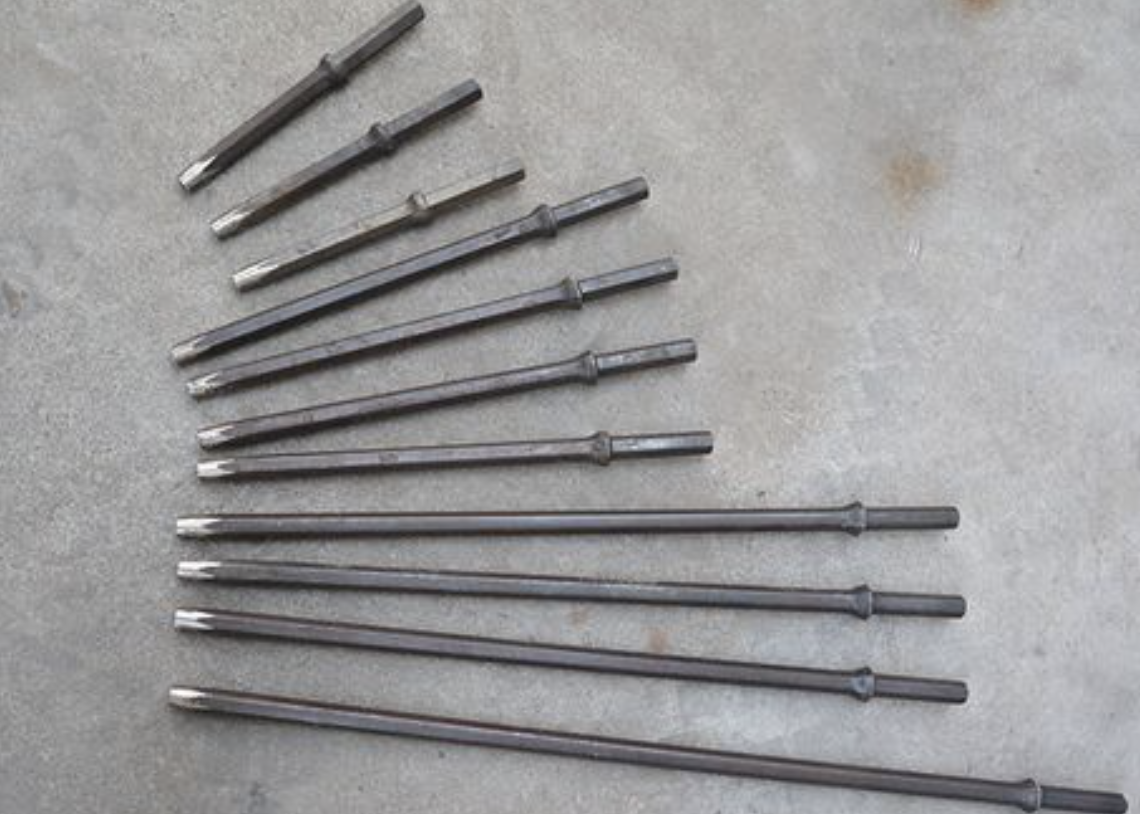
One-piece rods One-piece rods are manufactured as a single seamless unit with the shank and bit end integrally formed. Their advantages include high structural strength, minimal transmission losses, and the ability to withstand high‑frequency impact loads. They are suitable for small‑diameter, shallow drilling operations and are common on hand‑held rock drills and small anchor drill rigs. Typical applications include mine tunnel tunneling and foundation anchor drilling for construction. The main drawback is that when the bit end wears or is damaged the entire rod must be replaced, so operating cost is relatively high.
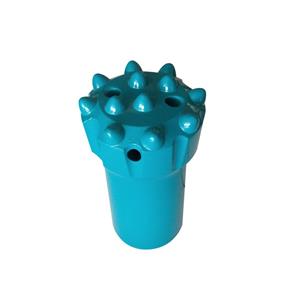
Two-piece (replaceable‑head) rods Two-piece rods consist of a rod body and a replaceable bit head, connected by threads, tapers, or other detachable joints. Their core advantage is controllable consumable cost: worn bit heads can be replaced individually without discarding the whole rod. This design is especially suited for large‑diameter, deep‑hole operations. By connection type they are further divided into:
Threaded‑connection rods: use standardized thread interfaces (e.g., R32, T38, T45), offering high connection precision and easy disassembly. They are typically used with medium‑to‑large hydraulic drills for open‑pit blast holes and tunnel blast drilling.
Tapered‑connection rods: rely on cone surface contact for load transfer. They have a simple structure and strong impact resistance, making them suitable for high‑impact breaking tasks such as quarrying and concrete demolition.
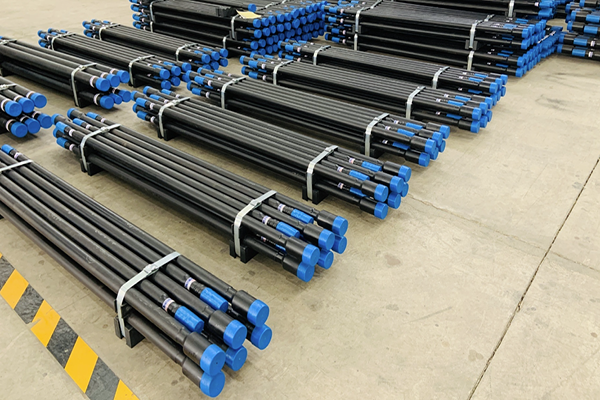
Hollow rods Hollow rods have an internal through‑hole for fluid passage and are mainly used for wet drilling. High‑pressure water or compressed air can be delivered through the rod to remove cuttings and cool the bit during drilling, reducing dust and extending rod life. Hollow rods are standard for large‑scale drilling in mines and tunnels and are commonly paired with heavy drill rigs or drill jumbos.
II. Classification by material and performance
Alloy tool‑steel rods Made from alloy tool steels such as chromium‑molybdenum or silicon‑manganese steels and heat treated (quenched and tempered), these rods offer a good balance of strength and toughness at relatively low cost. They are appropriate for drilling in medium‑ to low‑strength formations (e.g., shale, sandstone) and are widely used in small‑to‑medium quarries and civil construction.
High‑strength alloy steel rods Forged from high‑strength alloy steels (for example 42CrMo, 35CrMnSi) and processed with carburizing, quenching, and other precision heat‑treatment steps, these rods achieve surface hardnesses above HRC55 while retaining a tough core. They resist impact and abrasion from hard rocks such as granite and basalt. These rods are key consumables in large mines and hard‑rock tunnel projects and are matched to heavy hydraulic drill rigs.
Coated, wear‑reinforced rods Alloy steel rods may be surface‑coated with wear‑resistant layers (for example tungsten‑carbide or titanium‑nitride coatings) to improve abrasion and corrosion resistance. Coated rods can extend service life by roughly 30–50% compared with uncoated rods. They are suited for high‑wear, high‑corrosion environments such as coastal drilling and mines with corrosive minerals.
III. Classification by compatible equipment
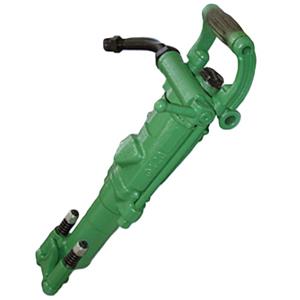
Rods for hand‑held rock drills These rods are relatively short (typically 1–3 m) with small diameters (22–32 mm) and lightweight designs for manual handling. The rod tail is configured to fit the chuck or coupling of hand‑held rock drills. Typical uses include small tunnels, slope support, and other operations requiring manual drilling.
Rods for drill jumbos and rig‑mounted platforms Designed for mechanical drilling platforms, these rods are longer (3–10 m) and larger in diameter (38–76 mm), made of high‑strength materials with precision connections. They are compatible with track‑mounted drill jumbos and hydraulic drill rigs, and are used for large‑scale mechanized work such as open‑pit blast holes and deep tunnel drilling.
Rods for hydraulic breakers Also called breaker rods, these have flat or pointed working heads at the front and a tail suited to hydraulic breakers. Unlike drilling rods, breaker rods are optimized for impact breaking rather than cutting and require very high impact toughness and abrasion resistance. Typical applications include concrete demolition, secondary ore breaking, and frozen‑soil fracturing.
IV. Classification by operating conditions
Hard‑rock rods Designed for hard formations with Mohs hardness above ~6 (e.g., granite, basalt). These rods use high‑strength alloy steels with wear‑resistant surface treatments and reinforced rod‑to‑bit connections to withstand high‑frequency, high‑load impacts and to prevent rod failure or bit loss.
Soft‑rock rods Intended for softer formations such as shale and limestone. These rods prioritize toughness and efficient cuttings removal; hollow‑rod diameters may be larger to promote rapid flushing of debris and reduce drilling resistance. Compared with hard‑rock rods, soft‑rock rods are lower cost and better suited for large‑scale, shallow drilling.
Rods for underwater or wet environments Made from corrosion‑resistant materials (for example stainless alloy) or treated with galvanizing or polymer coatings, these rods provide good waterproofing and anti‑corrosion performance. They are used for underwater tunnels, river dredging, and coastal mining operations, helping to prevent strength loss due to rust and corrosion.
This classification framework can guide selection of rod type, material, and configuration to match formation characteristics, drilling equipment, and operating conditions, thereby optimizing performance and cost.