Rock Drilling Tool Manufacturing Is No Longer About Volume. It Is About Reliability.
The rock drilling tool industry has always followed the rhythm of mining, infrastructure, energy, and construction.
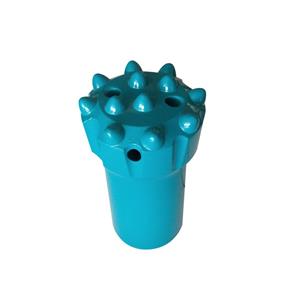
When commodity demand rises, mines expand. When tunnel and railway projects accelerate, drill rigs move into new headings. When large infrastructure work begins, contractors need more drill rods, button bits, shank adapters, coupling sleeves, DTH hammers, and related drilling tools.
For manufacturers, this often creates a tempting opportunity: produce more.
But volume alone does not build a sustainable rock drilling tool business.
When a market grows quickly, many suppliers enter. Production capacity rises. Lower-grade raw materials may appear in the supply chain. Price competition becomes intense. Customers start to see products that look similar but perform very differently underground.
That is the moment when the industry changes. The strongest manufacturers stop competing only on output and begin competing on reliability.
Growth creates demand, but it also creates pressure
Mining, quarrying, tunneling, hydropower, road building, rail construction, and urban underground work all depend on drilling. As those sectors expand, the demand for drilling tools rises with them.
At first, the market may reward suppliers that can deliver quickly. Simple products, familiar designs, and competitive prices can be enough to win orders.
Over time, however, customers become more selective.
They begin measuring drilling cost per meter instead of purchase price per piece. They look at penetration rate, service life, thread failures, gauge retention, regrinding intervals, rig downtime, and delivery consistency. They want tools that work reliably with modern hydraulic drills, DTH systems, automated rigs, and more demanding project schedules.
This is where low-quality volume reaches its limit.
A drill rod that breaks early, a coupling sleeve that damages threads, or a button bit that loses gauge too quickly costs more than its invoice price. It interrupts the drilling cycle and creates costs elsewhere in the operation.
Hollow steel is the starting point for drill rod quality
For top-hammer drilling, hollow drill steel is not simply raw material. It is the foundation of the drill rod.
The rod must transmit high-frequency impact energy, rotation torque, and flushing media while operating in abrasive, corrosive, and highly variable ground conditions. Any metallurgical or mechanical defect in the steel can become a fatigue starting point.
Under repeated stress cycles, a small defect may grow into a crack. Eventually, the rod fails.
That is why quality control should begin before forging, threading, or heat treatment. Steelmaking, billet selection, rolling, internal-hole quality, straightness, surface condition, and dimensional tolerances all influence the final rod.
A drill rod may look straight and clean when new, but hidden defects can reveal themselves only after thousands of impacts. Reliable hollow steel requires controlled chemistry, stable rolling practice, careful cooling, and inspection that looks beyond surface appearance.
For manufacturers, this is one of the clearest examples of why “cheaper material” can become a false saving.
Modern drilling systems demand better tool systems
The market is moving beyond individual components.
A hydraulic drill rig does not use a bit, rod, coupling sleeve, and shank adapter as separate products. It uses them as one energy-transfer system. The components must match in thread form, hardness, length, alignment, steel quality, and operating purpose.
As rigs become more powerful and more automated, mismatched drilling tools become more expensive.
A weak thread, poor sleeve fit, unstable bit body, or inconsistent heat treatment can reduce the performance of the entire drill string. Even a premium drill rig cannot compensate for poor steel in front of it.
This is why tool suppliers should think in systems:
Match drill rods to the rig’s impact energy and feed system.
Match thread types and coupling sleeves to the intended drilling conditions.
Select bit profiles and carbide grades for the actual rock formation.
Control heat treatment to balance hardness and toughness.
Provide practical guidance on inspection, lubrication, regrinding, and replacement.
The supplier that only sells parts competes on price. The supplier that helps customers manage a complete drill-string system competes on productivity.
Product structure matters more than product count
A wide catalogue can look impressive, but it does not automatically create value.
Manufacturers should understand which products are growing, which are mature, and which are becoming less suitable for modern drilling equipment. Traditional light-drill steel may still have strong demand in some mining and construction markets. At the same time, hydraulic drilling tools, high-pressure DTH systems, tunnel tools, raise-boring tools, non-excavation drilling tools, and specialized infrastructure products may offer new opportunities.
The key is not to chase every category at once.
A good product strategy starts with existing capability. What steel-processing equipment does the factory have? What heat-treatment control is available? Can it produce accurate threads consistently? Does it understand carbide-button installation and bit-face design? Can it inspect the finished tool properly?
Then the business can choose adjacent products that build on those strengths.
For example, a manufacturer with strong experience in threaded drill rods may expand into matched couplings and shank adapters. A producer with stable button-bit manufacturing may develop solutions for specific rock types or drilling applications. A supplier serving mines may add products for tunnel-face drilling or ground-support work.
Focused expansion is safer than uncontrolled diversification.
Quality control is a market strategy
Quality is often described as a factory issue. In reality, it is a sales strategy too.
Customers may not ask detailed questions about steel cleanliness, grain flow, hardness variation, or thread-root finish during an initial quotation. But they notice when drill tools fail early.
They notice when the rod breaks in the middle of a shift. They notice when a bit cannot hold gauge. They notice when the drill string leaks, overheats, or becomes difficult to uncouple. They notice when one shipment performs differently from the previous one.
Consistent quality builds trust. Trust creates repeat business. Repeat business reduces the pressure to compete only on the lowest price.
That is why manufacturers should treat incoming-material inspection, process control, heat treatment, thread inspection, hardness testing, metallographic checks, and final packaging as part of their commercial reputation.
Future growth comes from solving harder problems
The most durable opportunities in rock drilling tools usually appear where the application is demanding.
Hard rock. Abrasive formations. Deep holes. High-energy hydraulic drilling. Tight tunnel headings. Automated rigs. Urban projects with strict accuracy requirements. These conditions require better design, not just more production.
Manufacturers that invest in material control, product testing, application knowledge, and technical support are better prepared to serve those markets.
The industry does not need more tools that merely look correct. It needs tools that hold gauge, transfer energy, resist fatigue, flush properly, connect reliably, and deliver a predictable cost per drilled meter.
That is the direction of modern rock drilling tool manufacturing.
The market may rise and fall with mining and construction cycles. But reliability remains valuable in every cycle.