Your Shank Adapter Guide Bushing Is Wearing Too Fast — Here Are the Four Things That Fix It
A worn guide bushing doesn't announce itself dramatically. There's no bang, no snap, no sudden failure. What you get is a slow drift in performance: the shank adapter starts running slightly off-center, impact energy loses its clean transfer, and components upstream and downstream start wearing faster than they should. By the time you notice, the bushing has already cost you more in collateral damage than it would have cost to replace.
Here's the good news: a guide bushing that's selected, installed, and maintained properly can run significantly longer than what most crews are getting. The difference comes down to four things most people skip.
Material Matters, but Matching Matters More
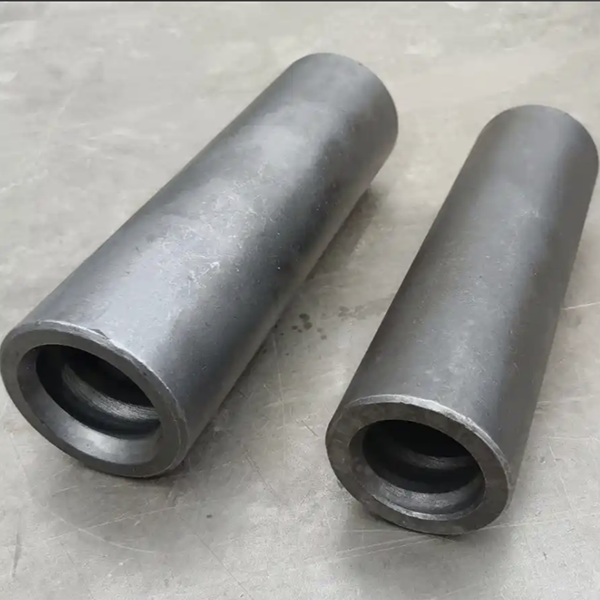
Guide bushings typically come in two families: alloy tool steels for high-wear environments, and copper-based alloys where you need a softer sacrificial surface that protects the shank adapter. Both work — but only if they're matched to the shank adapter material they're running against.
Run a hardened steel bushing against a shank adapter of the same hardness, and you've created a matched wear pair where both surfaces abrade each other. The wear rate on both components doubles — or worse. The bushing should either be slightly softer than the adapter (so it takes the wear and protects the more expensive component) or specifically engineered as a compatible pair from the same manufacturer. Mix and match from different suppliers, and you're gambling on metallurgy you can't verify.
Installation: The Five-Minute Step That Determines the Next Five Hundred Hours
A guide bushing pressed in crooked or forced in dry will never run true. The clearance between the bushing bore and the shank adapter body is tight by design — usually measured in hundredths of a millimeter. If the bushing isn't seated square in the front head, that clearance isn't uniform around the circumference. One side runs tight, heats up, galls. The other side runs loose, and the adapter rattles.
The procedure isn't complicated: clean the bore, apply assembly lubricant to the bushing OD, use the proper installation tool to press it in straight, and verify it's fully seated. Rushing this step because the rig is down saves ten minutes and costs you weeks of accelerated wear.
The One-Millimeter Rule
This is the single most useful maintenance threshold I know for guide bushings: when the clearance between the bushing inner diameter and the shank adapter body exceeds one millimeter, replace the bushing. Not next week. Not after one more round. Now.
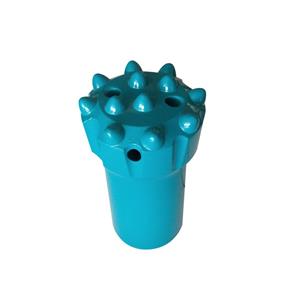
Past that point, the shank adapter has enough room to move off-axis under impact. That movement translates into bending stress at the adapter's drive end, uneven wear on the piston strike face, and vibration that propagates through the entire drill string into the rock drill rod and the button bit. A bushing that costs pocket change will take out hundreds of dollars in downstream components if you let it go.
Between replacements, keep the bushing clean and lubricated. High-temperature anti-wear grease applied at regular intervals makes a measurable difference. Check your air-oil mist parameters — the mist that lubricates the shank adapter also cools the bushing interface. If the mist is too lean, both components run hot. Adjust it, don't ignore it.
The Environment Is Working Against You
Dust, moisture, and corrosive groundwater don't just attack the drill rod and the bit — they work their way into the front head and accelerate bushing wear. Rock fines that get past the seals act as a lapping compound between the bushing and the adapter. Water that sits in the front head between shifts starts corrosion pitting on the bushing surface.
If your site conditions are harsh — and most are — simple measures go a long way. Dust suppression around the drill, even just a water spray to knock airborne particles down. A cover over the front head when the rig is parked. Making sure seals are intact and doing their job. None of this is complicated. All of it gets skipped.