Small Diameter Button Bits in China: Products, Market Trends, and Applications
Small Diameter Button Bits in China: Products, Market Trends, and Applications
Small diameter button bits are widely used with light-duty rock drills in tunneling, mining, road construction, railway construction, and other rock excavation projects. Compared with traditional chisel-type or flat-insert bits, button bits use rounded carbide inserts to improve rock breaking performance, wear resistance, and service life.
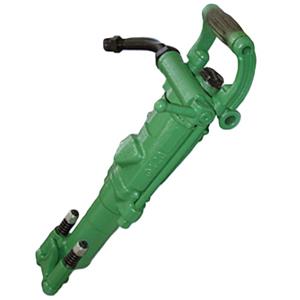
In China, tapered button drill bits have become an important product category for pneumatic rock drilling. Their continued use is closely connected to the large installed base of pneumatic leg drills used in infrastructure and underground excavation work. Although hydraulic drilling systems have grown in many applications, pneumatic rock drills remain common in smaller tunnels, construction sites, and projects where lower initial equipment cost is important.
What Are Small Diameter Button Bits?
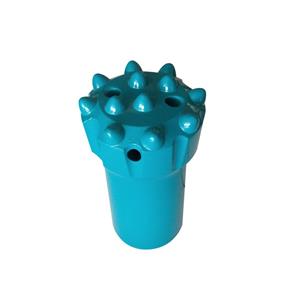
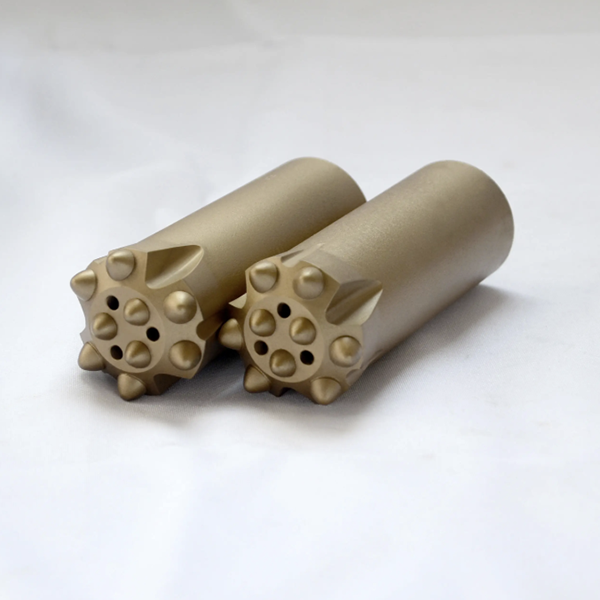
A small diameter button bit is a rock drilling bit fitted with tungsten carbide buttons. The buttons are inserted into a steel bit body and arranged to break rock through repeated impact and rotation. The bit is connected to the drill steel through a tapered or threaded connection, depending on the drilling system.
The small diameter range is often used with light rock drills and compact drilling equipment. The source article describes a domestic market focus on bit diameters of approximately 38 mm to 42 mm, including four-button and five-button configurations. Export-oriented products described in the article include approximately 32 mm to 41 mm diameters, with six-button, seven-button, and nine-button layouts.
The correct button layout depends on the rock condition, drilling diameter, flushing requirement, drill power, and desired balance between penetration rate and bit life. More buttons do not automatically mean better performance. The bit must be matched to the drill, drill steel, and working conditions.
Why Button Bits Have Replaced Many Chisel Bits
Traditional chisel bits use a flat carbide cutting edge. They can still be suitable for certain applications, but button bits provide several practical advantages in many rock conditions.
First, rounded carbide buttons distribute impact forces differently across the rock surface. This can support more stable drilling in hard or abrasive formations. Second, button bits can offer better wear resistance when the carbide grade, button size, and bit-body design are properly matched. Third, their design can improve drilling efficiency and bit life compared with many older flat-insert products.
The article notes that small diameter button bits have gradually replaced a large share of chisel-type carbide bits during the past decade. This trend is especially relevant for pneumatic leg drills used in road and railway tunnel construction, where reliable and economical drilling tools remain essential.
Carbide Consumption and Product Design
The carbide inserts are among the most important parts of a button bit. Their size, grade, shape, and placement influence penetration, wear resistance, breakage risk, and overall cost.
The source article reports that domestic light rock-drill button bits in the 38 mm to 42 mm range commonly use button sizes such as 0812 and 0913. It also states that a typical bit may contain approximately 50 to 55 grams of carbide. For smaller export-oriented button bits, the article describes carbide use of roughly 40 to 45 grams per bit and button sizes such as 0711 and 0812.
These figures should be treated as market references from the source article rather than universal specifications. Actual carbide consumption varies with bit diameter, button count, gauge design, flushing holes, steel body, and the required drilling application.
Domestic and Export Market Characteristics
The source article estimates annual Chinese output of small diameter button bits for domestic light rock drills at approximately 22 million units. It also describes annual exports of smaller diameter button bits at about 1.2 million units. These numbers illustrate the scale of the market and the continued demand for pneumatic rock drill bits.
China’s button-bit supply chain includes bit-body manufacturers, carbide suppliers, heat-treatment providers, and drilling-tool distributors. Product quality can vary significantly, so purchasing decisions should not rely on diameter and price alone.
Buyers should evaluate:
Carbide grade and insert consistency
Steel body material and heat treatment
Button retention quality
Taper or thread accuracy
Flushing-hole design
Gauge protection
Compatibility with the selected drill rod and rock drill
Supplier quality-control procedures
Selecting the Right Bit for Tunnel Drilling Tools
For tunnel drilling tools, the bit must perform reliably under repeated impact, rotation, vibration, and abrasive cuttings. A poorly selected bit can lead to slow penetration, premature button wear, broken carbide, damaged drill steel, and higher operating cost.
The best selection process starts with the rock type and drilling objective. Hard and abrasive rock may require a different carbide grade or button layout than softer, fractured ground. Hole diameter, flushing medium, drill power, and drill steel connection must also be confirmed.
Small diameter button bits remain a practical choice for many pneumatic drilling applications. When matched correctly with the rock drill and maintained properly, they can provide efficient rock breaking, predictable tool life, and strong value for tunneling and infrastructure projects.