Spiral Drill Rods in Coal Mining: The Operating Rules That Keep Your String in One Piece
Underground coal drilling is unforgiving on equipment. It's cramped, it's wet, the formations change without warning, and when something goes wrong at 200 meters depth, you can't just crane it out and start over. Of all the components in the drill string, the spiral drill rod takes the most abuse — it's transmitting torque, conveying cuttings, and flexing with every formation change, all at once.
The difference between a drill rod that lasts months and one that snaps on its third hole usually comes down to the first five minutes of operation and the last five. Here's what matters.
Before You Even Start: The Five-Minute Inspection
You've got a stack of rods on the rack and a hole to drill. The temptation is to grab the first one off the pile and start spinning. But spiral drill rods have a few failure modes that are invisible until you look for them, and they all announce themselves at the worst possible moment.
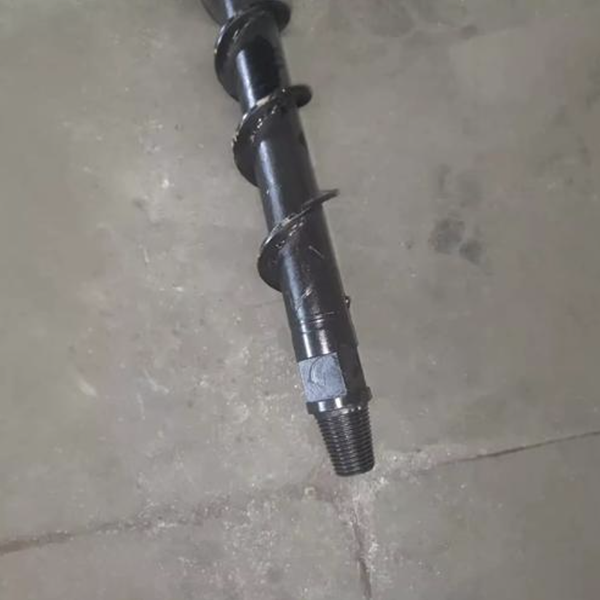
First: roll each rod on a flat surface before connecting it. Any visible gap between the rod and the surface means it's bent. A bent rod in a deep hole doesn't just drill crooked — it whips inside the borehole, hammers the wall on every rotation, and puts cyclic fatigue loads on every threaded connection above it. A bent rod is scrap. Don't try to straighten it.
Second: check the spiral flights. The welds where the spiral blade meets the central tube are stress concentrators. Look for hairline cracks radiating from the weld toe — they're small, but they propagate fast once drilling starts. Tap the flights with a wrench handle. A dull thud is solid metal. A ringing sound means the weld has cracked through and the flight is loose.
Third: thread condition. Clean, dry threads aren't optional — they're what keeps the entire drill string from unscrewing itself at depth. Coal dust and mud packed into the thread roots will prevent full connection engagement. A drill rod that's only 80% threaded in is a rod that will back off under torque. Wire brush the threads, blow them out with compressed air if you have it, and apply thread compound before every connection. Not grease — proper anti-seize thread compound rated for the torque you're running. Grease breaks down under heat and pressure; thread compound doesn't.
Last alignment check: the rig, the drill rod, and the borehole need to be on the same axis. Even a few degrees of misalignment at the collar translates to significant bending stress at 100 meters. Line it up properly, and your rods will thank you by not snapping.
Starting the Hole: The 300-Millimeter Rule
A spiral drill rod's job in coal is dual-purpose: transmit rotation to the drill bit and convey cuttings out of the hole via the spiral flights. Both jobs require the rod to be spinning inside a properly formed borehole. But at the very start of a hole, there is no borehole — just a rod trying to create one.
This is where the 300-millimeter rule comes in. For the first 300 millimeters of drilling — about a foot — keep the RPM low. Somewhere around 100 to 150, no more. Keep the feed pressure light. The goal isn't max penetration rate; it's letting the drill bit establish a clean, straight borehole that the rod can then follow. Until you've got that initial hole depth, the rod has no lateral support and will whip at the collar end if you spin it too fast.
Once you're past 300 millimeters and the hole wall is providing guidance, you can start ramping up. Increase RPM gradually to your target range — 150 to 300 RPM is typical for CMS1-series rigs in coal, with the low end for hard coal seams and the high end for soft. Feed rate should settle between 0.5 and 1.5 meters per minute depending on conditions.
Reading the Cuttings: The Most Underrated Skill in Coal Drilling
Here's something that separates experienced drillers from everyone else: they watch the cuttings. Not occasionally — constantly.
Spiral drill rods are designed to auger cuttings out through the flights as the rod rotates. If cuttings are flowing steadily out of the collar, the hole is healthy. If the flow stops — even for a few seconds — something has changed. Maybe the bit hit a soft zone and is generating more chips than the flights can clear. Maybe the hole wall has partially collapsed behind the bit. Maybe the flush medium isn't reaching the face.
Whatever the reason, the response is the same: stop feeding immediately, maintain rotation, and back the rod up a short distance — a meter or so — to clear whatever is blocking the flights. Then ease back in slowly. Forcing the rod forward when cuttings aren't coming out is how you pack the annulus solid, and a packed annulus is a stuck rod waiting to happen.
The principle is simple: if chips aren't coming out, don't go deeper. Period.
When Things Go Wrong Underground
Coal drilling has some failure modes that surface drilling doesn't. Gas kicks, water inflows, and sudden formation collapses are real possibilities, and the operator's response determines whether it's an incident or a disaster.
For mechanical problems — stuck rod, jammed connection — the rule is the same as with any downhole tool: don't force it. Stop feeding. Drop the RPM to low speed and reverse the rotation gently. Work the rod up and down in short strokes while rotating slowly in reverse. The spiral flights will help clear the blockage if you give them time. Yanking on a stuck drill rod with full retract force is a fast way to snap it at the weakest thread, and fishing a broken rod out of a coal seam hole is nobody's idea of a good shift.
For safety-critical situations — gas concentration spiking, water suddenly flowing from the hole, or any sign of a blowout — there's no troubleshooting procedure. Kill the rig power immediately. Evacuate the area. Report. No piece of equipment is worth staying in a compromised zone.
Pulling Out: Where Rods Get Damaged Most
Ironically, more spiral drill rods get damaged during removal than during drilling. Breaking threaded connections is the culprit. The right way: once the rod is clamped, reverse-rotate slowly — don't hammer the connection with high-speed reverse. If the joint doesn't break loose at low torque, work it by hand with a wrench before going back to power. High-speed reverse on a tight connection will gall the threads, and once threads are galled, the rod is junk.
After each rod is off the string, wipe it down. Coal slurry left on the flights and in the thread roots dries into a cement-like crust that's twice as hard to remove the next day. A quick wipe and a shot of anti-rust spray on the threads takes thirty seconds per rod. Thread protectors go on before the rod hits the rack. Rods stored without protectors collect dings on the thread crests, and a dinged thread will cross-thread the next time it's made up.
None of this is complicated. But the crews that do it consistently are the ones who aren't on the radio calling for a fishing tool.