Standardizing Drill Rod Construction Practices to Extend Service Life
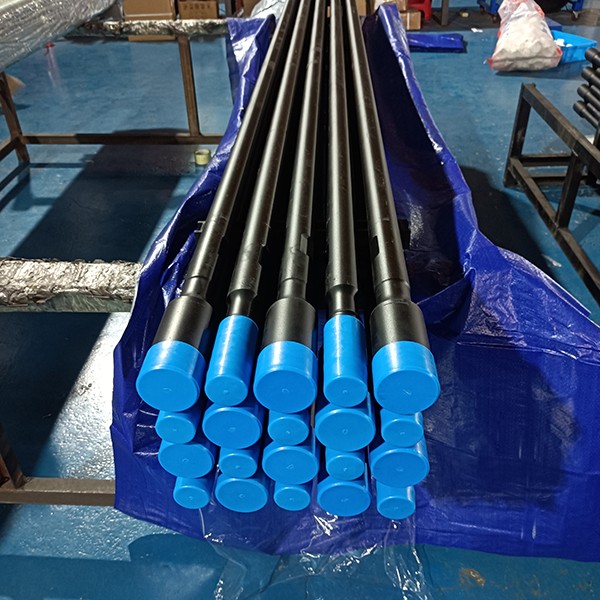
As a core component in drilling operations, the service life of a drill rod directly affects both construction efficiency and cost control. By standardizing operating procedures and tightening control over critical details, abnormal wear and premature failure can be significantly reduced. Key measures include:
1. Enforce Standard Operating Procedures
During construction, always operate within the drill rod’s rated tensile load, torque, and minimum bending radius limits. For contractors, disciplined rod operation is the primary safeguard against abnormal failure. It reduces the risk of breakage and excessive wear at the source and helps maintain continuous, stable operations.
2. Fully Utilize the Protective Function of Transition Rods
During reaming and pullback, the drill rod directly connected to the reamer often experiences an actual bending radius much smaller than the designed bore curvature. Under combined rotation and tension, this rod is subjected to high cyclic stress, which can cause fatigue damage, cracking, and eventual fracture.
Such fractures commonly occur about 0.3–0.8 m from the male tool joint.
Installing a transition rod between the standard drill rod and the reamer allows the transition rod to absorb the small-radius curvature load, effectively protecting the standard rod. This protective role is often overlooked, yet many “unexplained” drill rod fracture incidents are rooted in this exact issue.
3. Prevent Buckling Instability
From a mechanics perspective, a drill rod behaves like a slender member and is susceptible to buckling under compressive load. During pilot-hole drilling, free rod sections must be properly restrained to prevent bending failure during directional push and deflection.
Buckling most often occurs in the section between the rig clamp and the ground entry point. In practice, this section should be kept as short as possible, or additional targeted restraints should be applied. As a general control criterion, the free length should not exceed 20 times the rod diameter.
4. Select and Apply Thread Compound Correctly
Using high-quality thread compound helps prevent thread galling, lowers breakout torque, and reduces thread surface wear. It also improves thread sealing performance, reducing failures caused by thread damage and extending the service life of both the threaded connections and the drill rod as a whole.
5. Choose and Use Flushing Fluid Properly
When drilling through complex formations such as sand or cobble/gravel layers, high-quality drilling mud should be used as the flushing fluid. Mud forms a dense filter cake on the rod surface, providing effective lubrication. This reduces drilling torque and rod wear while also supporting borehole stability and cuttings transport—functions that are critical to drill rod protection.
6. Perform Regular Inspection and Timely Retirement
After a period of use, drill rods should be inspected regularly for wear level, bending deformation, and surface scratch depth. Rods with excessive wear, obvious bending, or deep surface scoring should be retired immediately to prevent safety incidents in operation.
Special attention should be given to the forged-to-rolled transition section, where stress concentration is high and wear/deformation are more likely. This area requires intensified inspection and stricter screening.