Static Rock Breaking Methods and Hydraulic Splitting Principles
Static Rock Breaking Methods and Hydraulic Splitting Principles
Static rock breaking is used when conventional explosive blasting is restricted by vibration limits, nearby buildings, noise controls, or safety requirements. It is commonly applied in foundation excavation, concrete removal, rock cutting, mining preparation, and urban demolition projects.
One traditional static method uses expansive demolition agents. These materials are commonly based on mineral compounds such as calcium oxide and silicate components. After water is added, the mixture undergoes a hydration reaction. As the material hardens and expands inside pre-drilled holes, it creates pressure against the surrounding rock or concrete. When the pressure exceeds the material’s tensile strength, cracks form and gradually widen.
This method requires careful preparation. The material should be stored in a dry location and mixed only when needed. After mixing, it should be placed into clean boreholes within the recommended working time. Hole orientation matters: vertical holes may be filled directly, while horizontal or inclined holes may require a stiffer mixture and appropriate sealing. Water in a borehole may require protective measures, and overly dry hole walls may need light wetting to support hydration.
Temperature also affects the reaction. In cold weather, warm water and insulation measures may help support crack development. The original article notes that cracking can occur over several hours, with the timing depending on temperature, material condition, borehole design, and the properties of the rock or concrete.
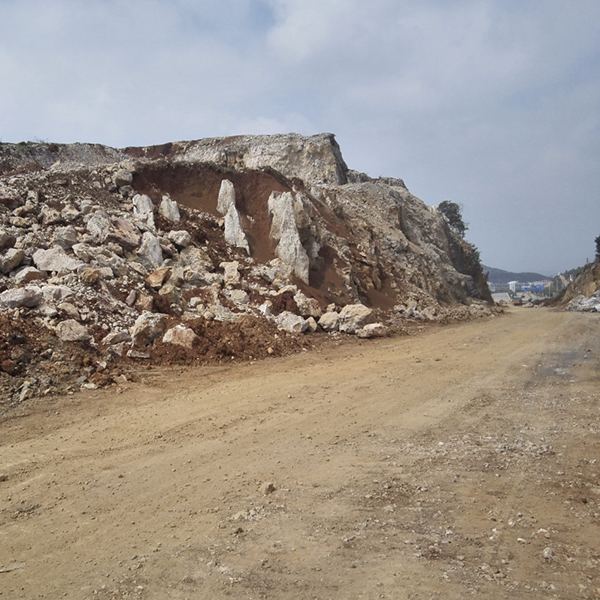
Hydraulic rock splitters use a different principle. A hydraulic power unit supplies high-pressure oil to a splitting tool inserted into a drilled hole. The internal hydraulic cylinder pushes splitting elements outward, applying force from inside the rock mass. Because rock and concrete are generally much weaker in tension than in compression, internal splitting force can create controlled fractures along a planned direction.
Hydraulic splitting can be valuable where contractors need predictable break lines, reduced vibration, and controlled removal of hard material. However, real productivity depends on site conditions, including rock strength, natural joints, borehole diameter, hole spacing, carrier equipment, hydraulic capacity, and operator experience.
For either method, project planning should include a site-specific trial area. Contractors should confirm the required crack direction, spacing, depth, expected cycle time, safety controls, and secondary breaking needs before full-scale work begins. Manufacturer performance claims should be verified through equipment specifications, field demonstrations, and comparable long-term project references.
Static rock breaking is not a single technology. Expansive agents and hydraulic splitters serve different operating conditions, but both can support non-blasting excavation when they are correctly selected, safely operated, and matched to the rock mass and construction objective.