The Shank Adapter: the Hydraulic Drilling Jumbo’s "Little Powerhouse"
Amid the roar of mining and the dim depths of tunnel excavation, the hydraulic drilling jumbo is an engineering behemoth: a powerful mechanical arm swings and hard rock yields. This machine’s performance depends on many parts working in concert, and among them there’s a small, easily overlooked component—the shank adapter. Outwardly unassuming, it controls the core path of force transmission, quietly passing massive energy through the machine’s internals. It’s the backbone of the jumbo’s striking power. Below is a clear look at what the shank adapter does, how it works, and why it matters.
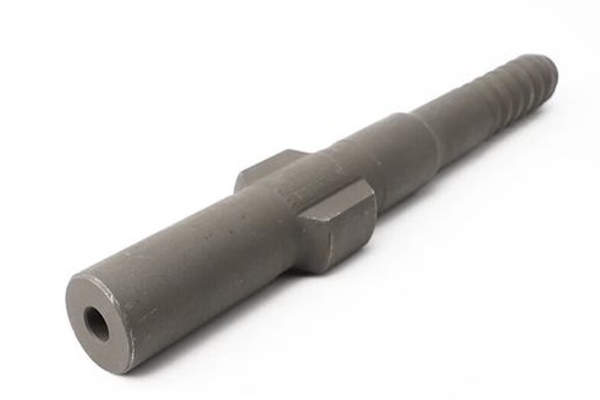
What the shank adapter is: the “power ferryman” inside the machine Simply put, the shank adapter is the critical connecting component in the hydraulic drilling jumbo’s power-transmission chain. Its structure is not complex, but its role is vital: it connects the rock drill’s impact piston to the drill rod (or drill steel), ferrying energy between them. One end of the shank adapter bears the repeated strikes of the impact piston; the other end couples to the drill rod, forming a continuous “energy highway.” When the rock drill runs, the impact piston lashes out at several thousand blows per minute against the shank adapter; that sudden, intense force is then transmitted through the shank adapter into the drill rod and finally focused onto the rock to break it.
This is easy to visualize if you think of driving a nail with a hammer: the piston is the hammer, the drill rod is the nail, and the shank adapter is like the wrist that connects hammer to nail. If the wrist is weak or the connection is sloppy, the hammer’s force dissipates and the nail won’t be driven properly. The same applies to the shank adapter: if it underperforms, even a powerful jumbo cannot deliver its full capability; work slows down and the machine may even fail.
How it works: a precise, non-deviating energy relay A hydraulic drilling jumbo’s task is essentially an energy relay, and the shank adapter is the relay runner that matters most. The hydraulic system drives the impact piston forward at high speed; that piston delivers huge, high-frequency impacts to the shank adapter. The shank adapter must absorb those impacts reliably and transfer the energy smoothly into the drill rod so the force lands accurately on the rock’s contact point, with no wasted energy.
This role is more demanding than it sounds. The shank adapter must withstand several thousand impacts per minute and cope with varying load conditions caused by rock hardness and uneven forces. Like a relay runner, it must grip the baton without letting go while keeping balance and rhythm. To meet these demands, modern shank adapters are made from high-strength alloy steels and undergo heat treatments such as quenching and tempering. They need both hardness to resist impact and enough toughness to avoid brittle failure. High-end manufacturers also use precision forging to create a dense, uniform internal structure and subject each piece to strict inspection so it will perform reliably under harsh working conditions.
Core value: the invisible switch that controls productivity and cost Although small, the shank adapter directly determines drilling speed and operating cost, and therefore the project’s profitability. A poor-quality shank adapter will waste transmitted energy, slow drilling rates, and multiply the time needed to complete work. Low-grade adapters are also prone to cracking and rapid wear, forcing frequent shutdowns for replacement. Those stop-and-go events not only add replacement costs but also cause downtime losses that can be far greater.
In large-scale mining or tunnel projects, problems caused by inappropriate shank adapters are common: frequent equipment failures, prolonged schedules, and in some cases project delays of many months that translate into multi-million-dollar losses. Conversely, choosing a high-quality shank adapter keeps the jumbo productive, reduces equipment wear, and extends service life—saving money and increasing profits over the long run.
Selection tips: how to avoid pitfalls (a) Size and specifications: find the correct “match key” Different models of hydraulic drilling jumbos use different interfaces and drill rod specifications. Like matching a key to a lock, the shank adapter must be the right size. Common sizes on the market include 76 mm and 90 mm; these dimensions determine whether an adapter fits and performs properly. If the size is wrong, the adapter may not fit at all, or it may fit poorly and cause poor energy transfer, severe vibration, and accelerated component wear. Always check the equipment manual and confirm dimensions so the adapter mates perfectly with the jumbo and drill rod.
(b) Material and manufacturing: good material and skilled processing equal longevity Material and manufacturing quality determine how durable and effective a shank adapter will be. High-quality adapters typically use alloy steels such as 42CrMo, which provide both strength and toughness to resist high-frequency impacts and complex stress states. Precise heat treatments (quenching and tempering) balance hardness and toughness, while precision forging creates a uniform internal grain structure. Top brands also perform rigorous quality control so each adapter can withstand severe working conditions.
(c) Brand and after-sales: choose a reliable partner Shank adapters vary widely in quality. Choosing a reputable brand with solid after-sales support helps avoid many problems. Check online reviews and ask industry peers about different manufacturers; prefer companies with long-standing experience, mature technology, and positive feedback. A trustworthy supplier not only delivers quality products but also offers professional selection advice and maintenance support, giving you greater confidence in operation.
Maintenance essentials: tips to prolong shank adapter life Like a well-maintained vehicle, a shank adapter needs regular care to maximize service life and minimize failures. First, inspect the adapter regularly for cracks, wear, or deformation; replace it immediately if damage is found to prevent small issues from becoming major failures or safety hazards. Second, ensure proper lubrication: contact areas between the shank adapter, piston, and drill rod are prone to friction and heat; apply the recommended lubricant at the prescribed intervals and keep lubrication channels clean. Finally, control operating parameters and avoid overloading the drill so the adapter is not subjected to excessive stress—this fundamentally extends its life.
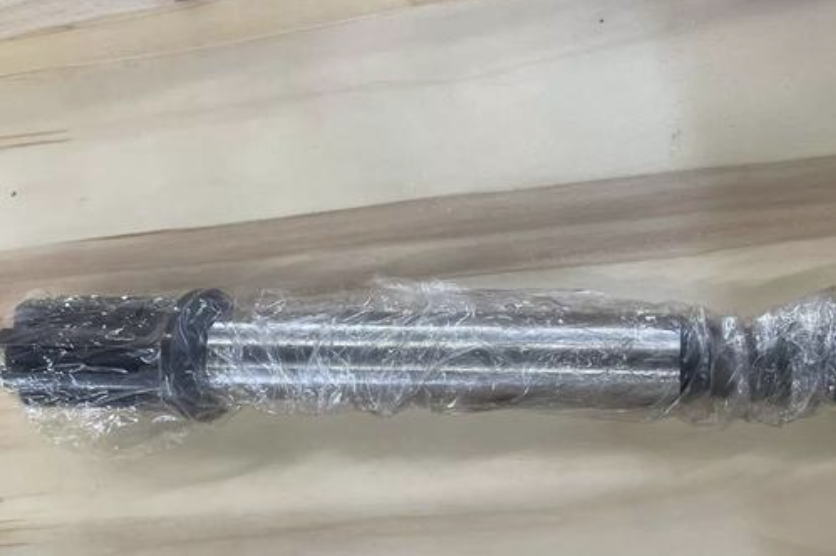
Though small in size, the shank adapter is the hydraulic drilling jumbo’s power core. It governs the critical link in energy transmission and directly affects productivity, equipment stability, and operating cost. Understanding its design, working principles, value, selection criteria, and maintenance needs makes it possible to give this small but vital component the attention it deserves. Choose well, use properly, and maintain carefully, and the shank adapter will keep the drilling jumbo performing strongly, helping mining and tunneling projects advance efficiently.