How to Use Tricone Drill Bits Correctly: Match the Bit to the Formation
A tricone drill bit can perform very differently from one formation to another.
The same bit that drills quickly through soft clay may wear rapidly in quartz-rich sandstone. A bit that performs well in limestone may suffer impact damage in fractured rock. When drilling performance changes, the cause is not always the bit itself. Formation type, drilling pressure, rotary speed, flushing, and hole conditions all influence the result.
Correct tricone bit use begins with understanding the ground.
Formation conditions control bit failure
Different formations create different drilling problems.
Clay, mudstone, and shale can absorb free water from the drilling fluid and swell. The hole may become smaller, making tripping difficult and increasing the risk of sticking. With longer exposure, pieces of the formation may fall away, enlarge the hole, and create instability.
Carbonaceous shale often has weak bonding and may collapse easily. Soft mudstone can drill quickly, but it can also create bit balling when cuttings adhere to the bit.
In these formations, the drilling-fluid program is important. Water or a low-density, low-viscosity fluid may be suitable in some conditions, but the final selection must follow the well plan and local engineering requirements.
Sandstone varies widely according to grain size, mineral content, and cementation.
Fine grains, abundant quartz, and silica or iron cement generally create harder, more abrasive sandstone. Quartz sandstone can therefore accelerate wear on the bit teeth and bearings.
More clay cement, mica, or feldspar often produces a softer and easier-to-drill formation. Coarse, weakly cemented sandstone may be more permeable, increasing fluid loss and creating a thick wall cake. That can contribute to differential sticking and abnormal bit operation.
Conglomerate can cause jumping, torque fluctuations, and borehole collapse. If pump flow is too low or drilling-fluid viscosity is unsuitable, gravel may not return effectively to the surface. Repeated contact with the bit body and teeth can then cause severe damage.
Limestone is often hard and produces a relatively low penetration rate. Fractures and cavities create additional risks, including sudden loss of circulation, drilling into a void, unstable torque, and hole enlargement. Where soft and hard layers alternate, deviation can also become more likely.
Soluble formations such as gypsum or rock salt may change the drilling-fluid properties and interfere with normal bit performance.
Drilling parameters must fit the bit and rock
The main controllable drilling parameters are:
Weight on bit
Rotary speed
Drilling-fluid flow rate
These values should be selected according to the formation, bit design, rig capacity, hole size, and operator experience. A parameter that improves performance in one rock type may shorten bit life in another.
There is no universal “maximum” drilling pressure or rotary speed that works everywhere.
Weight on bit: enough to make the cutters work
Weight on bit is necessary for the teeth to penetrate and break the formation.
As weight increases, penetration rate may initially rise. However, excessive weight also accelerates bearing wear, tooth damage, vibration, and structural loading.
The relationship between weight and rock breaking can be understood in three stages.
Surface-fracturing stage: When the applied weight is below the formation's indentation resistance, the teeth cannot penetrate effectively. They mainly scrape and rub the surface. Drilling remains slow, while tooth wear can be surprisingly high.
Fatigue-fracturing stage: As weight approaches the required level, repeated tooth contact creates cracks in the rock. The formation begins to break through repeated loading, but the process is still less efficient than full penetration.
Volume-fracturing stage: Once the teeth penetrate sufficiently, larger chips break away and the bit enters a more productive drilling condition.
The objective is to reach effective penetration without overloading the bit.
Soft, sticky formations may require lower weight to reduce balling and blockage. Abrasive rock may need enough weight to prevent the teeth from rubbing without cutting. Fractured formations often require lower weight to reduce jumping and prevent tooth breakage.
The best setting is the one that allows the cutting structure to work while limiting unnecessary wear.
Rotary speed: faster is not always better
Rotary speed determines how quickly the bit turns against the rock.
In soft, plastic, low-abrasion formations, higher rotary speed can often increase mechanical drilling speed when weight remains appropriate. The cutting teeth penetrate relatively easily, and wear may remain limited.
Hard and abrasive formations behave differently. As teeth wear and the contact area increases, rock deformation and crack development require more time. If the bit rotates too quickly, the teeth may leave the contact zone before the rock has fully fractured.
That can reduce effective cutting depth, increase heat and wear, and eventually lower penetration rate.
Field testing has shown that speed increases are not equal across formations. In one comparison, doubling rotary speed increased drilling speed by approximately 93% in a softer marble, but by only about 28% in a very hard porphyritic granite.
The lesson is simple: higher speed may help softer formations, while hard, abrasive rock often benefits more from controlled speed and sufficient weight.
Flushing protects the bit
Drilling-fluid flow is not only about cooling. It also removes cuttings, stabilizes the hole, and keeps the bit face clear.
Poor flushing can cause:
Repeated crushing of old cuttings
Bit balling
Increased tooth wear
Higher torque
Sticking or jamming
Hole deviation
Damage to bearings and the bit body
The flow rate must suit the hole diameter, formation permeability, pump capacity, and cuttings volume. A number copied from another rig is not automatically correct.
Inspect the complete drilling system
A tricone bit should be evaluated together with the drill string and rig.
Before drilling, check:
Bit type and tooth structure
Formation hardness and abrasiveness
Planned weight and rotary speed
Pump capacity and flushing quality
Drill rod strength and length
Rig torque and feed capability
Hole deviation risk
Expected failure mode
A bit can be correctly manufactured and still fail early if the drilling system is poorly matched.
Likewise, a sudden drop in penetration rate does not always mean the bit must be replaced immediately. It may indicate poor flushing, formation change, excessive speed, insufficient weight, hole instability, or drill-string problems.
Choose performance, not just price
Tricone bit selection should consider cost per meter, not only purchase price.
A low-cost bit that drills slowly, requires frequent replacement, or causes downtime may cost more over the life of the project. A better comparison includes penetration rate, footage, bearing life, tooth wear, drilling-fluid demand, and failure consequences.
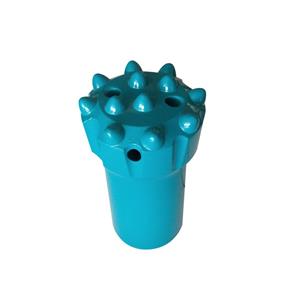
Gaea Rock supplies tricone drill bits, DTH bits, button bits, drill rods, shank adapters, and related rock-drilling tools. Matching the bit design and drilling parameters to the formation is the most reliable way to improve footage, protect the drill string, and control total drilling cost.