Umbrella Drill Tools: How to Select Drill Rods and Bits for Shaft Drilling
Umbrella Drill Tools: How to Select Drill Rods and Bits for Shaft Drilling
Umbrella drills are widely used in shaft sinking and vertical rock drilling operations. Working downward in a confined shaft environment creates special demands for drilling equipment, particularly for drill rods, drill bits, shanks, and flushing performance. Choosing the right umbrella drill tools is essential for stable drilling, effective cuttings removal, lower tool consumption, and safer working conditions.
Unlike ordinary horizontal drilling, shaft drilling places greater emphasis on debris discharge. Broken rock, dust, and drilling fines must be removed efficiently from the hole. If the drill rod or bit is poorly matched to the drilling machine and rock conditions, cuttings can accumulate, reduce drilling speed, increase tool wear, and contribute to premature bit or rod failure.
Selecting Drill Rods for Umbrella Drills
Umbrella drill systems commonly use drill rods such as H25, H32, and H35. The final selection depends on the drilling machine, thread connection, hole size, ground conditions, and required drilling depth.
For pneumatic rock drills, H25 drill rods are frequently used. These rods may use a shank connection at one end and a tapered or threaded bit connection at the other end. Tapered connections and thread options such as R28 and R32 are commonly used in suitable drilling applications.
Hydraulic rock drills generally use stronger threaded rod systems, including H32 and H35 rods. These systems may incorporate R38 or T38 threads on one end and R32 threads on the other, depending on the selected drilling arrangement. The purpose of a correct thread system is not only to join the drilling tools securely, but also to transfer impact energy and rotation efficiently through the drill string.
When selecting shaft drilling drill rods, operators should confirm several factors:
Compatibility with the rock drill model
Rod diameter and stiffness
Thread type and connection strength
Required drilling length
Hole diameter and bit size
Rock hardness and abrasiveness
Flushing and cuttings-removal requirements
A drill rod that is too light may bend or fail under demanding conditions. A rod that is poorly matched to the drill bit or rock drill can also waste impact energy, cause connection damage, and reduce penetration rate.
Material Quality Makes a Major Difference
Drill rod material has a direct effect on strength, toughness, wear resistance, and service life. Standard drill steel may be suitable for some conditions, but higher-performance materials can offer important advantages in difficult shaft operations.
For example, carburized drill rods can provide improved surface hardness and wear resistance while maintaining core toughness. This combination is valuable because drill steel must resist impact, bending, thread wear, and abrasive rock contact. A rod with good toughness is less likely to fail suddenly, while a hard and wear-resistant surface can extend the service life of threaded connections and contact areas.
Selecting higher-quality hydraulic rock drill rods may require a larger initial investment, but the operating benefit can be substantial. Longer service life, fewer rod replacements, less downtime, and more stable drilling performance can reduce total project cost.
Choosing Rock Drilling Bits
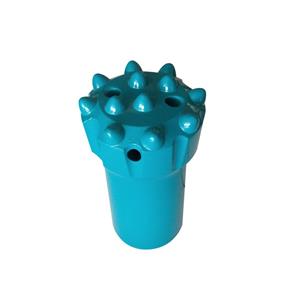
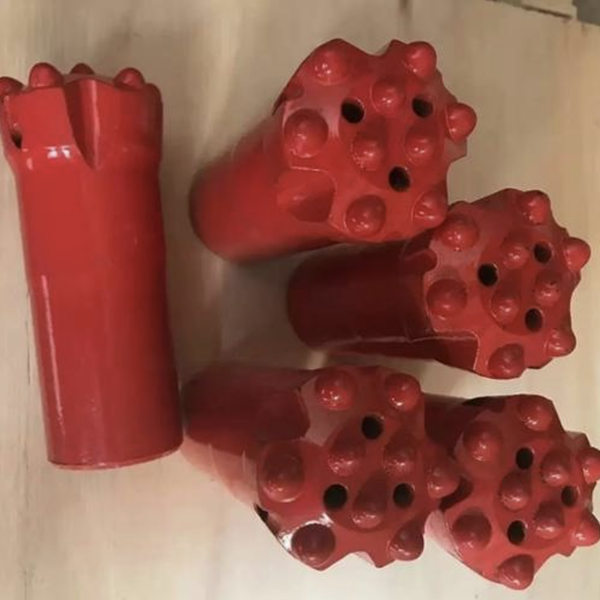
Umbrella drill bits are commonly selected in a diameter range of approximately 48 to 57 mm, with thread connections such as R28 and R32. The correct bit size must match the rod, rock drill, and drilling objective.
Bit selection should consider more than diameter alone. The bit body, carbide button layout, flushing holes, thread quality, and gauge protection all affect drilling performance. In vertical drilling, flushing design is especially important because cuttings must be carried out of the hole effectively.
If cuttings are not removed properly, several problems can occur:
Reduced penetration rate
Regrinding of rock fragments
Excessive heat and wear
Abnormal carbide failure
Damage to the bit body
Abnormal drill rod breakage
A high-quality bit should provide a stable connection, durable carbide inserts, sufficient flushing capacity, and a profile suited to the rock type. Operators should also inspect the bit regularly for button wear, cracked carbide, damaged threads, and blocked flushing holes.
Why Cuttings Removal Is Critical
Shaft drilling is a downward drilling process, so cuttings removal has a major influence on tool life. If the flushing system cannot clear broken rock from the hole, debris may circulate around the bit and cause unnecessary wear. The bit can lose its cutting efficiency, the carbide can be damaged, and the drill string may experience abnormal vibration or loading.
Poor flushing is not always caused by the rock drill itself. It can result from an unsuitable bit, insufficient air or water flow, blocked holes, improper rod selection, or a mismatch between tools and drilling conditions. For this reason, drill steel maintenance should include inspection of the complete drilling system rather than only individual parts.
Improve Safety and Productivity Through Better Tool Management
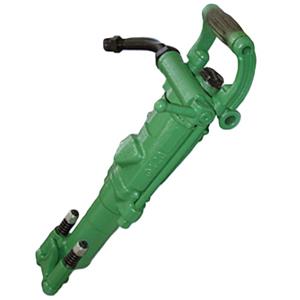
Shaft conditions are often demanding, and workers may face high labor intensity. Reliable rock drills and correctly selected drill tools can reduce manual intervention, improve drilling efficiency, and help control operating costs.
A practical tool-management program should include correct tool selection, routine inspection, timely replacement of worn components, proper thread lubrication, and monitoring of drilling performance. By treating rods, bits, connections, and flushing as one integrated system, shaft-drilling teams can improve safety, protect equipment, and achieve more consistent results.