Understand 38 Open‑Pit Mining Terms at a Glance
In open‑pit mining, professional terminology forms the shared language that standardizes production processes and ensures safe, efficient operations. These terms cover mine planning, mining methods, key parameters, equipment, and safety management across the whole workflow. The following explains 38 core terms grouped by logical categories to help you quickly grasp the core logic and key points of open‑pit mining.
I. Basic Mine Geometry and Boundary Terms These terms define the mine’s spatial form, boundary criteria, and working area—foundations for mine planning and design.
Hillside open‑pit: The area of open‑pit mining located above the closed contour; mining conditions are influenced by slope, elevation and other terrain factors. Suitable for relatively shallow deposits near the upper part of a hill.
Depressed/open‑pit below the contour: The mining area located below the closed contour. As depth increases, slope stability and drainage become primary concerns; common where the deposit is deeply buried.
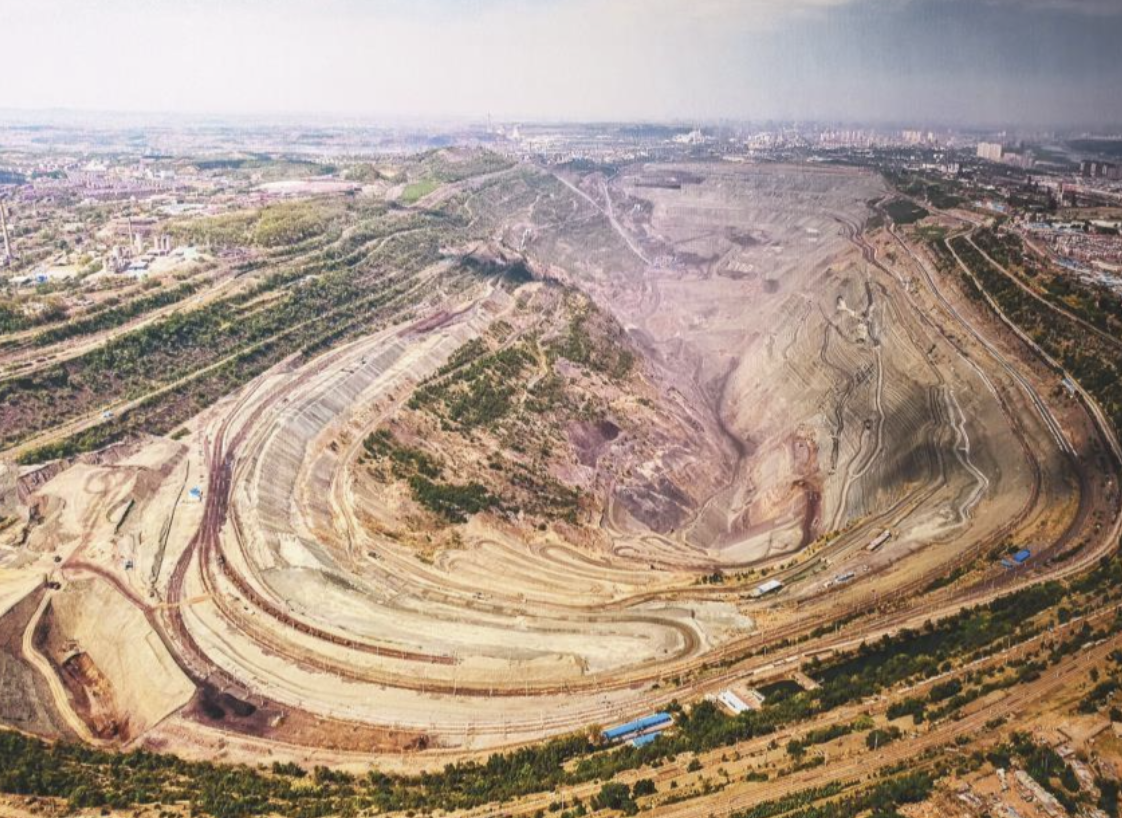
Closed contour (closure contour): A closed curve at a common elevation that delineates the upper limit of open‑pit mining; it separates hillside workings from the depressed pit and plays a decisive role in defining the mine extent.
Open‑pit working area: The collective term for the pit, benches, and open channels created by mining; it is the zone where extraction, stripping and other core operations occur.
Pit limit and its components: The spatial outline formed at the end of open‑pit mining (or at a given phase), composed of the surface boundary, bottom perimeter, and surrounding slopes. Determining it balances resource recovery, economic feasibility, and slope stability and is central to mine design.
Lower final boundary (bottom perimeter): The intersection line between the final bench slope and the pit floor; it defines the bottom extent of the pit and is a key limit for mining depth. Final berms above this line can be classified as safety berms, haulage berms, or cleanup berms.
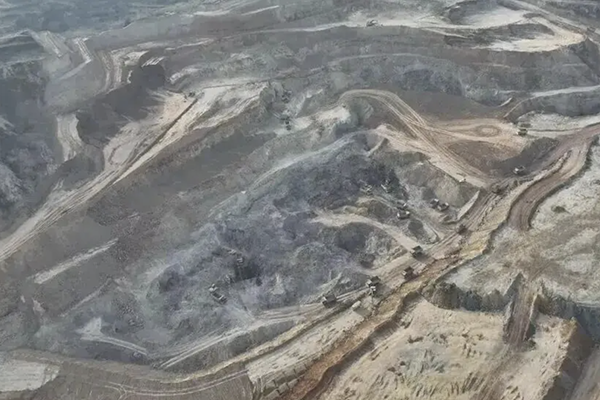
II. Core Working Areas and Layering Terms These terms correspond to the layered units used in bench mining and directly affect order, efficiency and safety.
Bench: A horizontal layer of rock and ore of controlled thickness that is mined from top to bottom in a stepped arrangement. Benches control mining height, improve safety, and facilitate excavation, loading and haulage.
Blast strip (blasting zone): A subdivision of a working bench into strips that are blasted and mined sequentially. Proper division improves blasting efficiency and reduces safety risks.
Cut width (excavation strip): The width excavated in a single pass by an excavator. Its value depends on excavator type, rock properties and mining method, and it directly affects single‑pass production and overall progress.
Working platform (working bench/platform): The surface on working benches where excavation and stripping occur. It must have adequate width and bearing capacity for excavators and haul trucks and should include drainage slope to prevent water accumulation.
Access ramp (haul ramp): Inclined transport routes connecting surface levels, working benches, and different elevations. They are classified as main ramps (for bulk material haulage) and auxiliary ramps (for equipment and personnel).
Starter drift (opening trench): A near‑horizontal trench excavated to establish the working line for a bench; its location, length and width are determined by the planned mining line and are prerequisites for starting operations on that level.
III. Slope‑Related Terms (Safety‑Critical) Slope stability underpins safe open‑pit production. These terms define slope types, key parameters and protective features.
Non‑working wall: The area around the pit composed of completed bench platforms, slope surfaces and the bottoms of access ramps. Although no longer actively mined, it requires long‑term stability management to prevent landslides and collapses.
Final wall: A non‑working wall that lies on the final mining boundary; the wall on the lower side of the deposit is called the footwall. Its location and shape are fixed during design and are crucial for post‑mining land reclamation and ecological restoration.
Highwall (upper wall): The wall located on the upper side of the deposit; its stability directly affects safety in the upper pit area and is monitored and reinforced as needed.
End wall: The wall at the ends of the deposit; its excavation and maintenance must consider ore strike and mining sequence to maintain overall operational continuity.
Working wall (active wall): Comprised of benches currently being mined or about to be mined; it is the active area of production. Slope angles and bench heights are adjusted dynamically with mining progress.
Final slope angle: The angle between the final slope face and the horizontal plane; it indicates the steepness of the final wall and is determined by rock mechanics, slope height and stability calculations to ensure long‑term stability.
Final slope face: The slope surface that becomes the final wall when non‑working benches reach the final boundary; its shape must conform strictly to design and marks the end state of mining.
Working wall slope angle: The angle between the active wall face and the horizontal; it affects stability and productivity and should be optimized for the current phase and rock conditions.
Working wall surface: The imaginary sloping surface formed between the top bench toe and the bottom bench toe of the working wall; it visually reflects overall wall geometry and guides angle and operation planning.
Safety berm (catch bench): Designed to buffer and intercept falling rock, reduce the effective slope angle and protect lower levels. Width and spacing are set based on slope height and rock stability.
Haulage berm (transport platform): The bench or roadway linking working benches to access ramps, designed for safe passage of haulage vehicles; its width, gradient and surface must suit vehicle types and haul volumes.
Cleanup bench (catch/cleaning platform): Installed periodically down the slope to intercept fallen rock and to allow removal by cleaning equipment. It also serves as a safety berm to protect lower operations.
IV. Core Mining Parameters (Economic and Production Planning) These indicators measure mining economics, scale and guide production planning.
Stripping ratio: The ratio of waste (overburden) to ore (t/t or m³/m³). It is a core economic indicator for open‑pit mining: the lower the stripping ratio, the better the economic outlook.
Average stripping ratio (np): The ratio of total waste volume Vp to total ore volume Ap within the pit limit: np = Vp / Ap. It reflects the overall proportion of waste to ore in the planned pit and is important for planning and economic assessment.
Bench (layer) stripping ratio (nf): The ratio of waste Vf to ore Af in a given bench or layer: nf = Vf / Af. It is used to analyze the economics of specific layers and to help determine mining order and method.
Marginal stripping ratio (nj): The ratio of incremental waste to incremental ore when the pit limit is extended by a unit depth: nj = ΔV / ΔA. It helps decide whether deepening the pit boundary is economically justified; if below the economic cutoff ratio, deepening may be feasible.
Operational/production stripping ratio (ns): The ratio of waste Vs to ore As during a specific production period: ns = Vs / As. It reflects ore‑to‑waste proportions during a production stage and is important for production scheduling and equipment allocation.
Economic cutoff stripping ratio: The maximum amount of waste per unit ore that is economically acceptable for open‑pit mining. Areas exceeding this ratio are uneconomic to mine and require calculation using ore price, mining and stripping costs.
Total mined tonnage: The sum of ore produced and waste removed; it directly reflects production scale and operational intensity.
Mine production capacity (t/a): Expressed by ore capacity Ak and total material capacity A, with A = Ak × (1 + ns). Capacity must be set according to reserves, market demand and technical conditions and is a core design parameter.
Planned mine life (economic life): The service life chosen to maximize economic benefit given construction scale and proven industrial reserves. It considers resource utilization, payback period and equipment depreciation to ensure optimal economic outcomes.
V. Mining Methods and Supporting Technologies These terms cover stripping, transport, blasting and waste handling methods—key to smooth operations.
Blasting parameters: Include bench burden (stemming line), hole spacing and pattern, proximity factor, overdrilling, stemming length, explosive consumption per unit, and charge per hole. Proper selection affects rock fragmentation, blasting safety and explosive consumption and is optimized via field trials and calculations.
Open‑pit mining methods: The study of sequencing and spatial relationships in mining, stripping and ore extraction. Appropriate methods (e.g., benching, highwall mining, etc.) improve efficiency, reduce cost and ensure safety.
Open‑pit transport modes: Include rail, road, skip/hoist on inclines, combined transport, belt conveyors, hydraulic transport, and gravity flow. Each has advantages and constraints and should be chosen based on mine scale, topography and material properties.
Waste rock disposal methods: Examples include truck haul and dozer push, rail transport with excavator placement, dozer rip‑and‑push, loader dumping, and belt conveyor stacking. Choice depends on transport method, dump site conditions and equipment layout to ensure orderly, safe waste placement and minimize environmental impact.
Main factors affecting waste dump stability: Include dump slope, stacking height, foundation geology and bearing capacity, soil‑rock properties and stacking sequence. Common failure modes are landslides and debris flows. Design and operation must adopt suitable stacking sequences, foundation treatment and drainage systems to maintain stability.
In summary, these 38 terms span mine planning, design, production and safety management. Understanding their meanings and interrelations is fundamental to mastering open‑pit mining processes and ensuring safe, efficient operations.