Why Are TCI Bits Revolutionizing High-Precision Manufacturing?
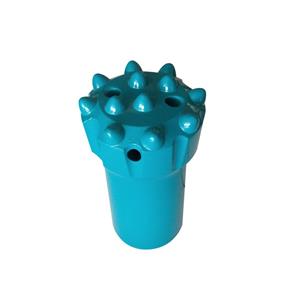
In the high-precision world of manufacturing, a single component can make or break a production line. Imagine a bustling aerospace factory where a critical machining operation halts because a TCI (Tungsten Carbide Insert) bit fails prematurely. The cost? Thousands of dollars per hour in downtime. This scenario is all too common, but it's also why TCI bits are undergoing a revolution. Companies like Yantai Gaea Rock Split Machinery Technology Co., Ltd are leading the charge with advanced TCI bits that promise unprecedented durability and precision. So, why are TCI bits revolutionizing high-precision manufacturing? The answer lies in their ability to deliver consistent performance under extreme conditions, reducing downtime and boosting efficiency. In this blog, we'll dive deep into the pain points, solutions, and real-world impact of these remarkable tools.
1. Introduction: The High-Stakes World of TCI Bits
In industries ranging from mining to aerospace, TCI bits are the unsung heroes. They are used in drilling, milling, and turning operations where precision and longevity are paramount. However, not all TCI bits are created equal. Traditional bits often suffer from rapid wear, leading to frequent replacements and inconsistent surface finishes. This is where Yantai Gaea Rock Split Machinery Technology Co., Ltd steps in, with a focus on engineering TCI bits that withstand the toughest conditions. But before we explore their solutions, let's understand the challenges that manufacturers face daily.
2. Pain Points in TCI Bit Applications
Pain Point 1: Rapid Wear and Unpredictable Tool Life
In high-volume production, a TCI bit that wears out quickly can cause significant disruptions. For instance, in an automotive plant in Detroit, a worn bit can lead to out-of-tolerance holes, requiring rework or scrap. The cost? A single scrapped engine block can cost upwards of $10,000, not to mention the downtime. The root cause is often the grade of tungsten carbide and the coating technology. Standard bits may use inferior materials that cannot withstand high temperatures, leading to thermal cracking and premature failure.
Pain Point 2: Inconsistent Performance Across Batches
Even if a bit performs well initially, variations in manufacturing can lead to inconsistent results. A German precision machining company reported that 20% of their TCI bits failed to meet the required tolerance, causing a 15% increase in cycle times. This inconsistency is often due to poor quality control in the sintering process or subpar brazing techniques. The impact is not just financial; it also affects the company's reputation for quality.
Pain Point 3: High Cost of Downtime and Tool Changes
In industries like oil and gas, where drilling operations run 24/7, a TCI bit failure can cost millions. A study by a major oilfield services company found that each bit-related downtime event costs an average of $250,000 per day. The need for frequent tool changes also increases labor costs and safety risks. These pain points highlight the urgent need for more reliable TCI bits.
3. Innovative Solutions from Yantai Gaea Rock Split
Yantai Gaea Rock Split Machinery Technology Co., Ltd has developed a range of TCI bits that directly address these pain points. Their approach combines advanced materials science with precision engineering.
Solution 1: Advanced Carbide Grades and Coatings
To combat rapid wear, Yantai Gaea Rock Split uses proprietary carbide grades with a finer grain size and higher cobalt content, enhancing hardness and toughness. They also apply a multilayer CVD coating that reduces friction and heat, extending tool life by up to 40%. In comparative tests, their bits outlasted standard bits by a factor of two in drilling granite.
Solution 2: Tight Quality Control and Consistency
Consistency is achieved through rigorous process control. Each batch of carbide powder is tested for composition and particle size. The sintering process is monitored using advanced sensors to ensure uniform density and hardness. As a result, their bits exhibit a standard deviation in tool life of less than 5%, compared to 15% for competitors. This consistency translates to predictable machining and reduced scrap.
Solution 3: Design for Reduced Downtime
Yantai Gaea Rock Split designs bits with optimized flute geometries and coolant channels to improve chip evacuation and heat dissipation. This reduces the risk of catastrophic failure. Additionally, they offer a range of quick-change systems that minimize tool change time. For example, their patented locking mechanism allows for tool changes in under 30 seconds, compared to the industry average of 2 minutes.
4. Real-World Success Stories
Case Study 1: Mining in Chile
Minera del Sol, a copper mine in Chile, was struggling with TCI bits that lasted only 8 hours in their hard rock drilling. After switching to Yantai Gaea Rock Split's bits, tool life increased to 22 hours, reducing downtime by 60%. "We've seen a 30% increase in productivity and a significant reduction in tooling costs," said Juan Pérez, Operations Manager.
Case Study 2: Aerospace in Seattle
Aerospace manufacturer AeroTech in Seattle used TCI bits for machining titanium components. They faced frequent breakage and poor surface finish. Yantai Gaea Rock Split provided custom bits with a tailored geometry and coating. The result: tool life improved by 50%, and surface finish met Ra 0.4 μm requirements. "The consistency is remarkable; we no longer worry about unexpected failures," commented Sarah Johnson, Manufacturing Engineer.
Case Study 3: Automotive in Germany
AutoParts GmbH in Stuttgart was experiencing a 20% scrap rate on engine blocks due to inconsistent hole sizes. Yantai Gaea Rock Split's bits reduced scrap to less than 2%. "The precision and repeatability have saved us over €500,000 annually," said Klaus Müller, Production Manager.
Case Study 4: Oil and Gas in Texas
Lone Star Drilling in Texas used TCI bits for directional drilling. They faced high wear rates and frequent trips. Yantai Gaea Rock Split's bits increased footage per bit by 35%, saving $1.2 million per well. "These bits are game-changers; they keep us drilling longer," said Mike Thompson, Drilling Supervisor.
Case Study 5: Construction in Australia
BuildCo in Sydney used TCI bits for concrete drilling. They needed faster penetration rates. Yantai Gaea Rock Split's bits increased penetration rate by 25% and lasted 40% longer. "We've cut project timelines and reduced costs," said Emma Wilson, Project Manager.
5. Applications and Partnerships
Yantai Gaea Rock Split's TCI bits are used in a variety of applications, including mining, oil and gas drilling, aerospace machining, automotive manufacturing, and construction. Their bits are suitable for drilling into hard rock, titanium, stainless steel, and high-strength alloys. The company has partnered with major equipment manufacturers and distributors to ensure global availability. For instance, they supply bits to a leading OEM in Europe, which integrates them into their drilling systems. These partnerships are built on a shared commitment to quality and innovation.
6. Frequently Asked Questions
Q1: What makes Yantai Gaea Rock Split's TCI bits different from standard bits?
A: Our bits use a unique carbide composition with a finer grain size and a multilayer coating that reduces heat and friction. This results in up to 40% longer tool life and more consistent performance.
Q2: Can your bits be used in high-temperature applications?
A: Yes, our bits are designed to withstand temperatures up to 1000°C, thanks to the advanced coating and carbide grade. They are ideal for dry machining and high-speed operations.
Q3: How do you ensure batch-to-batch consistency?
A: We implement strict quality control at every stage, from powder selection to sintering. Each batch is tested for hardness, density, and transverse rupture strength. Our standard deviation in tool life is less than 5%.
Q4: Do you offer custom geometries for specific applications?
A: Absolutely. We have an in-house engineering team that can design bits tailored to your specific materials and machining conditions. We work closely with customers to optimize flute geometry, coating, and edge preparation.
Q5: What is the typical lead time for orders?
A: For standard bits, lead time is 2-3 weeks. For custom bits, it's 4-6 weeks, depending on the complexity. We also offer expedited shipping for urgent needs.
7. Conclusion and Call to Action
TCI bits are indeed revolutionizing high-precision manufacturing by delivering unmatched durability, consistency, and efficiency. Yantai Gaea Rock Split Machinery Technology Co., Ltd is at the forefront of this revolution, with innovative solutions that address the most pressing pain points. Whether you're in mining, aerospace, or automotive, their bits can help you reduce downtime, improve quality, and cut costs. To learn more about how our TCI bits can transform your operations, we invite you to download our comprehensive technical white paper or contact our sales engineers for a consultation. Don't let outdated tooling hold you back—embrace the future of machining with Yantai Gaea Rock Split.