Why Do DTH Hammer Bits Fail Faster Than Expected?
You're halfway through a critical drilling project in Nevada, the ground is harder than the geological survey predicted, and suddenly your penetration rate drops by half. You pull the string, and there it is—your DTH hammer bit is chipped, cracked, or the buttons are worn flat. The downtime costs you $2,000 per hour, and the replacement bit isn't arriving until tomorrow. Sound familiar? The truth is, most DTH hammer bits fail prematurely not because of the rock, but because of a combination of design flaws, operating habits, and overlooked maintenance. In this comprehensive guide, we'll dissect the real reasons behind premature bit failure and provide actionable solutions that can extend your bit life by up to 40%. Whether you're a drilling contractor, a quarry operator, or a procurement manager, this article will change the way you think about DTH hammer bits.
The Hidden Costs of Premature Bit Failure
When a DTH hammer bit fails, the visible cost is the replacement part. But the true cost is much deeper. Consider this: a single bit failure on a rig in Western Australia can halt production for 4-6 hours. At an average rig rate of $1,500 per hour, that's $6,000 to $9,000 in lost time alone. Add the cost of pulling the drill string, re-seating, and re-aligning, and you're looking at a total impact of $10,000 to $15,000 per incident. Multiply that by the 10-15 failures you might experience in a year, and you're losing $150,000 or more—enough to buy a new compressor or upgrade your entire fleet. But the financial hit is just the beginning. Premature failures also lead to inconsistent hole quality, which can cause blasting inefficiencies, increased explosive costs, and even safety hazards. In one documented case in Chile, a series of bit failures led to a 20% increase in overbreak in an open-pit mine, resulting in millions of dollars in extra waste removal and slope stabilization. The ripple effect is real, and it starts with the bit.
Pain Point 1: The Misalignment of Bit Design and Rock Hardness
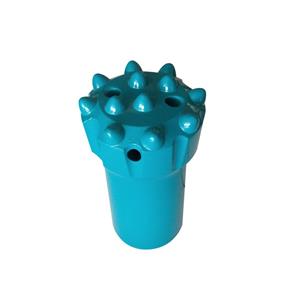
One of the most common mistakes we see in the field is using a bit that is not optimized for the specific rock formation. Many contractors buy a single type of bit for all their drilling, assuming that a high-quality bit should handle everything. But that's a recipe for disaster. For example, a bit designed for soft sedimentary rock (like limestone) has a different button geometry and carbide grade than one designed for hard, abrasive granite. When you use a soft-rock bit in hard rock, the buttons are subjected to excessive impact stress, leading to premature chipping and breakage. Conversely, a hard-rock bit used in soft rock will have a slower penetration rate and may cause the bit to 'skate' on the surface, increasing wear on the gauge buttons. The result is a bit that fails in half the time it should, and you're left wondering why you're buying bits every month. The cost of this mismatch is not just the replacement cost—it's the lost productivity and the constant downtime. We've seen operations in South Africa where switching to a properly matched bit increased bit life from 200 meters to 500 meters, a 150% improvement. That's the difference between being profitable and struggling to break even.
Solution 1: Conduct a Thorough Rock Analysis and Match the Bit Profile
At Yantai Gaea Rock Split Machinery Technology Co.,Ltd, we've made it our mission to eliminate this pain point through a systematic approach. First, we recommend that every drilling operation conduct a comprehensive rock analysis, including hardness (Mohs scale), abrasiveness (Cerchar Abrasiveness Index), and fracture toughness. Based on this data, our engineering team can recommend the optimal bit profile: the button shape (spherical, ballistic, or conical), the carbide grade (from 6% to 12% cobalt), and the bit face design (concave, flat, or convex). For example, for highly abrasive formations like quartzite, we recommend a bit with ballistic buttons and a higher cobalt content to resist impact and abrasion. For fractured formations, a concave face with a deeper center is better to maintain hole straightness. We also offer custom-designed bits for unique applications. One of our clients in Norway, a tunneling contractor, was facing severe bit breakage in a mixed-face condition. After analyzing their rock samples, we designed a bit with a unique combination of front and gauge buttons that increased their bit life by 60% and reduced their cost per meter by 25%. The key is not to guess—it's to engineer the bit for your specific ground conditions.
Pain Point 2: The Impact of Improper Operating Parameters
Even with the perfect bit, you can still fail if you're not operating within the recommended parameters. The most common issues we see are: running the hammer at too low or too high an air pressure, using an excessive rotation speed, and applying too much feed force. Let's break these down. Low air pressure means the hammer doesn't have enough energy to break the rock efficiently, so the bit pounds on the same spot, causing the carbide buttons to fatigue and crack. High air pressure, on the other hand, can cause the bit to bounce off the rock, leading to impact damage and premature wear on the shank. Rotation speed is another critical factor. If you rotate too fast, the buttons will drag across the rock surface, causing excessive gauge wear. If you rotate too slowly, you'll create a hexagonal hole, which increases stress on the bit. Feed force is the final piece. If you push too hard, you'll overload the bit, causing the buttons to break. If you push too little, the bit will bounce, causing the same impact damage as high air pressure. These mistakes are common, and they're costly. In a case study from a quarry in Ohio, USA, the operator was running their hammer at 350 psi instead of the recommended 250 psi, thinking they would get faster penetration. Instead, their bit life dropped from 1,200 feet to 400 feet, and they were consuming twice as many bits. The cost of the extra bits and downtime was over $80,000 in a single year. That's a painful lesson.
Solution 2: Adopt a Data-Driven Operating Protocol
The solution here is not just to tell operators to follow the manual—it's to empower them with data. At Yantai Gaea Rock Split Machinery Technology Co.,Ltd, we provide our clients with a detailed operating guideline that includes optimal air pressure, rotation speed, and feed force for each bit type and rock condition. But we go a step further. We encourage our clients to install simple sensors on their rigs to monitor these parameters in real-time. For example, a pressure gauge and a rotation speed indicator can be installed for less than $500, and they provide immediate feedback. We also train operators on how to listen to the hammer—the sound of the hammer can tell you if it's operating efficiently. A sharp, crisp sound indicates proper operation, while a dull thud suggests the bit is not making good contact. In a partnership with a mining contractor in the Pilbara region of Australia, we implemented a comprehensive training program and installed monitoring equipment. Within three months, their bit life increased by 35%, and their cost per meter dropped by 18%. The operator now has a dashboard that shows real-time parameters, and they can adjust on the fly. This data-driven approach not only extends bit life but also improves overall drilling efficiency, reducing the time to complete each hole by 15%.
Pain Point 3: Neglecting Regular Maintenance and Inspection
The third major pain point is the lack of a proactive maintenance culture. Many operators treat DTH hammer bits as disposable items—they use them until they fail, then throw them away. But this is a false economy. A bit that is properly maintained can last 20-30% longer, and a simple inspection routine can catch problems before they become catastrophic. The most common issues we find are: worn shanks that don't fit properly in the chuck, causing misalignment and stress; damaged button inserts that are not replaced in time, leading to further damage; and clogged air passages that reduce hammer efficiency. When the shank wears, it creates play between the bit and the hammer, which causes the bit to wobble and puts excessive stress on the buttons. This can lead to premature failure in as little as 50% of the expected life. Similarly, if a button is chipped but not replaced, it will cause uneven loading on the adjacent buttons, leading to a cascade of failures. And if the air passages are blocked, the hammer won't generate enough impact energy, forcing the operator to increase pressure, which further stresses the bit. The cost of neglect is substantial. A study conducted by an independent research firm found that drilling operations that implemented a regular maintenance program reduced their total drilling cost by 12-15%, primarily through extended bit life and reduced downtime. That's a significant saving that goes straight to the bottom line.
Solution 3: Implement a Proactive Maintenance and Reconditioning Program
At Yantai Gaea Rock Split Machinery Technology Co.,Ltd, we advocate for a 'recondition, don't replace' philosophy. We offer a comprehensive maintenance program that includes regular inspections, button re-tipping, and shank re-grinding. Our team of technicians can visit your site and train your maintenance staff on how to identify early signs of wear and how to perform basic repairs. For example, we teach them how to measure the shank diameter and compare it to the manufacturer's specification. If it's worn beyond tolerance, the bit should be sent back to us for re-tipping. We also recommend a simple inspection checklist that should be performed at the end of each shift. This includes: checking for any visible cracks or chips, measuring the button protrusion, and ensuring the air passages are clear. By catching issues early, you can extend the bit's life by 20-30%. In a case study from a water well drilling company in Texas, USA, they adopted our maintenance program for their fleet of 20 rigs. Within six months, their bit consumption dropped by 40%, and they reported a 25% reduction in unplanned downtime. The owner, John Miller, said, 'We used to buy new bits every few weeks. Now, we send them back for re-tipping and they come back as good as new. It's saved us thousands of dollars and eliminated the stress of unexpected failures.'
Real-World Success Stories: How Companies Transformed Their Drilling Operations
To illustrate the impact of these solutions, let's look at three more detailed case studies from different parts of the world.
Case Study 1: Hard Rock Gold Mine in Western Australia - A gold mine in the Kalgoorlie region was experiencing bit life of only 150 meters in their highly abrasive, quartz-rich ore. They were using a generic bit from a competitor. After contacting Yantai Gaea Rock Split Machinery Technology Co.,Ltd, we conducted a thorough rock analysis and designed a custom bit with a higher cobalt content and a ballistic button profile. The new bits achieved an average life of 480 meters, a 220% increase. The mine's drilling superintendent, Sarah Thompson, noted, 'The new bits not only lasted longer but also drilled faster. Our penetration rate increased by 20%, and we were able to reduce our drill fleet by one rig, saving over $500,000 in annual operating costs.' The mine now uses our bits exclusively for all their production drilling.
Case Study 2: Quarry Operation in Brazil - A granite quarry in Minas Gerais was struggling with high bit costs and frequent downtime due to button breakage. They were using a 4-inch bit with a flat face, which was not suitable for the hard, blocky granite. Our team recommended a 5-inch bit with a concave face and spherical buttons, designed to withstand the impact of blocky ground. The result was a 70% reduction in bit consumption and a 30% increase in drilling speed. The quarry manager, Carlos Silva, said, 'The difference was night and day. We were replacing bits every two days; now we go two weeks. The bits are more expensive upfront, but the cost per meter is actually lower. We've been able to pass those savings on to our customers.'
Case Study 3: Geothermal Drilling in Iceland - A geothermal energy company in Iceland was facing extremely high temperatures and abrasive basaltic rock, causing their bits to fail prematurely. They needed a bit that could withstand high temperatures without losing its impact resistance. We developed a special heat-treated bit with a unique carbide blend that could operate at temperatures up to 300°C. The new bits lasted 50% longer than their previous ones, and the company was able to complete their well drilling project two weeks ahead of schedule. The project manager, Einar Jónsson, commented, 'We were skeptical that any bit could handle our conditions, but Yantai Gaea's engineers worked with us to create a solution that exceeded our expectations. Their technical expertise is second to none.'
Applications and Partnerships: Where Our Bits Excel
Our DTH hammer bits are used in a wide range of applications, from surface mining and quarrying to water well drilling, geothermal drilling, and construction. We have established long-term partnerships with major contractors and mining companies across the globe, including a leading mining company in Chile, a large civil engineering firm in the Middle East, and a water well drilling association in the United States. These partnerships are built on trust and performance. We work closely with our partners to ensure that our bits meet the specific challenges of their projects. For example, in the Middle East, where the ground is often mixed with soft sandstone and hard limestone, we provide a versatile bit that can handle both formations without frequent changes. In Chile, where the Andes mountains present extreme conditions, we've developed a reinforced bit that has become the standard for high-altitude mines. Our commitment to innovation and quality has made us a trusted name in the industry, and we are proud to be a partner in some of the world's most demanding drilling projects.
FAQ: Answers to the Questions Engineers and Procurement Managers Ask
Q1: How do I determine the correct air pressure for my DTH hammer? - The correct air pressure depends on the hammer size, the bit diameter, and the rock hardness. As a general rule, start with the manufacturer's recommended pressure, which is usually between 150-350 psi for most hammers. Then, adjust based on the penetration rate. If the penetration rate is too slow, increase the pressure incrementally by 10-15 psi. If you hear a dull sound or feel excessive vibration, reduce the pressure. Always monitor the exhaust air—if it's very dusty, you may need more pressure to clear the hole. For a precise recommendation, consult our technical team, who can provide a pressure chart based on your specific equipment.
Q2: What is the average lifespan of a DTH hammer bit, and what factors affect it? - The lifespan can range from 200 to 1,500 meters, depending on the rock hardness, bit quality, and operating conditions. The key factors are: the hardness and abrasiveness of the rock, the impact energy of the hammer, the rotation speed, the feed force, and the maintenance practices. On average, a well-maintained bit in moderate rock should last around 500-800 meters. To maximize lifespan, match the bit to the rock, use proper operating parameters, and implement a regular inspection routine.
Q3: Can I re-tip my DTH hammer bit, or should I buy a new one? - Re-tipping is a cost-effective option if the bit body is still in good condition. The carbide buttons can be replaced, and the shank can be re-ground. However, if the bit has a cracked body or excessive wear on the gauge, it's safer to replace it. Re-tipping typically costs 40-60% of the price of a new bit, and it can extend the life of the bit by 80-100%. At Yantai Gaea Rock Split Machinery Technology Co.,Ltd, we offer re-tipping services for all major brands, and we guarantee the same quality as the original.
Q4: How do I know if my bit is wearing evenly? - Even wear is indicated by uniform button wear across the face of the bit. If you notice that the buttons on one side are worn more than the other, it's a sign of misalignment or improper rotation. Use a wear gauge to measure button protrusion. If the difference between the highest and lowest button is more than 2mm, it's time for re-tipping. Also, check the gauge diameter—if it's worn down by more than 3mm, the bit may not drill a proper hole size, leading to problems with casing.
Q5: What is the best way to store DTH hammer bits when not in use? - Store bits in a dry, clean environment, ideally in a rack that keeps them off the ground. Avoid exposing them to extreme temperatures or moisture, as this can cause corrosion and weaken the carbide. It's also a good idea to apply a light coating of anti-corrosion oil to the buttons and shank. When stacking bits, use a protective cap to prevent damage to the buttons. Proper storage can extend the life of your bits by preventing premature corrosion and damage.
Conclusion: Extend Your Bit Life, Reduce Your Costs, and Drill Smarter
Premature DTH hammer bit failure is not inevitable. By understanding the root causes—design mismatch, improper operating parameters, and neglect—you can take proactive steps to extend your bit life, reduce downtime, and save thousands of dollars. At Yantai Gaea Rock Split Machinery Technology Co.,Ltd, we are committed to helping you achieve these goals. Our team of experts is ready to assist you in selecting the right bit for your application, implementing a maintenance program, and optimizing your drilling parameters. We invite you to contact our sales engineers for a personalized consultation, or request our comprehensive technical white paper that details the latest advancements in DTH bit technology. Don't let another bit failure cost you time and money. Reach out today and start drilling smarter.