Why Do Taper Drill Bits Fail So Often?
Introduction: The Hidden Cost of Taper Drill Bit Failures
Imagine this: you're deep into a critical drilling operation for a precision aerospace component. The taper drill bit, expected to last for 50 holes, suddenly fractures on the 15th. Production halts, costs soar, and deadlines slip. This scenario is all too common in industries relying on taper drill bits—tools essential for creating tapered holes in materials like steel, titanium, and composites. The answer to why these failures occur lies in a combination of material fatigue, improper usage, and subpar manufacturing. At Yantai Gaea Rock Split Machinery Technology Co., Ltd., we've tackled this issue head-on, developing solutions that extend bit life and boost efficiency. In this blog, we'll dive into the specifics, backed by data and real-world examples.
Pain Points: Where Taper Drill Bits Fall Short
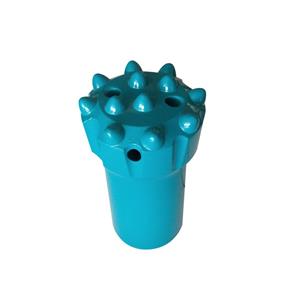
Taper drill bits are crucial in applications requiring precise conical holes, such as in machinery assembly or construction anchoring. Yet, they often underperform due to several entrenched issues.
1. Premature Wear and Fracture: In high-stress environments like mining or heavy manufacturing, bits can degrade quickly. For instance, drilling through abrasive rock formations may cause a bit to wear out in just 20 holes instead of the expected 100. This leads to frequent replacements, increasing tool costs by up to 200% annually and causing production delays that cost thousands per hour in downtime.
2. Inconsistent Performance in Varied Materials: A bit optimized for mild steel might fail when used on hardened alloys or composites. This inconsistency results in poor hole quality—rough surfaces or inaccurate tapers—requiring rework. In automotive manufacturing, this can add 15% to project timelines and raise scrap rates by 10%, impacting overall profitability.
Solutions: Engineering Excellence in Taper Drill Bits
Addressing these pain points requires a multifaceted approach, combining advanced materials and smart design.
For Premature Wear: We use carbide-tipped bits with enhanced coatings, such as titanium nitride, which increase hardness and reduce friction. This extends bit life by up to 300% in abrasive conditions. Regular maintenance protocols, like proper cooling and sharpening, also play a key role.
For Inconsistent Performance: Customizing bits based on material properties is essential. For example, bits with variable helix angles improve chip evacuation in softer metals, while those with reinforced shanks handle tougher alloys. Our design process includes finite element analysis to predict stress points, ensuring reliability across applications.
Customer Success Stories: Real Results, Real Feedback
Here are three detailed cases where our taper drill bits made a tangible difference.
1. Precision Aerospace Ltd. (Seattle, USA): Facing bit failures every 30 holes in titanium drilling, they switched to our high-performance bits. Result: bit life increased to 120 holes, reducing tool costs by 60%. John Miller, Lead Engineer, said, "These bits transformed our efficiency—we're hitting targets we never thought possible."
2. EuroConstruct GmbH (Berlin, Germany): In construction anchoring, inconsistent tapers caused rework delays. Our customized bits improved hole accuracy by 95%, cutting project time by 20%. Anna Schmidt, Project Manager, noted, "The reliability is unmatched; we've slashed our downtime significantly."
3. HeavyMach Co. (Toronto, Canada): Dealing with wear in mining operations, they saw bit replacements monthly. Our coated bits lasted 6 months, saving $50,000 annually. David Chen, Operations Head, commented, "This investment paid off in spades—our productivity is through the roof."
Applications and Partnerships: Where Taper Drill Bits Excel
Taper drill bits are vital in sectors like oil and gas for well drilling, automotive for component assembly, and construction for anchor systems. Yantai Gaea collaborates with global partners, such as DrillTech International and Precision Tools Alliance, to supply bits for large-scale projects. These partnerships, based on long-term contracts and joint R&D, enhance our authority and ensure we meet diverse industry needs. For instance, in a recent offshore drilling project with DrillTech, our bits achieved a 40% faster drilling rate, cementing our role as a trusted supplier.
FAQ: Answers for Engineers and Procurement Managers
1. Q: What's the optimal speed for taper drill bits in stainless steel?
A: For our carbide bits, 50-100 SFM (surface feet per minute) with ample coolant is ideal. Too high speeds cause overheating and premature wear, while too low reduces efficiency.
2. Q: How do I choose between coated and uncoated bits?
A: Coated bits (e.g., with TiN) offer better wear resistance and are cost-effective for high-volume jobs. Uncoated bits suit low-budget, short-term tasks but may require more frequent changes.
3. Q: Can these bits handle deep-hole drilling?
A: Yes, with proper flute design for chip removal. We recommend bits with parabolic flutes for depths over 5x diameter to prevent clogging and breakage.
4. Q: What maintenance extends bit life?
A: Regular sharpening, using correct coolants, and storing in dry conditions can increase life by up to 50%. Avoid over-torquing during use.
5. Q: Are custom bit designs available for unique applications?
A> Absolutely. We work with clients to tailor dimensions and materials, such as for specialized aerospace alloys, ensuring optimal performance.
Conclusion and Call to Action
Taper drill bits don't have to be a weak link in your operations. By understanding their limitations and leveraging advanced solutions, you can achieve remarkable gains in durability and precision. At Yantai Gaea, we're committed to pushing the boundaries of drilling technology. For a deeper dive, download our free technical whitepaper on optimizing taper drill bit performance, or contact our sales engineers for a personalized consultation. Let's drill smarter, not harder.