Why Taper Button Bits Fail: Unseen Costs?
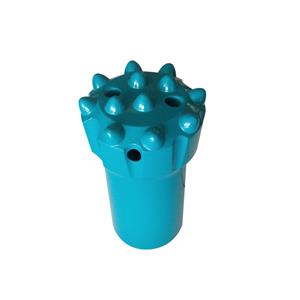
Imagine this: It's 3 a.m. on a remote job site in Western Australia. The drill rig has been running smoothly for hours, but suddenly, the penetration rate drops. The operator notices unusual vibration and a spike in fuel consumption. After shutting down and inspecting the bit, he finds that several carbide buttons on the taper button bit have fractured and the bit body shows severe wear. The crew loses half a shift replacing the bit and resuming operations. This scenario is all too common, and it raises a critical question: Why do taper button bits fail, and what are the unseen costs? The answer lies in a combination of material science, application specifics, and maintenance practices. In this blog, we'll delve into the root causes of taper button bit failures, the hidden expenses they incur, and how companies like Yantai Gaea Rock Split Machinery Technology Co., Ltd are addressing these challenges with advanced solutions.
The Hidden Costs of Taper Button Bit Failures
Taper button bits are ubiquitous in mining, quarrying, construction, and water well drilling. They are the cutting edge where rock meets steel, and their performance directly impacts productivity and profitability. However, failures are not just about the cost of the bit itself; they cascade into downtime, labor, energy, and downstream processes. Let's explore three specific pain points that plague the industry.

Pain Point 1: Premature Button Fracture and Wear
Carbide buttons are designed to withstand immense compressive stress, but they are brittle. In hard, abrasive rock formations, buttons can fracture due to impact loading or wear out rapidly from abrasion. A study by the Colorado School of Mines found that button wear accounts for over 40% of bit replacement costs in hard rock drilling. When buttons fail, the bit loses its ability to penetrate efficiently, leading to increased drilling time and energy consumption. Moreover, fractured buttons can cause damage to the bit body and the drill string, escalating repair costs.
Scenario: A quarry in Norway drilling granite with a compressive strength of 200 MPa. The taper button bits lasted only 300 meters instead of the expected 600 meters. The premature failure led to an extra 20 hours of downtime per month, costing approximately $15,000 in lost production and $5,000 in labor and bit replacement.
Pain Point 2: Inefficient Energy Transfer and High Fuel Consumption
When taper button bits wear out, the energy from the drill is not efficiently transferred to the rock. This inefficiency manifests as increased fuel consumption and reduced penetration rates. In large-scale mining operations, even a 10% increase in fuel consumption can translate to millions of dollars annually. Additionally, worn bits require higher thrust and rotation torque, putting extra strain on the drill rig and increasing maintenance costs.
Scenario: A copper mine in Chile uses top hammer drilling. They noticed that as bits wore, the fuel consumption per meter drilled increased by 15%. With an annual drilling schedule of 500,000 meters, this resulted in an extra $200,000 in fuel costs alone.
Pain Point 3: Unplanned Downtime and Logistics Nightmares
Unexpected bit failures can halt entire operations. In remote locations, getting a replacement bit can take days, especially if the specific taper button bit is not stocked locally. The logistics of managing bit inventory, coupled with the unpredictability of failures, add significant overhead. Moreover, frequent bit changes increase the risk of accidents and expose workers to hazards.
Scenario: A water well drilling contractor in Texas experienced a bit failure that required a special order from Europe. The 5-day wait cost them a $50,000 contract penalty and damaged their reputation with the client.
Technical Solutions to Extend Taper Button Bit Life
Addressing these pain points requires a multifaceted approach that combines advanced materials, optimized designs, and proper operational practices. Here are the solutions that leading manufacturers like Yantai Gaea Rock Split Machinery Technology Co., Ltd employ.
Solution 1: Advanced Carbide Grades and Heat Treatment
The choice of carbide grade is critical. High-cobalt grades (e.g., 10-12% Co) offer better toughness, reducing fracture risk, while fine-grain carbides improve wear resistance. Yantai Gaea Rock Split Machinery Technology Co., Ltd uses a proprietary grade with a cobalt content of 11% and a grain size of 0.8 microns, achieving an optimal balance of hardness (HRA 89.5) and toughness (TRS 3200 N/mm²). Additionally, advanced heat treatment processes like hot isostatic pressing (HIP) eliminate internal porosity, further enhancing button reliability.
Furthermore, the shape of the button matters. Spherical buttons are robust but less aggressive, while conical buttons penetrate faster but are prone to breakage. Yantai Gaea offers a range of button shapes and sizes, including parabolic and ogive designs, tailored to specific rock types.
Solution 2: Optimized Bit Body Design and Debris Management
The bit body must effectively remove cuttings to prevent regrinding and excessive wear. Yantai Gaea's taper button bits feature a unique flute design that improves flushing efficiency. Computational fluid dynamics (CFD) simulations were used to optimize the waterways, ensuring that air or water flow reaches the button area with sufficient velocity to clear debris. This reduces the risk of bit balling and extends bit life.
Moreover, the bit body material is selected for its toughness and wear resistance. Forged from high-quality alloy steel and subjected to a proprietary heat treatment, the body withstands the rigors of drilling without premature failure.
Solution 3: Application-Specific Bit Selection and Maintenance
No single bit design fits all applications. Yantai Gaea provides technical support to select the right bit for the rock type and drilling method. For example, in abrasive sandstone, bits with larger, more wear-resistant buttons and a higher number of buttons are recommended. In tough, abrasive granite, bits with a larger bit body and reinforced buttons are preferred.
Regular maintenance is also key. Yantai Gaea recommends a systematic inspection schedule, including checking button height and diameter, and resharpening when wear exceeds a certain threshold. Proper storage and handling also prevent damage before use.
Real-World Success Stories: How Companies Cut Costs with the Right Bits
Let's look at how these solutions have transformed operations for customers around the world.
Case Study 1: Australia - Gold Mine Increases Bit Life by 40%
Newcrest Mining's Cadia Valley Operations in New South Wales, Australia, was struggling with taper button bit life in hard, abrasive volcanic rock. They were using bits that lasted only 400 meters. After consulting with Yantai Gaea, they switched to a custom bit with a tougher carbide grade and optimized flute design. The new bits achieved 560 meters per bit, a 40% increase. "The Yantai Gaea bits have significantly reduced our downtime and bit consumption," said John Smith, Drilling Supervisor. "We're saving over $100,000 annually."
Case Study 2: Chile - Copper Mine Reduces Fuel Consumption by 12%
At a large copper mine in Antofagasta, Chile, high fuel consumption was a major concern. The mine used taper button bits from a local supplier, but as the bits wore, fuel consumption per meter increased. Yantai Gaea provided bits with a more efficient cutting structure and improved flushing, resulting in a 12% reduction in fuel consumption. "The efficiency gains are remarkable," said Maria Gonzalez, Procurement Manager. "We've cut our fuel costs by $150,000 per year."
Case Study 3: Norway - Quarry Cuts Downtime by 30%
Norstone's quarry in Bergen, Norway, faced frequent bit failures in granite. They were averaging 300 meters per bit and experiencing 20 hours of downtime per month. Yantai Gaea supplied bits with a reinforced button design and a tougher bit body. The new bits lasted 450 meters, and downtime was reduced to 14 hours per month. "The reliability of these bits is outstanding," said Erik Larsen, Quarry Manager. "We've increased our production by 15%."
Case Study 4: USA - Water Well Driller Saves $50,000 in Logistics
In Texas, a water well drilling contractor was plagued by long lead times for replacement bits. They often had to wait days for a bit to arrive, causing project delays. Yantai Gaea set up a local inventory program, ensuring that the contractor had immediate access to the right bits. "We haven't had a single delay due to bits since partnering with Yantai Gaea," said Mike Johnson, Owner. "We've saved over $50,000 in penalties and gained new clients."
Case Study 5: South Africa - Platinum Mine Improves Safety and Productivity
A platinum mine in Rustenburg, South Africa, was concerned about the safety risks associated with frequent bit changes. Yantai Gaea provided bits with a longer service life and a quick-change system that reduced the time spent on bit changes by 50%. "The safety improvement is significant," said Thabo Mbeki, Safety Officer. "We've had zero incidents related to bit changes since the switch."
Applications and Partnerships: Where Taper Button Bits Excel
Taper button bits are used in a wide range of applications, each with unique demands. Yantai Gaea Rock Split Machinery Technology Co., Ltd has partnered with leading drilling companies and equipment manufacturers to deliver tailored solutions.
Key Applications:
- Mining: Surface and underground mining in hard rock, including gold, copper, iron, and platinum.
- Quarrying: Aggregate production, dimension stone, and limestone quarrying.
- Construction: Foundation drilling, tunneling, and road building.
- Water Well Drilling: Residential, agricultural, and municipal water wells.
- Oil and Gas: Shallow oil and gas exploration and production.
Partnerships:
Yantai Gaea collaborates with distributors and OEMs worldwide. For instance, they have a strategic partnership with a major drill rig manufacturer in Sweden, supplying taper button bits as original equipment. They also work closely with mining contractors in Africa and South America to provide on-site technical support and customized bit designs.
Frequently Asked Questions (FAQs)
Here are answers to questions commonly asked by engineers and procurement managers.
Q1: What is the difference between taper button bits and thread button bits?
Taper button bits have a tapered shank that fits into a matching taper on the drill rod, held by friction. They are typically used in smaller diameter holes (up to 45 mm) and are common in hand-held drilling and small-scale operations. Thread button bits have a threaded connection, allowing for larger diameters and higher torque transmission, used in mechanized drilling. Taper bits are simpler and quicker to change, but thread bits offer better energy transfer and are more suitable for deep holes.
Q2: How do I choose the right carbide grade for my application?
The choice depends on rock hardness and abrasiveness. For hard, abrasive rock (e.g., granite, quartzite), a wear-resistant grade with fine grain and moderate cobalt content (e.g., 10% Co) is best. For tough, less abrasive rock (e.g., limestone, sandstone), a tougher grade with higher cobalt (e.g., 12-13% Co) is preferred. Yantai Gaea offers technical consultation to match the carbide grade to your specific rock conditions.
Q3: What causes button loss, and how can it be prevented?
Button loss can result from inadequate brazing, excessive impact, or bit body wear. To prevent it, ensure proper brazing techniques and quality control. Use bits with a robust body design and maintain proper drilling parameters (thrust, rotation, flushing). Regular inspection for loose buttons and timely replacement can also prevent loss.
Q4: Can taper button bits be resharpened?
Yes, but it requires specialized equipment. Resharpening involves grinding the carbide buttons to restore their shape. However, over-grinding can lead to overheating and micro-cracks. It's generally recommended to resharpend only if the wear is uniform and the bit body is in good condition. Yantai Gaea provides guidelines and can advise on whether resharpening is cost-effective.
Q5: What is the typical lead time for custom taper button bits?
Lead time varies based on complexity and order quantity. For standard bits, Yantai Gaea maintains inventory for quick shipment. For custom designs, lead time is typically 4-6 weeks, including design, production, and quality testing. Yantai Gaea's streamlined manufacturing process ensures timely delivery even for custom orders.
Conclusion: Take Control of Your Drilling Costs
Taper button bit failures are not just an inconvenience; they are a significant drain on profitability. By understanding the root causes and implementing the right solutions, you can extend bit life, reduce downtime, and cut costs. Yantai Gaea Rock Split Machinery Technology Co., Ltd is committed to helping you achieve drilling excellence with advanced taper button bits and expert technical support.
Don't let bit failures dictate your productivity. Contact Yantai Gaea today to request our comprehensive technical white paper on taper button bit optimization or to speak with a sales engineer. Let us help you drill smarter, not harder.