Why threaded button bits work so well — the secrets of securing the buttons
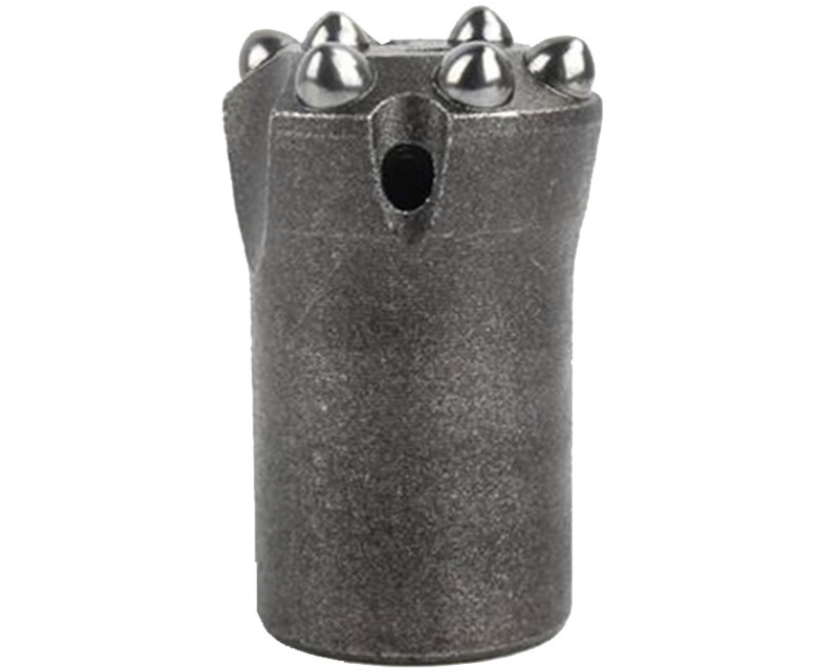
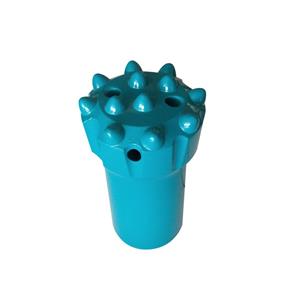
Threaded button bits have become a go-to tool in modern rock drilling. Made by embedding tungsten carbide button inserts into a bit body, they are increasingly favored over conventional insert-style bits because they fit a wide range of drilling conditions and offer several key advantages.
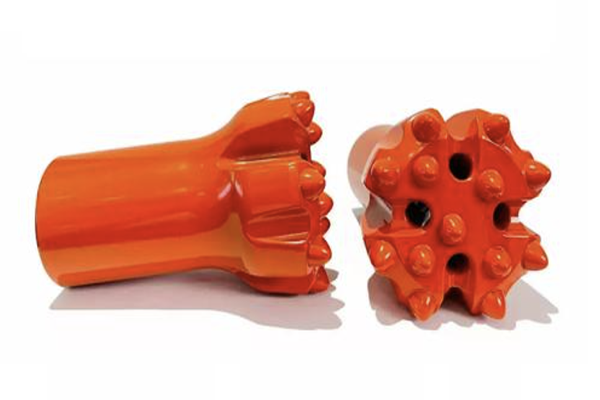
Core advantages: versatile, efficient, and durable The layout flexibility of button bits is a major benefit. Operators can adjust the number and placement of peripheral and central buttons to match the hole size and rock-breaking requirements, and the bit diameter is not tightly constrained, so these bits suit many different applications. Their rock-breaking action uses multiple impact points, which reduces unbroken “dead” zones and avoids re-crushing rock fragments. That improves penetration efficiency and lowers energy consumption.
Durability is another strong point. The tungsten carbide buttons carry most of the compressive loads during drilling, while older flat inserts tend to be subjected to tensile forces. Because the carbide buttons are harder, they resist wear much better. In high-frequency operations, minimizing bit changes saves significant time; the longer life of button bits reduces replacement frequency and raises overall productivity — a key reason for their growing popularity.
Critical to performance: three mainstream button-retention techniques Securing the carbide buttons to the bit body — the button retention step — is crucial. It must prevent button loss or movement during drilling to extend service life. The industry commonly uses three methods: brazing, press-fit (cold fit), and thermal (hot) insertion. Each has distinct characteristics and is suitable for different bit types and operating demands.
Brazing: an early, now largely phased-out method Brazing was the earliest retention method and is relatively straightforward: machine matching button holes and button dimensions according to the brazing gap, drill the holes in the bit body, then join the buttons to the body using copper or silver brazes. Brazing does not demand very tight manufacturing tolerances, so it was widely used at first. But it has clear drawbacks: the process can leave brazing marks that affect appearance, and poorly executed brazes can fail prematurely. Today brazing remains mainly for small-diameter bits with tapered-socket connections and has gradually been replaced in most applications.
Press-fit (cold fit): simple and fast, for lower-demand uses The cold-fit method relies on interference fitting. Based on the yield limit of the bit-body steel, manufacturers calculate the gap between the button and the hole, then press the button into the hole with external force. This method is easy to learn and fast for mass production. However, pressing can stress and damage both the bit body and the buttons, reducing overall service life; prolonged use often leads to button loss or breakage. For that reason, press-fit is typically used for lower-demand threaded button bits or applications where frequent regrinding isn’t required.
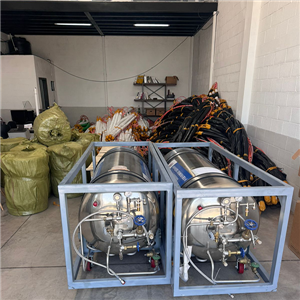
Thermal insertion (hot shrink-fit): the top choice for high performance For high-performance threaded button bits, thermal insertion (hot shrink-fit) is the preferred method. This approach uses a bit body made from alloy steel chosen for good thermal expansion and toughness. By exploiting the different expansion rates of the steel body and the carbide buttons, manufacturers heat the body (or buttons) to create the proper clearance, insert the buttons, and then let the assembly cool. As the steel contracts, it locks the buttons firmly in place. Compared with brazing and cold-fit methods, thermal insertion is simple to perform and exerts much lower stresses on the components during assembly, reducing the risk of damage and producing a more stable, secure retention suitable for high-intensity drilling.