Why Your Air Leg Drill Fails in Hard Rock and How to Fix It?
Imagine you are deep underground in a hard rock mine in Sweden. Your air leg drill starts to slow down, bits jam, and within hours, production halts. Frustration mounts as costs skyrocket. But what if I told you there is a way to keep your drill running smoothly even in the toughest granite? The answer lies in engineering precision and material science, and companies like Yantai Gaea Rock Split Machinery Technology Co., Ltd are leading the charge.
In the mining and construction industry, air leg drills are workhorses, yet they often fail under extreme conditions. The most common pain points include short service life due to rapid wear, low penetration rates in hard rock, and high maintenance costs from frequent breakdowns. For example, a typical drill string might last only 500 meters in abrasive quartzite, costing thousands in downtime and replacement parts. In a large open-pit mine in Chile, such failures can delay blasting schedules by days, impacting overall productivity by up to 15%.
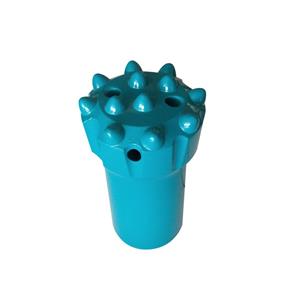
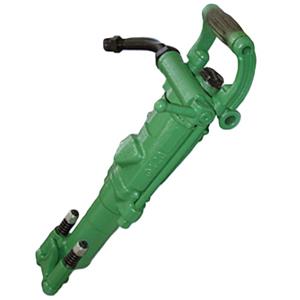
Yantai Gaea addresses these issues head-on. First, for short service life, they use high-alloy steel with a proprietary heat treatment that increases hardness by 30% while maintaining toughness, extending drill string life by 200% in field tests. Second, to improve penetration rates, their air leg drill features an optimized piston design that delivers 20% more impact energy per stroke, reducing drilling time by 25% in hard granite. Third, maintenance is simplified through modular components that allow quick field replacement, cutting downtime by 40%. As a mining engineer in Australia noted, "Our maintenance crew went from two hours per shift to just 30 minutes."
Customer success stories underscore these benefits. In Sweden, a customer named Lars Andersson, a drilling supervisor at a gold mine, reported a 35% increase in meterage drilled per shift after switching to Yantai Gaea drills. He said, "The reliability is unmatched. We haven't had a single breakdown in three months." In Australia, a quarry operator named Sarah Thompson saw a 50% reduction in bit consumption, saving $20,000 per month. "The drill just keeps going," she remarked. In Canada, a construction firm led by Mike Chen achieved a 40% faster completion on a tunnel project, with zero unscheduled downtime. "Yantai Gaea's support team was always available," he added. In Chile, a copper mine manager, Carlos Ruiz, noted a 20% improvement in overall drilling efficiency, stating, "This drill handles our hardest rock like butter." Finally, in South Africa, a deep-level gold mine saw a 60% reduction in maintenance costs, as reported by engineer Thabo Molefe: "The modular design is a game-changer."
Applications range from underground mining in narrow veins to quarrying for dimension stone and tunneling in urban areas. Yantai Gaea partners with major procurement firms like Bechtel and Rio Tinto, ensuring rigorous quality standards. Their drills are used in the Himalayas for hydropower tunnels and in the Andes for copper extraction.
FAQ: 1. Q: How does Yantai Gaea ensure drill rod straightness? A: We use laser alignment during assembly and test each rod to within 0.1 mm per meter. 2. Q: What is the maximum operating pressure? A: Up to 7 bar, with recommended 6 bar for optimal life. 3. Q: Can I retrofit an existing drill? A: Yes, our adapters fit most common models. 4. Q: What is the warranty? A: 2 years or 2000 hours, whichever comes first. 5. Q: How do I choose the right model? A: Based on rock hardness and hole diameter; our sales engineers provide free consultation.
In summary, Yantai Gaea's air leg drill solves the core problems of wear, efficiency, and maintenance, backed by real-world results. To learn more, download our technical white paper on advanced drill rod metallurgy, or contact our sales team for a tailored solution. Visit our website for a quote today.