
- Gaea
- China
- 20 days
- 20000meter /monthly
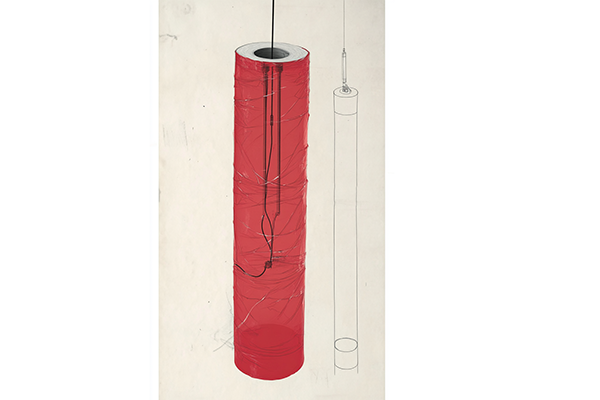
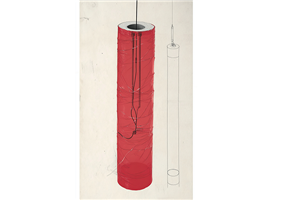
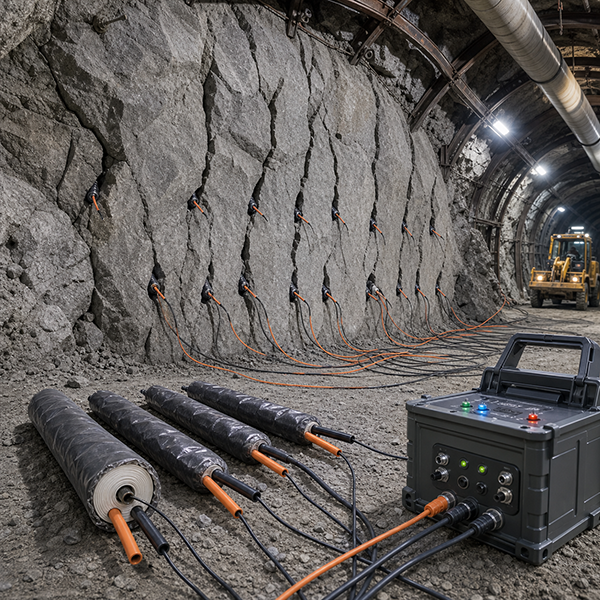
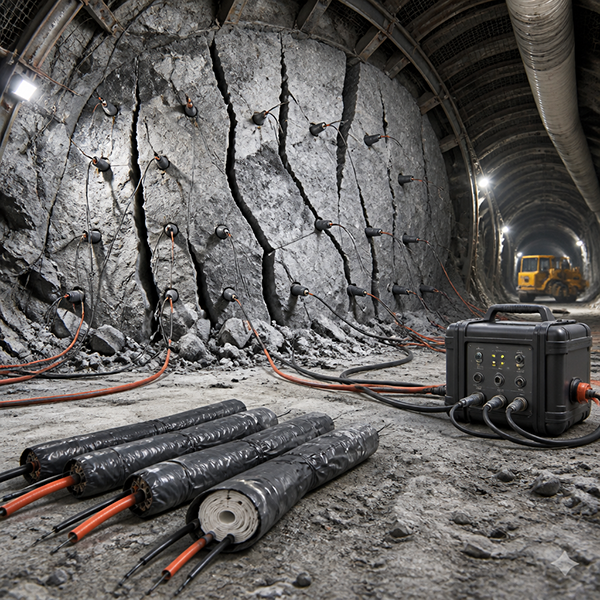
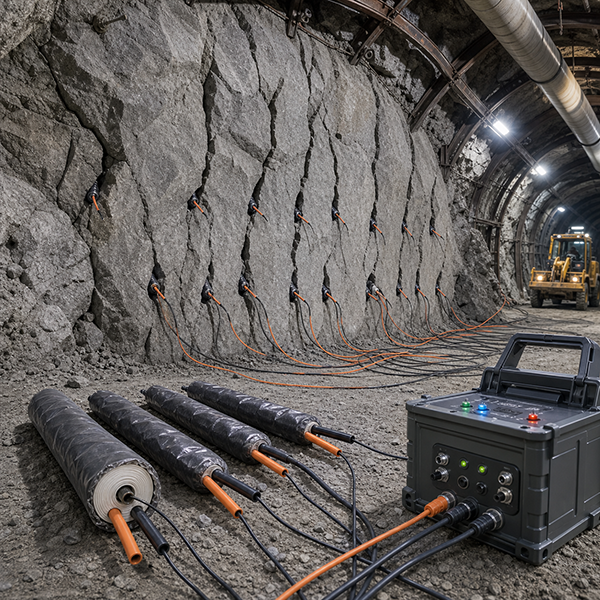
Gaea's O2 Rock Blasting System uses compact 60 mm splitting tubes for underground exploration and tunnel excavation. Typical tubes are approximately 1 m long, with boreholes spaced around 0.5 m, supporting controlled face development where ventilation, access and working space are critical.
Underground Tunnel Rock Breaking System | Gaea O2
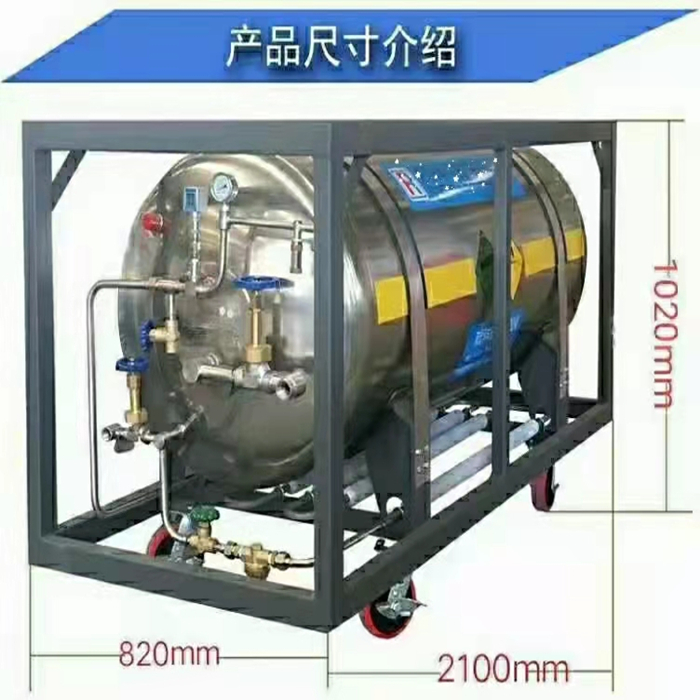
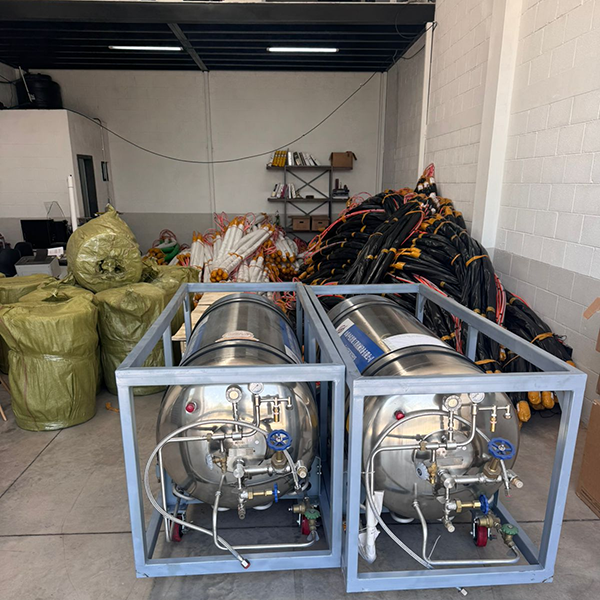
Product principles and system composition details:
Underground Tunnel Rock Breaking System
Compact O2 Rock-Breaking Technology for Underground Exploration and Tunnel Excavation
Underground excavation presents very different challenges from open-pit mining. Working space is limited, tunnel faces are smaller, equipment access is restricted, and every excavation cycle must account for ventilation, gas control, worker re-entry and surrounding rock stability.
Gaea's O2 Rock Blasting System for underground tunnel projects uses shorter, smaller-diameter splitting tubes developed for confined excavation environments. It can be evaluated for mineral exploration drifts, mine development tunnels, access headings, shafts and civil tunnel construction.
For underground applications, the splitting tube is limited to a 60 mm diameter model and is typically approximately 1 metre long.
This compact configuration allows the system to match the smaller boreholes and tighter drilling patterns commonly required at underground tunnel faces.
Special 60 mm Splitting Tube for Tunnel Projects
The splitting tubes used in open-pit mines are not directly applied to underground tunnel faces.
For tunnel and underground exploration projects, Gaea uses a dedicated compact configuration:
| Underground Parameter | Typical Reference |
|---|---|
| Splitting tube diameter | 60 mm only |
| Typical splitting tube length | Approximately 1 m per tube |
| Typical borehole diameter | 60 mm |
| Typical borehole depth | Approximately 2.5 m |
| Typical distance between holes | Approximately 0.5 m |
| Application environment | Underground headings and tunnel faces |
The shorter and thinner splitting tube is designed for the restricted geometry of underground excavation. The approximately 0.5 m borehole spacing supports a denser face pattern than is normally used in open-pit mining.
These figures are typical engineering references. Final hole depth, spacing, tube quantity and face pattern must be confirmed according to tunnel dimensions, rock strength, joint structure and the required advance.
Why Underground Projects Require a Different Configuration
Limited Working Space
Underground headings may not have enough space for large drilling, loading or fragmentation equipment. The compact 60 mm splitting tube is easier to integrate into a smaller tunnel face and a restricted working area.
Shorter Excavation Cycles
A typical tube length of approximately 1 metre allows the system to be arranged around short underground advance cycles. This is particularly relevant for exploration drifts and smaller headings where the face must be excavated progressively.
Closer Borehole Pattern
Underground tunnel faces require more precise distribution of energy across a limited cross-section. A typical distance of approximately 50 cm between boreholes helps create a coordinated fragmentation pattern across the face.
Controlled Tunnel Profile
The hole pattern can be designed around the required tunnel outline, helping the project team manage face advance and reduce unnecessary disturbance outside the planned excavation profile.
Applications in Underground Mining and Exploration
Underground Mineral Exploration
The system can be evaluated for exploration drifts and headings used to access, inspect or sample underground mineral zones.
Its compact tube configuration is suitable for projects where exploration teams must advance through hard rock while working within a limited tunnel cross-section.
Mine Development Tunnels
O2 rock breaking can support the excavation of access tunnels, haulage drifts, ventilation passages and other underground mine-development openings.
The system configuration is selected according to the tunnel dimensions, rock strength, support requirements and planned advance per cycle.
Tunnel Face Excavation
For civil and mining tunnels, the 60 mm splitting tube can be incorporated into a project-specific face pattern. The short tube length and close spacing are designed to suit the geometry of underground headings.
Shafts and Confined Underground Openings
The system may also be evaluated for shaft development, underground chambers, crosscuts and other confined rock-excavation areas where equipment size and access are restricted.
Tunnel Ventilation Is Essential
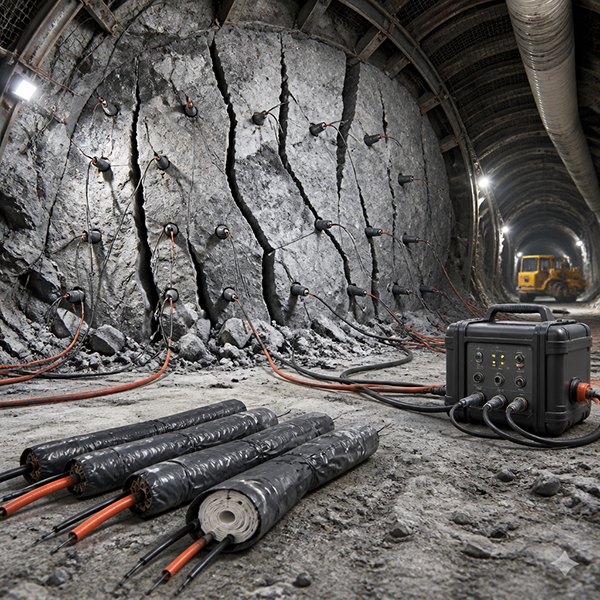
Underground O2 Rock Breaking Must Never Be Planned Without an Effective Ventilation System
Unlike an open-pit site, an underground tunnel cannot rely on natural air movement to rapidly disperse gas, heat, smoke and airborne dust.
A project-specific ventilation plan must be established before underground operation. The tunnel should have sufficient airflow to deliver fresh air to the working face and remove post-fragmentation gases and dust from the excavation area.
Important ventilation requirements include:
Mechanical supply and exhaust ventilation
Ventilation ducting extended toward the tunnel face
Airflow calculated for the tunnel dimensions and excavation cycle
Post-operation gas and oxygen-level monitoring
Dust removal and visibility control
Controlled worker re-entry after ventilation
Emergency ventilation and evacuation procedures
Workers should return to the tunnel face only after ventilation has been completed and the underground atmosphere has been tested and confirmed acceptable by authorized personnel.
Ventilation capacity, clearance time and gas-monitoring requirements must follow the project's engineering plan and applicable underground mining or tunnelling regulations.
Designed Around the Tunnel Face
A successful underground rock-breaking plan must consider the entire face rather than treating each borehole as an isolated point.
Before recommending a configuration, Gaea reviews:
Tunnel width and height
Required excavation profile
Rock type, UCS and joint structure
Borehole diameter and available drilling equipment
Planned hole depth and advance per cycle
Distance between the face and existing support
Ventilation capacity and airflow arrangement
Required fragment size for removal
Mucking and material-handling equipment
Ground-support and re-entry requirements
This information allows the splitting-tube layout to be matched to the actual tunnel geometry and excavation sequence.
Supporting an Efficient Underground Excavation Cycle
Underground productivity depends on how smoothly each stage connects with the next.
The Gaea O2 system can be evaluated as part of a coordinated tunnel cycle that includes:
Face surveying and engineering design
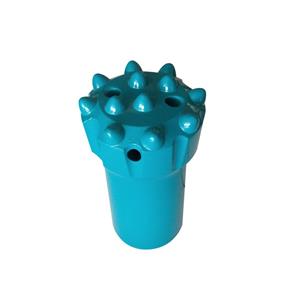
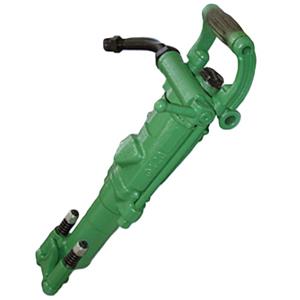
60 mm borehole drilling
Project-specific splitting-tube arrangement
Controlled rock fragmentation
Mechanical ventilation and atmospheric testing
Broken-rock removal
Face inspection and ground support
Preparation for the next advance
The objective is not simply to break the rock. It is to support a repeatable underground cycle that considers advance rate, ventilation time, material removal and worker safety.
Suitable Underground Rock Conditions
The system can be configured for underground excavation in:
Granite
Basalt
Gabbro
Quartzite
Hard sandstone
Limestone
Quartz-vein mineral zones
Other competent underground rock formations
Rock strength alone does not determine the final configuration. Joint orientation, fractures, groundwater, tunnel shape and surrounding rock quality must also be assessed.
Frequently Asked Questions
What splitting tube diameter is used in tunnel projects?
For underground tunnel applications, Gaea uses the 60 mm splitting tube model. Larger open-pit splitting-tube configurations should not be assumed suitable for confined tunnel faces.
How long is an underground splitting tube?
Most splitting tubes used for underground tunnel projects are approximately 1 metre long. The final tube arrangement depends on the borehole depth, tunnel profile and required face advance.
What is the typical distance between tunnel boreholes?
A typical underground reference is approximately 0.5 m between holes. Final spacing must be engineered according to rock strength, jointing, face dimensions and the desired fragmentation result.
Can the system be used for underground mineral exploration?
Yes. It can be evaluated for exploration drifts, mine-development headings, crosscuts and other underground openings used to access mineralized zones.
Is tunnel ventilation required after rock breaking?
Yes. Effective mechanical ventilation and atmospheric monitoring are essential. Personnel should not return to the working face until gases and dust have been removed and authorized testing confirms that re-entry conditions are acceptable.
Can the same configuration be used for every tunnel?
No. Tunnel dimensions, geology, drilling equipment, ventilation, support design and production targets vary between projects. Gaea reviews the project information before recommending the tube quantity and face configuration.
Request an Underground Tunnel Project Assessment
Send Gaea the following information:
Project country and location
Underground mine, exploration drift or civil tunnel
Tunnel width and height
Rock type and UCS
Planned borehole diameter and depth
Required advance per cycle
Ventilation-system capacity
Required fragmentation size
Expected monthly excavation volume
Gaea will evaluate your tunnel face, rock conditions and ventilation requirements and recommend a 60 mm O2 Rock Blasting System configuration for the underground project.
The dimensions and spacing shown above are typical reference values based on Gaea project knowledge. Final borehole layout, splitting-tube configuration, ventilation plan, exclusion controls and re-entry procedure must be approved by qualified project personnel and comply with applicable underground mining and tunnelling regulations.