Chile's Mining Acceleration in 2026: How Non-Explosive Rock Breaking Is Cutting Through the Permitting Bottleneck
Chile Is Pushing the Accelerator on Mining Development
After years of permitting gridlock that trapped roughly USD 16 billion in stalled projects, Chile is undergoing a decisive shift. The new Kast administration, which took office on 11 March 2026, has placed permitting reform at the top of its agenda — ordering ministers to unblock 50 pending administrative claims tied to major mining and infrastructure investments within 90 days.
The urgency is well founded. Chile remains:
The world's largest copper producer, responsible for roughly 23% of global output
The largest lithium producer in South America, with 33.6% of global lithium reserves and 271,000 tonnes of lithium carbonate equivalent produced annually
A mining-dependent economy where mining exports reached USD 63.3 billion in 2025 — approximately 59% of total national exports
Yet despite these extraordinary reserves, foreign direct investment into Chile's mining sector fell 28.7% year-on-year in 2024. Capital was pricing in regulatory risk. Projects were piling up between feasibility and construction because approvals simply took too long — in some cases up to 12 years for full permitting.
The Kast reforms aim to compress that timeline by 30-70%. And the market is responding. In 2026, Chile is fast-tracking 13 copper projects through an accelerated development pipeline, representing one of the most significant mining investment waves in the country's recent history.
Among the flagship projects:
Marimaca Copper — a CAD 409 million, environmentally permitted, DFS-backed open-pit heap-leach copper project near Antofagasta, targeting 2026 construction start. Positioned 25 km from the Port of Mejillones with access to recycled seawater and renewable power, the project aims to produce approximately 50,000 tonnes of copper annually over a 13-year mine life.
Multiple new lithium projects — Chile's National Lithium Strategy under the previous administration created a framework that the Kast government is now streamlining, with four new lithium projects planned to reach operational status.
Exploration expansion — new copper porphyry discoveries continue to emerge, most recently from Nobel Resources Corp. at its Cuprita and Pampa properties in northern Chile.
Every one of these projects — from greenfield mine development to existing mine expansion — requires massive volumes of rock drilling, rock breaking, and material handling.
And that is where the operational challenges multiply.
Chile's Mining Cost Crisis: Water, Energy, and Regulation
While permitting reform addresses the timeline problem, a separate set of pressures is driving up mining costs across Chile — and these pressures disproportionately penalize conventional explosive-based rock breaking.
Water Scarcity in the Atacama Desert
Chile's Atacama Desert, one of the driest places on Earth, is the epicenter of the country's copper and lithium mining. Water availability is the most immediate crisis facing Chilean miners in 2026.
Conventional explosives face a particular challenge here. In many open-pit operations, boreholes must be kept dry for explosive loading, requiring dewatering operations that consume water — the very resource that is most scarce and most expensive. In an environment where every cubic meter of water has a measurable cost impact, any technology that reduces water consumption translates directly to the bottom line.
Energy Costs
Chile's mining operations are among the most energy-intensive in the world. Conventional explosive blasting operations require significant energy inputs for drilling, loading, ventilation, and post-blast cleanup. The more efficiently rock can be fragmented in a single operation, the lower the energy cost per tonne of material moved.
Environmental Compliance Costs
Chile's environmental review process — even under reformed timelines — imposes rigorous conditions on mining operations. Dust, vibration, noise, and emissions are all subject to monitoring and regulatory limits. Conventional explosives that produce nitrogen oxides, carbon monoxide, and fine particulate matter require additional mitigation measures and monitoring programs.
Remote Logistics
Many of Chile's new mining projects are in remote regions of the Atacama and the northern highlands. Transporting, storing, and managing conventional explosives in these areas requires specialized logistics, secure storage facilities, and armed transport — all of which add cost and complexity to operations that are already logistically challenging.
The Non-Explosive Toolkit for Chilean Mining
A new generation of non-explosive rock-breaking and drilling technologies is helping Chilean mining companies address these challenges simultaneously. Three product categories from Yantai Gaea Rock Split Machinery Technology are particularly relevant to Chile's 2026 mining landscape.
O2 Gas Energy Rock Splitting System — High-Volume Fragmentation Without Explosives
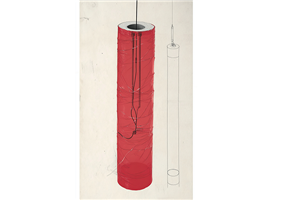
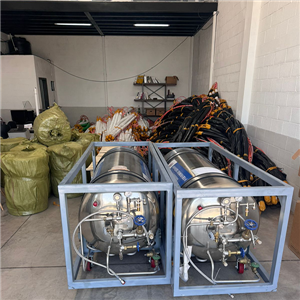
The O2 Gas Energy Rock Splitting System (Liquid Oxygen Rock Blasting System) is the flagship solution for large-scale rock fragmentation in mining, quarrying, and civil excavation.
How it works: Specialized paper splitting tubes are placed in pre-drilled boreholes, and liquid oxygen is injected from a refillable gas filling tank. When remotely triggered, the liquid oxygen vaporizes and expands approximately 860 times its volume, generating controlled pressure that fractures rock along designed planes. The reaction byproducts are only water vapor and carbon dioxide.
Why it fits Chile's mining environment:
Works in water-filled boreholes — unlike conventional explosives, the O2 system requires no dewatering of boreholes before loading. In the water-scarce Atacama, this eliminates a significant water consumption point in the blasting cycle.
No explosive permits or secure storage — liquid oxygen and paper splitting tubes are classified as ordinary cargo. No military-grade storage facilities, no armed transport, no multi-agency permitting. For remote mining operations, this dramatically simplifies logistics.
Approximately USD 1 per cubic meter — 20-65% cheaper than conventional explosives on a direct cost basis, with additional savings from eliminated permitting, storage, and transport overhead.
Zero toxic emissions — no NOx, no carbon monoxide, no harmful particulate matter. This reduces environmental monitoring requirements and simplifies compliance with Chile's increasingly stringent environmental regulations.
70% less shockwave than conventional explosives, reducing vibration impact on adjacent mine infrastructure, pit walls, and nearby communities.
40HQ container holds material for 131,250 cubic meters of rock fragmentation, enough for sustained large-scale mining operations.
For open-pit copper mines like Marimaca and the 13 fast-tracked projects in Chile's pipeline, the O2 system offers a high-throughput, low-cost, and regulation-friendly alternative to conventional explosives.
Excavator Drill Rigs — Integrated Drilling and Excavation
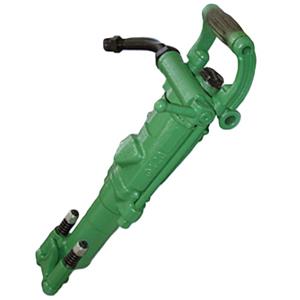
The WG-45 Excavator Drill Rig combines a rock drill and excavator in a single machine, providing powerful rock drilling with the versatility of an excavator platform.
How it works: The WG-45 uses high-frequency piston impact for efficient penetration into hard rock, with durable components and an ergonomic cab design that reduces operator fatigue during extended shift cycles.
Why it fits Chile's mining environment:
Dual-function versatility — drills boreholes and performs excavation with a single machine, reducing the equipment fleet required on remote sites
Efficient penetration in hard rock formations typical of Chile's copper deposits
Reduced transport and maintenance costs compared to operating separate drilling and excavation equipment
Suitable for mining, tunneling, and construction — applicable across the full lifecycle of mine development
For the exploration and development phases of Chile's new mining projects, the WG-45 provides an efficient drilling solution that reduces equipment complexity in remote, logistically challenging locations.
DTH Hammers and Bits — Deep Penetration in Hard Rock
Chile's copper deposits are among the hardest rock formations in global mining. Effective drilling requires tools that can maintain penetration rates and tool life in abrasive, high-strength rock.
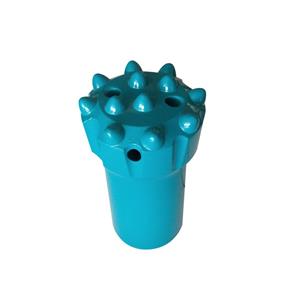
Yantai Gaea's range of DTH (Down-The-Hole) hammers and DTH bits — including CIR 90-100, CIR 90-110, and CIR 110-120 configurations — is engineered for sustained performance in demanding conditions.
Why they fit Chile's mining environment:
High-frequency impact energy optimized for hard rock penetration
Multiple bit configurations to match specific formation characteristics
Durable materials and heat treatment for extended service life in abrasive copper-bearing formations
Compatible with standard drill pipe and shank adapter systems
For exploration drilling, blasthole preparation, and grade control drilling across Chile's copper and lithium deposits, these DTH tools provide the reliability needed for sustained high-production operations.
The Compounding Advantage: Using the Full Toolkit Together
The real value for Chilean mining operators emerges when these technologies are deployed as an integrated system:
DTH hammers and bits drill the boreholes for fragmentation operations
O2 Rock Blasting System fragments the rock without explosives, eliminating permitting delays and reducing costs
Excavator drill rigs handle ancillary drilling and excavation tasks
The result: a self-contained rock-breaking operation that requires no explosive permits, no secure storage, no water for borehole dewatering, and produces zero toxic emissions
For mining companies operating in Chile's regulatory environment — where time is an "unpriceable risk," in the words of industry lawyers — this integrated approach reduces the variables that cause delays and cost overruns.
Chile's Mining Reset — And the Window for Action
The convergence of permitting reform, copper market bullishness, and the fast-tracking of 13 major projects creates a narrow window of opportunity for mining equipment suppliers and operators in Chile. Companies that can offer rock-breaking and drilling solutions which simplify regulatory compliance, reduce water and energy consumption, and operate reliably in remote conditions will be well positioned to capture market share during the 2026-2030 development wave.
Chile's mining sector is not broken — it is being rebuilt. And the rebuild starts with the tools that move rock.