Yantai Gaea CO2 Gas Expansion Rock Breaking: Principles and Applications
Yantai Gaea CO2 Gas Expansion Rock Breaking: Principles and Application Knowledge
Mining, infrastructure construction, railway and highway projects, foundation excavation and rock-removal work often require an effective approach to breaking competent rock. Conventional explosive blasting can provide high output, but it may face restrictions related to permits, transport, storage, environmental controls, nearby buildings and worksite safety requirements.
The source article introduces carbon-dioxide gas-expansion rock breaking as a non-traditional rock-fracturing method. In this version, the original company reference has been replaced with Yantai Gaea. The article explains the basic technical concept, potential application settings and practical considerations for project teams evaluating controlled rock-breaking methods.
CO2 gas-expansion rock breaking should be understood as a project-specific engineering option. It is not automatically suitable for every geology, construction environment or excavation objective. The final decision should be based on qualified site assessment, project approval, equipment suitability, workforce competence and local regulatory requirements.
Basic Principle of CO2 Gas Expansion Rock Fracturing
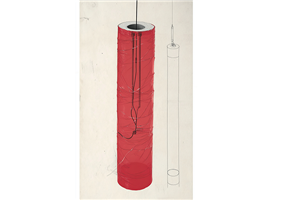
The article describes CO2 gas expansion as a physical rock-breaking method. A liquid carbon-dioxide medium is used in a purpose-designed rock-fracturing assembly. Under controlled operating conditions, the medium changes phase rapidly and develops high-pressure gas. The pressure acts inside the borehole environment and may encourage cracks to develop in the surrounding rock mass.
The source characterizes this as a physical pressure-fracturing process rather than a conventional explosive chemical reaction. Its intended result is to create or extend fractures in the rock, allowing the material to be removed more easily by excavators, loaders or other mechanical equipment.
The distinction from conventional explosive blasting is important. Conventional explosives create a rapid chemical energy release and shock-wave effect. A CO2 gas-expansion system relies on the physical behavior of a pressure medium. However, this difference does not remove the need for strict safety management. Pressure systems can present serious hazards and must be controlled by trained and authorized personnel.
Potential Applications
The source identifies several scenarios where CO2 gas-expansion rock breaking may be considered:
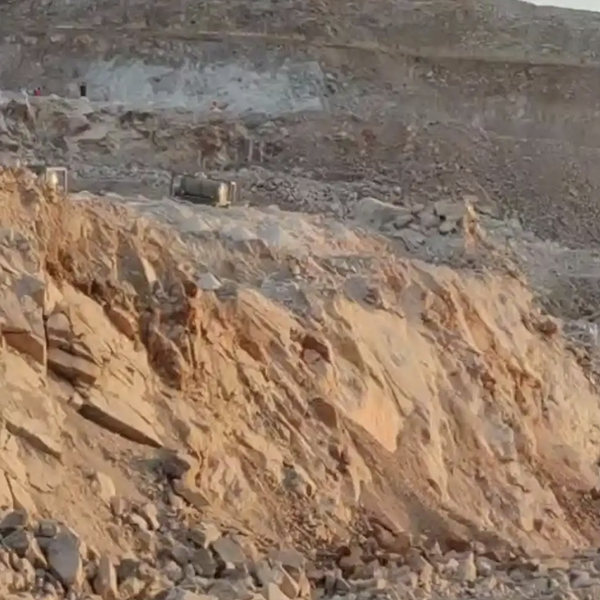
Mine and quarry rock excavation
Highway and railway roadbed or slope works
Large foundation-pit excavation
Rock removal for infrastructure construction
Projects close to residential areas or existing facilities
Ecologically sensitive work areas
Locations where conventional explosive use is restricted
These applications should be evaluated individually. A method that is suitable for a quarry with strong rock and open access may not be suitable for an urban foundation pit, a tunnel portal or a sensitive slope project.
For Yantai Gaea, the relevant question is not simply whether a CO2 system can be supplied. The question is whether the project conditions support a controlled rock-fracturing approach and whether the construction team can operate it safely under an approved plan.
Geological Suitability
The source emphasizes that rock properties affect the final performance of the method. Important factors include rock hardness, degree of fracturing, rock integrity, joint orientation, weathering and water conditions.
In rock masses with favorable natural joints or weaknesses, pressure-driven fracturing may help open existing discontinuities. In very dense, highly competent rock with limited fractures, the effect may be less pronounced, and a project may require a combined approach involving mechanical breaking or another rock-removal method.
A technical evaluation should review:
Rock type and compressive characteristics
Existing joints, fissures and bedding planes
Rock integrity and weathering degree
Groundwater and water-bearing conditions
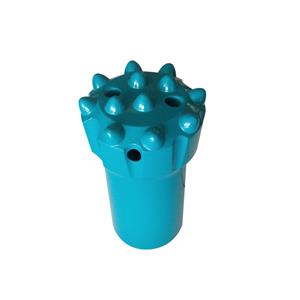
Borehole quality and drilling consistency
Free-face conditions and excavation geometry
Nearby buildings, utilities and sensitive infrastructure
Required fragmentation and material-removal method
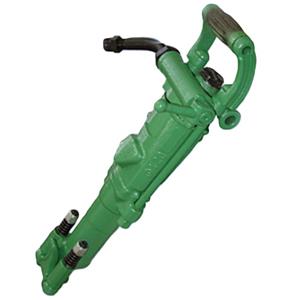
The source notes that a single rock-breaking event may have a smaller output than conventional explosive blasting. This means project planning and work sequencing are especially important. Contractors should assess total productivity across drilling, equipment preparation, controlled fracturing, secondary breaking and material removal.
Equipment and Service Capability
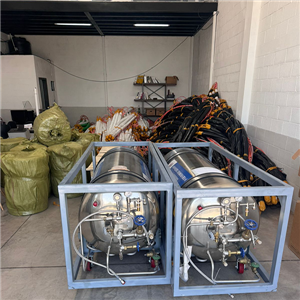
The article discusses differences among providers in terms of equipment stability, process maturity and field-management capability. This is a useful distinction. A controlled rock-breaking system should not be selected solely on the basis of a component or quoted price.
Yantai Gaea can support a project by discussing available site information, equipment needs, training requirements and project-specific technical boundaries. A responsible service scope may include equipment documentation, project communication, operator preparation and coordination with the contractor’s work sequence.
However, the final execution plan must be determined by qualified personnel for the actual site. This includes engineering design, equipment inspection, safety procedures, regulatory approvals and emergency arrangements. A supplier should not provide unconditional claims about legal compliance, output, cost savings or environmental performance without a project-specific assessment.
Safety and Operational Control
The source recognizes that pressure-based rock-breaking work requires professional operating discipline. Although the technology is described as non-explosive, it still involves high-pressure equipment and controlled energy release.
Only trained and authorized personnel should conduct the work. Project procedures should cover equipment inspection, approved operating conditions, site access control, work-zone management, emergency response and post-operation inspection.
CO2 fracturing equipment should be inspected and maintained in accordance with applicable standards and manufacturer requirements. The use of damaged or unsuitable pressure equipment creates unacceptable safety risk. Project owners and contractors must also verify all relevant local requirements for equipment, transport, storage, occupational safety and construction operations.
Environmental Considerations
The source describes CO2 gas expansion as relevant for projects seeking a controlled alternative to conventional blasting. It may be considered where vibration, noise, community concerns or environmental restrictions make conventional blasting more difficult to organize.
Nevertheless, environmental effects should not be assumed to be negligible. Rock-breaking work can still involve noise, vibration, dust, vehicle movement and worksite disturbance. A project must assess and manage these effects according to its own environmental conditions and approval requirements.
For Yantai Gaea, the appropriate message is that controlled gas-expansion rock fracturing may offer an additional option in suitable settings, rather than a universal environmental solution.
Cost and Project Planning
The article notes that total cost can depend on drilling quantity, CO2 consumption, equipment depreciation, transport, labor, maintenance and excavation conditions. This is an important point because project economics should be evaluated as a complete workflow.
A direct comparison with conventional blasting or hydraulic breaking can be misleading if it ignores permit timelines, equipment wear, worksite restrictions, logistics and follow-up excavation. Some sites may find a controlled gas-expansion approach commercially reasonable; others may find mechanical breaking or another method more appropriate.
Yantai Gaea should help customers consider the full project context. The most useful evaluation is not a fixed cost claim, but a site-specific comparison based on actual geology, access, production targets, schedule and risk controls.
Frequently Asked Questions
How does CO2 gas expansion differ from conventional explosive blasting?
The source describes CO2 gas expansion as a pressure-driven physical rock-fracturing process. Conventional explosive blasting relies on chemical detonation and shock-wave energy. The technical and regulatory classification must be confirmed for the individual location.
Is the method suitable for every kind of rock?
No. Rock integrity, fracture development, hardness, water conditions and borehole quality can all affect performance. Very dense or minimally fractured rock may require another method or supplementary mechanical breaking.
What are the main safety considerations?
The primary concerns include pressure-system integrity, equipment handling, trained personnel, controlled work zones and compliance with approved procedures. Local regulations and site-specific safety plans must always govern the work.
Where can Yantai Gaea provide support?
Yantai Gaea can discuss equipment options, project information requirements, technical documentation and training or service scope. Final construction approval and safe operation remain the responsibility of qualified project personnel and the relevant authorities.
Can this method completely replace conventional blasting?
Not necessarily. The source itself indicates that the method has application boundaries. It should be evaluated as a complementary rock-breaking option for suitable geological and operational conditions.