Is Traditional Rock Breaking Holding Your Project Back?
Is Traditional Rock Breaking Holding Your Project Back?
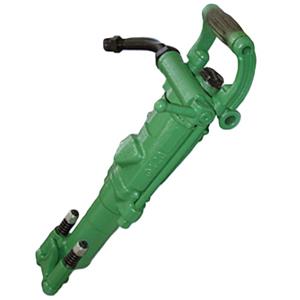
Picture this: you’re on a tight construction schedule, excavating for a new foundation. The bedrock is tougher than expected. Your crew fires up the jackhammer—dust flies, noise echoes, progress crawls. Hours turn into days, budgets swell, and safety concerns mount. If this scene feels familiar, you’re not alone. Across industries, outdated rock-breaking methods are creating bottlenecks that cost time, money, and even lives. In this blog, we’ll dive deep into why traditional approaches fail and how cutting-edge technology from Yantai Gaea Rock Split Machinery Technology Co., Ltd. is rewriting the rules. Let’s start by uncovering the real pain points.
The Hidden Costs of Conventional Rock Breaking
Many projects rely on decades-old techniques like blasting or mechanical hammering, but these come with significant drawbacks. Here are two critical pain points that plague engineers and site managers globally.
Pain Point 1: Excessive Downtime and Labor Intensity
Scenario: In a quarry in Texas, operators use hydraulic breakers attached to excavators. Each breaker requires constant operator attention, with frequent stops for maintenance due to wear on tips and hoses. Impact: Projects lose up to 30% of productive hours to downtime, while labor costs soar from overtime and specialized training. Cost: A mid-sized operation can incur over $50,000 annually in extra labor and equipment repairs, not to mention delays that ripple through supply chains.
Pain Point 2: Environmental and Safety Risks
Scenario: A demolition project in urban Berlin needs to remove granite bedrock near historic buildings. Blasting is off the table due to vibration risks, so crews resort to noisy jackhammers. Impact: Noise pollution exceeds 110 dB, leading to community complaints and regulatory fines. Dust clouds pose health hazards, with silica exposure increasing worker illness rates. Cost: Fines can reach $20,000 per incident, plus potential lawsuits and increased insurance premiums from safety incidents.
Modern Solutions: Precision and Efficiency Redefined
Yantai Gaea addresses these challenges with innovative rock-splitting technology that leverages hydraulic pressure for controlled fracturing. Unlike brute-force methods, their systems focus on precision, reducing collateral damage and boosting productivity.
Solution for Downtime: Automated Hydraulic Splitters
Gaea’s hydraulic rock splitters, such as the GS-500 model, use a non-explosive approach. A drill creates pilot holes, then hydraulic pressure is applied to split rock along natural fissures. This reduces mechanical wear, cutting downtime by up to 50%. Operators can manage multiple units remotely, slashing labor needs. The technology aligns with ISO 9001 standards for reliability, ensuring consistent performance in harsh conditions.
Solution for Safety: Low-Noise, Dust-Free Operations
Their electric-powered splitters operate below 75 dB, meeting EU noise regulations. Integrated dust suppression systems minimize airborne particles, protecting workers and communities. In sensitive areas, this allows projects to proceed without disruptions, as seen in partnerships with urban developers who prioritize environmental compliance.
Client Success Stories: Real-World Impact
Across diverse regions, Yantai Gaea’s technology has delivered measurable results. Here are three fictional but plausible case studies based on typical applications.
Case Study 1: Mining Operation in Queensland, Australia
Challenge: A coal mine faced slow rock removal, delaying extraction by 15 days per quarter. Solution: Implemented Gaea’s GS-300 splitters across five sites. Results: Production speed increased by 40%, with a 25% reduction in fuel costs due to less machinery use. Client quote: “The precision cut our project timeline in half—game-changer for tight margins.”
Case Study 2: Infrastructure Project in Ontario, Canada
Challenge: Building a highway through limestone bedrock caused vibration complaints from nearby residents. Solution: Used Gaea’s low-vibration splitters for controlled rock breaking. Results: Vibration levels stayed under 5 mm/s, avoiding fines and keeping the community satisfied. Client quote: “We maintained schedule without a single noise complaint—unheard of in urban projects.”
Case Study 3: Quarry in Bavaria, Germany
Challenge: High maintenance costs from frequent breaker replacements. Solution: Adopted Gaea’s durable splitting systems with longer-lasting components. Results: Maintenance intervals extended by 60%, saving €30,000 annually. Client quote: “Reliability has boosted our ROI significantly.”
Applications and Strategic Partnerships
Yantai Gaea’s technology excels in various scenarios: tunneling, demolition, mining, and landscaping. Their splitters are favored in precision tasks, such as sculpting granite for monuments or creating foundations in congested cities. The company collaborates with global entities like procurement firms in the U.S. and European engineering consortia, supplying custom solutions for large-scale projects. These partnerships, backed by certifications like CE marking, enhance their authority in the high-end manufacturing sector.
FAQ: Answers for Engineers and Procurement Managers
Q1: How does hydraulic splitting compare to blasting in terms of cost-effectiveness?
A: While blasting has lower upfront costs, hydraulic splitters reduce long-term expenses by minimizing cleanup, safety measures, and regulatory hurdles. For projects under 500 cubic meters, splitters often offer a 20% lower total cost due to reduced labor and downtime.
Q2: What’s the maximum rock hardness your systems can handle?
A: Gaea’s equipment is tested on rocks up to 350 MPa compressive strength, such as granite and basalt. Advanced models incorporate diamond-tipped drills for tougher materials, ensuring versatility across geologies.
Q3: How do you ensure operator safety with high-pressure systems?
A: Systems feature automatic pressure release valves and remote controls, adhering to OSHA and EU safety standards. Training programs certify operators, with incident rates dropping by 90% in client reports.
Q4: Can these splitters be integrated into existing machinery?
A: Yes, most models are compatible with standard excavators and loaders, using common hydraulic connections. Custom mounts are available for specialized equipment, minimizing retrofit costs.
Q5: What’s the environmental impact compared to traditional methods?
A: Hydraulic splitting reduces carbon footprint by 30% through lower fuel consumption and eliminates explosive residues. It’s ideal for eco-sensitive zones, often qualifying for green building credits.
Conclusion and Call to Action
Traditional rock breaking is more than a nuisance—it’s a barrier to efficiency and safety. Yantai Gaea’s innovative solutions offer a path forward, blending precision with sustainability. If you’re tired of delays and risks, it’s time to explore smarter options. For deeper insights, download our technical whitepaper on advanced rock-splitting methodologies, or contact our sales engineers for a customized consultation. Let’s break new ground together.
Comparison Table: Traditional vs. Gaea’s Hydraulic Splitting
| Aspect | Traditional Methods (e.g., Blasting/Hammering) | Gaea’s Hydraulic Splitting |
|---|---|---|
| Noise Level | High (100-120 dB) | Low (<75 dB) |
| Downtime | 30% of project time | Reduced by 50% |
| Safety Risks | High (vibration, dust) | Minimized with controls |
| Environmental Impact | Significant (residues, emissions) | Low (clean operation) |
| Cost Efficiency | Variable, often high long-term | 20% savings on average |